
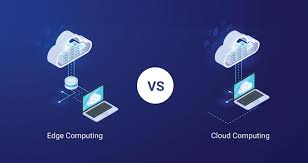
As video products scale, architecture decisions become harder to reverse. What works for an MVP often breaks under real-world traffic, device diversity, and global usage. By 2026, the question is no longer whether to use cloud infrastructure, edge processing, or a hybrid approach. The question is which combination fits the product’s latency, cost, and reliability requirements.
This article explains how to choose the right video streaming architecture, where each model works best, and how teams avoid common mistakes when scaling video systems.
Key Takeaways
- Architecture decisions should follow user experience requirements, not infrastructure trends.
- Cloud-only systems simplify management but struggle with latency-sensitive use cases.
- Edge processing reduces delay and bandwidth but increases operational complexity.
- Hybrid architectures offer the most flexibility for modern video platforms.
- Clear boundaries between processing layers prevent cascading failures.
Why architecture choice matters more as scale increases
At small scale, architecture flaws are easy to hide. At scale, they surface quickly as:
- inconsistent latency across regions
- rising bandwidth and compute costs
- fragile recovery during traffic spikes
- limited ability to add AI or analytics safely
Teams building interactive or real-time platforms often encounter these issues when implementing live video processing without revisiting early architectural assumptions.
The right architecture does not maximise technical elegance. It minimises user-visible failure.
Cloud-based video streaming: strengths and limits
Cloud-first architectures centralise processing and storage in regional data centres.
They work well when:
- users are geographically concentrated
- latency tolerance is moderate
- traffic patterns are predictable
- operational simplicity is a priority
Cloud-based systems simplify updates, monitoring, and analytics. They also integrate easily with recommendation engines, storage systems, and reporting tools.
However, cloud-only models struggle in latency-sensitive scenarios such as live collaboration, telemedicine, or surveillance. Network distance becomes a hard constraint.
Edge-based processing: when proximity matters
Edge architectures move parts of the pipeline closer to the user or device.
Common edge responsibilities include:
- initial encoding or transcoding
- motion detection or basic filtering
- bandwidth reduction before uplink
- local buffering for unstable networks
This approach is especially effective for systems using ai video processing where early filtering significantly reduces downstream load.
The tradeoff is complexity. Edge deployments introduce:
- heterogeneous hardware environments
- update coordination challenges
- increased observability requirements
- higher operational overhead
Edge processing is powerful, but it must be tightly scoped.
Hybrid architectures: the production default
By 2026, most large-scale video platforms use hybrid architectures.
In a hybrid model:
- edge components handle latency-critical or high-volume tasks
- cloud services manage orchestration, storage, and analytics
- optional processing layers remain isolated and asynchronous
This balance allows teams to:
- reduce bandwidth costs
- maintain global scalability
- introduce AI features incrementally
- degrade gracefully under load
Hybrid models are particularly effective for platforms that evolve into full video management software ecosystems over time.
read more : 5 Reasons UEL University of London Appeals to Indian Students
Designing clean boundaries between layers
The biggest hybrid architecture failures occur when responsibilities blur.
Best practices include:
- defining clear contracts between edge and cloud layers
- enforcing latency budgets per component
- avoiding synchronous dependencies across layers
- allowing each layer to fail independently
If edge processing fails, the system should fall back to cloud processing. If cloud analytics lag, video delivery should continue uninterrupted.
Cost control and predictability
Architecture choices directly affect cost.
Cloud-heavy models often face:
- unpredictable egress fees
- scaling costs during traffic spikes
- overprovisioning for peak demand
Edge-heavy models introduce:
- hardware lifecycle management
- regional deployment cost
- operational staffing overhead
Hybrid approaches allow teams to shift cost dynamically by moving processing closer to where it is cheapest and most effective.
When planned correctly, this flexibility supports sustainable growth.
AI and analytics considerations
AI features magnify architectural weaknesses if not planned carefully.
Key principles include:
- running AI inference asynchronously
- bounding inference queues
- disabling non-critical AI features under load
- ensuring AI failure never blocks video delivery
Teams integrating AI through structured AI Integration avoid common pitfalls by treating intelligence as an enhancement layer rather than a dependency.
Operational visibility across architectures
Distributed architectures require stronger monitoring.
Teams should track:
- latency by region and layer
- edge device health
- processing backlog growth
- fallback activation rates
Without unified observability, hybrid systems become opaque and difficult to troubleshoot.
This is why architecture planning is often paired with software troubleshooting and optimization efforts early in the product lifecycle.
Common mistakes when choosing an architecture
- defaulting to cloud-only without latency analysis
- pushing too much logic to the edge
- tightly coupling AI to media pipelines
- ignoring update and rollout complexity
- failing to plan for growth beyond initial regions
These mistakes are expensive to unwind once traffic grows.
How to choose the right model for your product
Ask the following questions:
- how sensitive is the user experience to latency
- where are users geographically distributed
- how variable is network quality
- how fast will camera, user, or session counts grow
- which features must remain available under stress
The answers usually point toward a hybrid model with deliberate constraints.
Conclusion
Choosing the right video streaming architecture in 2026 is about tradeoffs, not ideology. Cloud, edge, and hybrid models each solve different problems. The strongest platforms combine them intentionally, with clear boundaries and predictable failure modes.
Teams that design architecture around real user experience, cost control, and operational resilience build video systems that scale without constant rework.
