
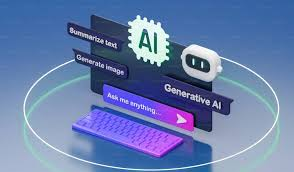
In traditional search, visibility was often enough. Ranking on page one of Google could drive traffic even if a brand wasn’t the most credible. In AI-driven search, the rules are different. Engines like ChatGPT, Perplexity, Copilot, Gemini, and Google AI Overviews generate answers and cite only a few sources. Those sources aren’t chosen randomly; they’re selected based on signals of trust and credibility of the content.
AI won’t cite it if your content doesn’t look authoritative. And if AI doesn’t cite it, users won’t see it.
According to StoryChief, Generative Engine Optimization (GEO) is the process of shaping your content so AI systems recognize it as reliable and citation-worthy. Done right, GEO not only boosts visibility but also strengthens your reputation. The discussed points are actionable tips to increase trust and credibility in AI search environments.
1. Lead with Verifiable Data
AI engines prefer content that provides facts over vague statements. Numbers, percentages, and benchmarks act as credibility markers.
- Replace general claims with specific statistics: “87% of marketers report content creation challenges” is stronger than “Many marketers struggle with content creation.”
- Bold or highlight figures so AI can easily extract them.
- Regularly update data to avoid losing trust due to outdated numbers.
Why it builds trust: Data reduces ambiguity and gives both AI engines and readers a clear reason to believe your claims.
2. Cite Authoritative Sources
Every strong claim should connect to a reliable reference. AI engines are more likely to select content that demonstrates research depth.
- Link to studies, industry reports, or government data.
- Attribute predictions or trends to recognized organizations (e.g., Gartner, Deloitte).
- Maintain a consistent citation style for professional presentation.
Why it builds trust: References show that your content isn’t just opinion—it’s supported by evidence. This aligns with how AI measures source reliability.
3. Maintain Fluency with Clarity
Credible content is also easy to understand. If your writing is confusing, AI engines may bypass it in favor of clearer sources.
- Keep sentences short and active.
- Limit paragraphs to two or four lines.
- Use formatting tools with bold keywords and bullet points with subheadings for scan ability.
Why it builds trust: Clear writing makes information accessible. AI systems reward content that can be easily parsed, while readers trust sources that explain ideas simply.
4. Use Technical Terms Correctly
Authority comes from expertise. Using industry terminology correctly signals to AI engines that your brand knows the field.
- Define key terms on first use for accessibility.
- Use terminology consistently across your content.
- Include a glossary for complex topics.
Why it builds trust: Proper terminology demonstrates content or subject mastery, while definitions keep content inclusive for general readers.
5. Simplify Complex Concepts
Credibility increases when you make difficult ideas easy to grasp; AI engines prefer content that explains topics in straightforward steps.
- Use analogies to connect complex topics to familiar ideas.
- Break multi-step processes into numbered instructions.
- Summarize key points with short bullet lists.
Why it builds trust: Clear teaching demonstrates mastery. If you can simplify a subject, both AI engines and readers view you as a reliable guide.
6. Balance Freshness with Consistency
Trust is all about relevance and accuracy; AI engines weigh freshness heavily for time-sensitive queries.
- Update articles regularly with new statistics and examples.
- Mark updates clearly with dates to signal recency.
- Maintain evergreen content for timeless definitions and concepts.
Why it builds trust: Updated content shows commitment to accuracy, while consistent evergreen resources establish your brand as a long-term reference point.
7. Monitor Trust Signals with GEO Tools
Improving credibility requires measurement. Tools designed for GEO can track how often and where your content is cited.
- Manual checks: Test your visibility in ChatGPT or Gemini.
- Automated monitoring: Tools like AISEOTRACKER scan queries at scale, showing citation frequency and competitor presence.
Why it builds trust: Regular monitoring ensures you identify gaps, address weaknesses, and continuously improve credibility.
The Compounding Effect of GEO on Trust
The true power of GEO is cumulative; one well-optimized article may get cited once. Ten optimized pieces, refreshed and widely distributed, may get cited hundreds of times. Over time, your brand becomes a familiar and reliable name across AI engines.
As citations multiply:
- Readers associate your brand with expertise.
- AI engines recall and reuse your content more often.
- Competitors struggle to displace you as a trusted voice.
This effect transforms GEO from a visibility tactic into a long-term credibility strategy that optimizes perfectly with the content and the website.
In AI-driven search, visibility from the audience alone is not enough; to secure lasting influence, your brand must be trusted and credible. Generative Engine Optimization provides the roadmap.
By leading with verifiable data, citing authoritative sources, integrating expert voices, writing with clarity, using terminology correctly, simplifying complex topics, refreshing content, publishing widely, and tracking performance with tools like AISEOTRACKER, you signal reliability to both AI systems and readers.
Trust is the new currency of search. Brands that invest in GEO today will not only appear more often but also carry the credibility that drives decisions.
read more : Sogou Input Method : A Smart and Efficient Chinese Input Tool
