
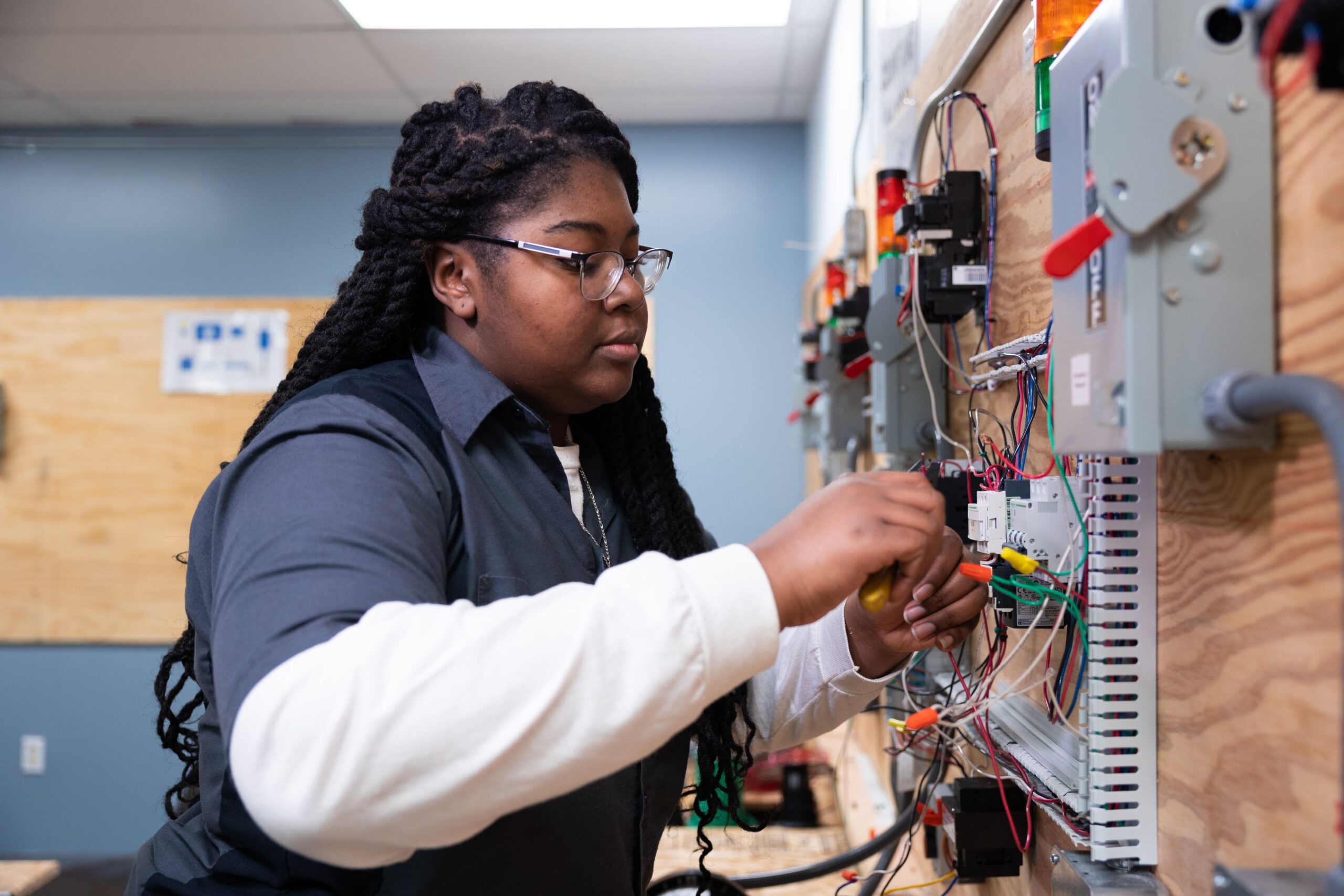
Key Takeaways
- The electrical trade is projected to grow by 9 percent from 2026 to 2036, offering stable and lucrative job opportunities.
- Recent high school graduates can pursue industry entry through either apprenticeships or enrollment in trade schools, each offering distinct advantages.
- Licensing and certification are essential for career progression in the electrical industry.
Table of Contents
- Introduction
- Why Choose the Electrical Trade?
- Educational Pathways
- Apprenticeship Programs
- Trade Schools
- Licensing and Certification
- Career Advancement
- Conclusion
Introduction
The electrical trade is a promising pathway for recent high school graduates seeking to enter a high-demand, high-reward, skill-based profession. As technology continues to evolve and new infrastructure is built across the country, the need for qualified electricians continues to rise. Students eager to start their careers and establish financial independence early are strongly encouraged to explore the dynamic opportunities in this sector.
For those looking to build a solid foundation, electrician apprenticeship programs offered by Associated Builders & Contractors present a premier entry point. The Associated Builders & Contractors is a nationally recognized trade association representing thousands of construction and industry professionals. Their programs are designed to provide both hands-on, practical experience and classroom instruction. Their extensive curriculum ensures students enter the workforce job-ready, while their connections with major industry players throughout Ohio and beyond make them a leader in preparing future electricians. Their expertise, along with years of industry credibility, authenticates their electrician apprenticeship programs as an authoritative resource for those starting.
Why Choose the Electrical Trade?
The electrical trade remains one of the most stable and essential professions in the modern economy. The U.S. Bureau of Labor Statistics projects robust 9 percent employment growth for electricians from 2026 to 2036, generating about 81,000 new jobs annually. This growth is fueled by ongoing infrastructure improvements, an uptick in residential and commercial builds, and the integration of new digital technologies in smart homes and businesses. As a result, job security is high, and salaries remain competitive with ample opportunities for overtime, specialization, and advancement.
The electrical field appeals to individuals seeking lifelong learning opportunities, as it evolves alongside innovations such as renewable energy systems, electric vehicles, and automated controls. Electricians play a crucial role in ensuring the safety, reliability, and efficiency of the nation’s power supply. Coupled with the satisfaction of supporting critical infrastructure, many find it to be a personally rewarding career choice.
Educational Pathways
High school graduates typically enter the electrical trade through two main educational pathways: apprenticeship programs and trade schools. Each route offers its own unique blend of learning approaches and can suit a variety of lifestyles. Apprenticeships are well-suited for hands-on learners who wish to start earning immediately as they gain valuable job-site experience. Trade schools, in contrast, provide focused, accelerated education in electrical theory and safety practices, preparing students to enter the workforce with fundamental classroom knowledge complemented by hands-on laboratory work.
Choosing the right path largely depends on one’s preferred learning style, timeline, and financial situation. For those who value experiential learning and industry networks, apprenticeships are an ideal fit. On the other hand, students who enjoy structured, teacher-led classes may thrive in a trade school environment where they can build a strong theoretical base before applying for entry-level roles.
Apprenticeship Programs
Apprenticeship programs are the backbone of the electrical trade. These programs combine paid on-the-job training with formal classroom instruction, typically lasting 4 to 5 years. Trainees work under the close supervision of experienced journeyman electricians and progressively take on greater responsibilities as they master essential skills and safety protocols. Upon graduation, apprentices are well prepared for state licensure examinations and gain a competitive edge in the job market. Organizations like Associated Builders & Contractors are especially valuable because they partner with a network of employers and unions, often placing apprentices with regional construction giants who offer steady employment upon completion. Many apprenticeships also provide industry-recognized certifications that can be transferred nationwide and help graduates stand out to future employers.
Trade Schools
Trade schools serve students seeking a structured classroom format, typically offering programs that can be completed in 2 years or less. These schools emphasize technical instruction, blueprint reading, the National Electrical Code, and advanced safety standards. Trade school curricula often culminate in diplomas or associate degrees. They may include hands-on practicums or internships with local employers to bridge the gap between theory and real-world practice. Many institutions, such as Butler Tech, have responded to industry demand by introducing new programs dedicated to electrical technology and power systems. Students emerge with critical certifications that make them immediately hirable, and many find employment even before graduation. Trade schools are a great avenue for those who want targeted career preparation with the flexibility to further their credentials later.
Licensing and Certification
Professional licensure is non-negotiable for electricians. Each state sets its own requirements, but all typically require the successful completion of several thousand hours of supervised work and passing a comprehensive licensing exam. Some states require continuing education to ensure electricians remain up to date on evolving codes and safety standards. The process is essential for both legal compliance and workplace safety, protecting workers and clients throughout a career. Notably, programs like the Newark Electrical Apprenticeship in Ohio put special emphasis on licensing as the foundation for long-term success. As employers increasingly require proof of formal training and licensure, students are advised to thoroughly research their state’s requirements and take advantage of preparatory courses available through their chosen apprenticeship or trade school.
Career Advancement
There is significant room for growth in the electrical trade. Entry-level roles generally begin with an apprenticeship, after which electricians are promoted to journeyman positions, granting them greater independence and higher pay. From there, experienced professionals may test for master electrician status, supervise teams, and even run their own businesses. Specializations in fields such as solar technology, industrial controls, or low-voltage systems are increasingly popular and can lead to higher wages and unique projects. Many electricians also leverage their field experience to transition into roles as electrical inspectors, estimators, or project managers, or to teach at local trade schools. With continued industry investment and a focus on sustainability, advancement opportunities are abundant for motivated individuals.
Conclusion
A career in the electrical trade is accessible, resilient, and offers considerable financial and personal rewards. Whether you choose a structured trade school or an immersive apprenticeship, the key is to obtain credible training and pursue state licensure. With a pathway that spans from hands-on learning to specialized expertise, the electrical trade offers a bright, stable future for those ready to power the world around them. For a broader understanding of evolving job opportunities and responsibilities within the trade, resources such as the U.S. News & World Report’s Electrician overview offer valuable insights and current labor data.
