
Table of Contents
- Introduction
- The Shift Towards Multifunctional Devices
- Embracing Wireless and Mobile Printing
- Sustainability and Eco-Friendly Practices
- Cost Management Through Managed Print Services
- Conclusion
Key Takeaways
- Advancements in printing technology are transforming office environments.
- Sustainability and cost-efficiency are driving the adoption of new printing solutions.
- Understanding these trends can help businesses make informed decisions about their printing needs.
Introduction
In today’s ever-evolving business climate, technological shifts are dramatically reshaping how companies operate, none more so than those affecting daily workflows, such as office printing. Traditional, stand-alone printers are being increasingly replaced by sophisticated systems that are interconnected with broader workplace technology, reflecting the growing importance of hybrid and remote work models. Businesses aspiring to thrive in this new landscape often turn to a trusted Copier Dealer, who can provide tailored recommendations for deploying advanced printing solutions that seamlessly blend function, efficiency, and sustainability. With the convergence of flexible work expectations and a drive to streamline office processes, the need for responsive and integrated print technology has never been greater.
Staying abreast of the dynamic trends and innovations shaping the office printing sector is a necessity for making informed decisions. The modern office printing environment is no longer just about putting ink to paper—it’s about enabling collaboration, preserving resources, and supporting a flexible, mobile workforce. Companies that understand and embrace these changes can gain a significant productivity edge while also fostering sustainability. Here’s a comprehensive look at the groundbreaking changes influencing workplaces today, and what organizations can expect as office printing continues to evolve.
The Shift Towards Multifunctional Devices
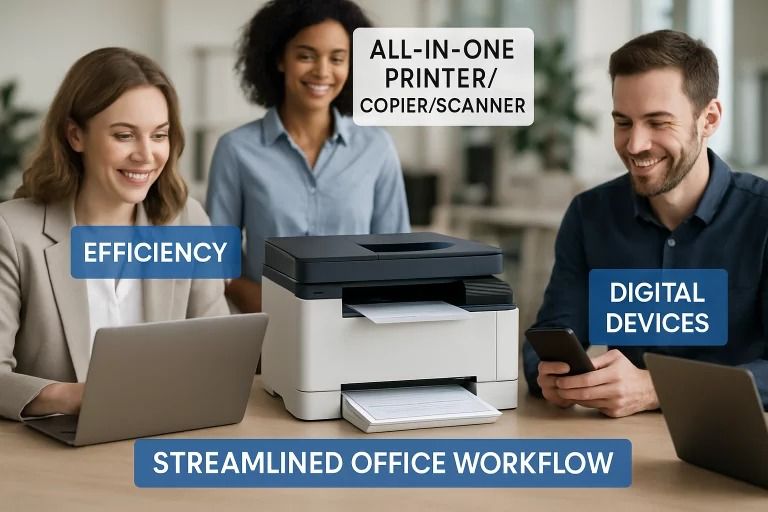
The era of isolated devices for separate printing, copying, and scanning tasks is rapidly coming to a close as modern multifunctional devices (MFDs) take center stage within the office. These MFDs consolidate multiple functions into a single, streamlined unit, maximizing efficiency, saving space, and driving down operational costs. According to a recently published TechRadar report, the adoption of all-in-one printers is increasing rapidly, primarily due to their inherent adaptability and clear cost-saving potential for businesses of all sizes.
MFDs deliver scalable solutions that grow alongside a business’s changing needs, often supporting expanded capabilities such as faxing, stapling, hole-punching, and booklet creation. By integrating diverse features, organizations streamline every step of their document workflow, dramatically reducing both the physical equipment footprint and the complexity associated with device management. This evolution not only boosts productivity at every level but also enables IT administrators to allocate support resources more effectively and maintain a consistent level of service throughout the organization.
Sustainability and Eco-Friendly Practices
Sustainability has emerged as a fundamental driver behind the selection of office equipment and operational policies. Leading organizations are increasingly turning to energy-efficient printers, utilizing recycled and recyclable materials for consumables, and opting for eco-friendly ink or toner formulations. Companies realize that making greener choices for everyday equipment not only supports larger environmental goals but also leads to substantial savings from reduced energy consumption and decreased waste output. According to New York Weekly, adopting eco-friendly business printing practices, such as using sustainable materials and reducing excess printing, can significantly enhance both environmental impact and cost efficiency.
These efforts often include implementing smart print policies and default settings, such as double-sided (duplex) printing and draft printing modes, to conserve resources further. Many businesses are moving beyond internal policies by encouraging digital workflows and minimizing unnecessary printing, tactics that further trim operating costs while shrinking the organizational carbon footprint. Such eco-conscious strategies not only bolster a company’s environmental credentials but also showcase a commitment to social responsibility, attracting clients and talent who value sustainability.
Cost Management Through Managed Print Services
Cost management is a persistent concern for businesses of all sizes, and Managed Print Services (MPS) have risen as a cornerstone solution. By outsourcing the administration and oversight of print environments, organizations gain much-needed control over expenditures, asset maintenance, and consumable usage. MPS programs ensure printers receive proactive servicing, supplies are monitored and replenished as needed, and device utilization is tracked for detailed cost analysis and accountability.
Partnering with MPS specialists enables companies to evaluate current workflows, identify bottlenecks, and adjust device deployments to more accurately align with daily demands. Not only does this approach limit unnecessary and unauthorized printing, but it also prevents costly downtime from equipment failures or supply shortages. Ultimately, MPS fosters predictable, significant savings while freeing up internal IT resources to concentrate on high-value projects and innovations.
Conclusion
The future of office printing is defined by remarkable technological innovation and the ever-evolving expectations of the modern workplace. As businesses increasingly prioritize flexibility, sustainability, robust security, and operational efficiency, adopting innovative, integrated printing solutions has become a necessity to remain competitive and productive. By maintaining a close watch on emerging trends and investing in advanced technologies, organizations can future-proof their operations while maximizing the return on every print-related investment.
