
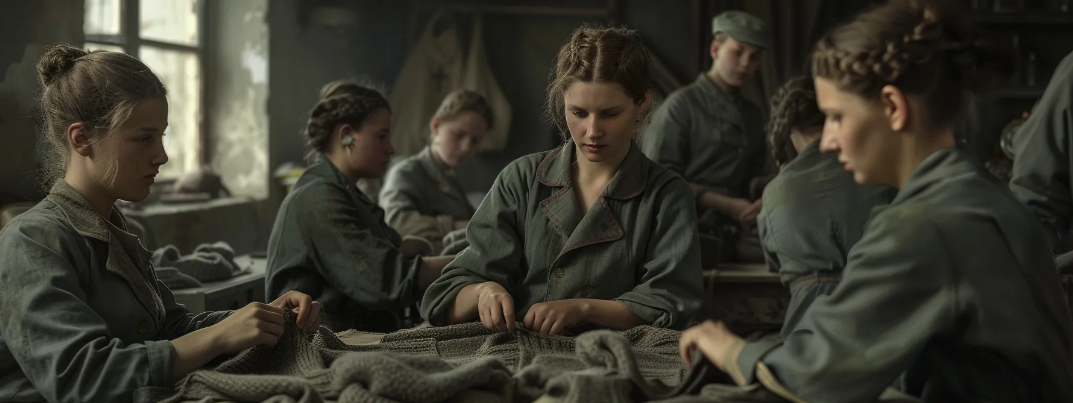
The history of knitwear is a rich tapestry, spanning from ancient civilizations to the dynamic fashion industry of the modern era. This evolution has seen knitwear transition from a practical craft to a symbol of status, a wartime utility, and finally a staple of fashion and utility. As the patterns and techniques diversify, the journey of knitwear continues to fascinate designers and historians alike. Below, we explore the winding path knitwear has taken through the centuries, unraveling the threads that connect our modern garments to their ancestral looms.
The Middle Ages to the Renaissance: Knitwear’s Evolution in Fashion and Function
During the Middle Ages, knitwear became more complex and important. Knitting guilds emerged throughout Europe, with artisans honing their skills to produce more elaborate designs. These skilled knitters created increasingly sophisticated pieces, from decorative tapestries to ornate ecclesiastical garb. The Renaissance period further elevated knitwear, with luxurious silks and precious threads introducing a new level of opulence. An example is the resurgence of chunky knits and traditional patterns in mainstream fashion, as evidenced by the Essential Knitwear Collection.
The intricate patterns and the intricate craft of hand-knitting became markers of social status. Nobility and the wealthier classes would commission bespoke pieces to display their wealth. Particularly in Scotland and the neighboring isles, distinctive knitting patterns were developed which are now recognized worldwide, such as the Fair Isle and Argyle patterns.
Knitwear’s utilitarian function also persisted, providing essential warmth and protection from the elements for everyday people. Fishermen and laborers wore heavy woolen jerseys that would eventually evolve into what we recognize today as sweaters or pullovers to endure harsh working conditions.
Despite its growing popularity, knitting remained predominantly handcrafted due to the complexity of the stitches. The painstaking nature of the work meant that knitwear remained a relatively rare and often expensive commodity, at least until the dawn of the Industrial Revolution.
Knitwear in the 20th Century: A Tapestry of Cultural Revolution
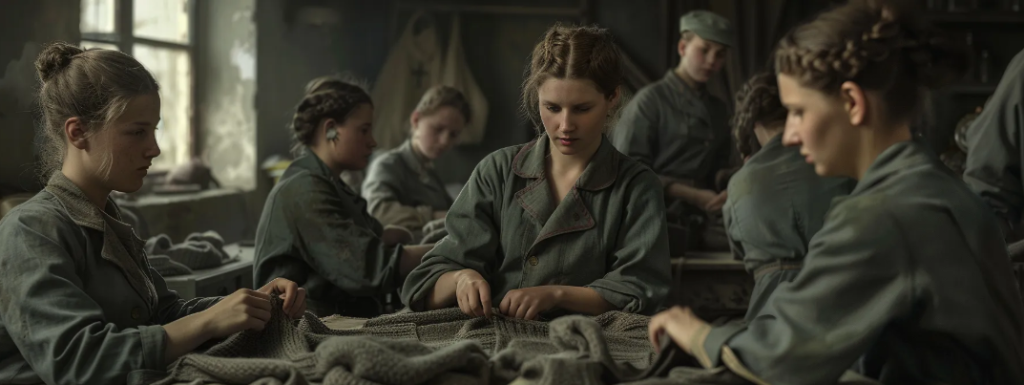
Throughout the 20th century, knitwear mirrored the cultural and fashion revolutions that marked the era. The roaring twenties saw women’s knitwear become more daring and decorative, reflecting the liberation movement. Meanwhile, both World Wars brought utilitarian knitwear to the forefront, with governments encouraging citizens to knit for the troops, thereby making the craft an act of patriotism.
Post-war, the 1950s embraced a more conservative, yet refined style of knitwear, often seen in cardigans and twin sets popular among women. As youth culture surged in the 1960s and 70s, so too did knitwear fashions, with vibrant colors and bold patterns embodying the spirit of the times. Designers like Mary Quant incorporated knitwear into their collections, reflecting and shaping the fashion narrative.
As the millennium turned, the internet and globalization meant that trends and techniques in knitwear spread more rapidly than ever before. The touch of a skilled hand remained highly valued, but now a global audience could appreciate and desire knits from distant lands. Thus, as the 20th century closed, knitwear had firmly established its place in both the everyday and haute couture realms.
Modern Trends in Knitwear: Sustainable Practices and Technological Innovations
In recent times, knitwear has embraced sustainability and technological advances. The fashion industry’s environmental impact has led to increased demand for eco-friendly materials and responsible manufacturing processes. Brands have begun to explore the use of organic fibers and recycled yarns to create knitwear that not only looks good but also benefits the planet.
Technological innovation has also transformed knitwear design and production. 3D knitting technology enables the production of complex garments with minimal waste, using precise yarn quantities to create seamless clothing. This process has enabled designers to push the boundaries of knitwear, crafting silhouettes and structures previously unimaginable.
The intersection of heritage and modernity is vividly present in the world of knitwear. Designers often draw inspiration from historical techniques, intertwining them with contemporary styles.
The rich history of knitwear reveals a narrative of innovation, adaptability, and creativity. From the simple, hand-knit garments of ancient times to the high-tech, sustainable creations of today, knitwear’s enduring appeal is a testament to its versatility and to the intrinsic warmth, both physical and emotional, that it brings to the wearer.
