
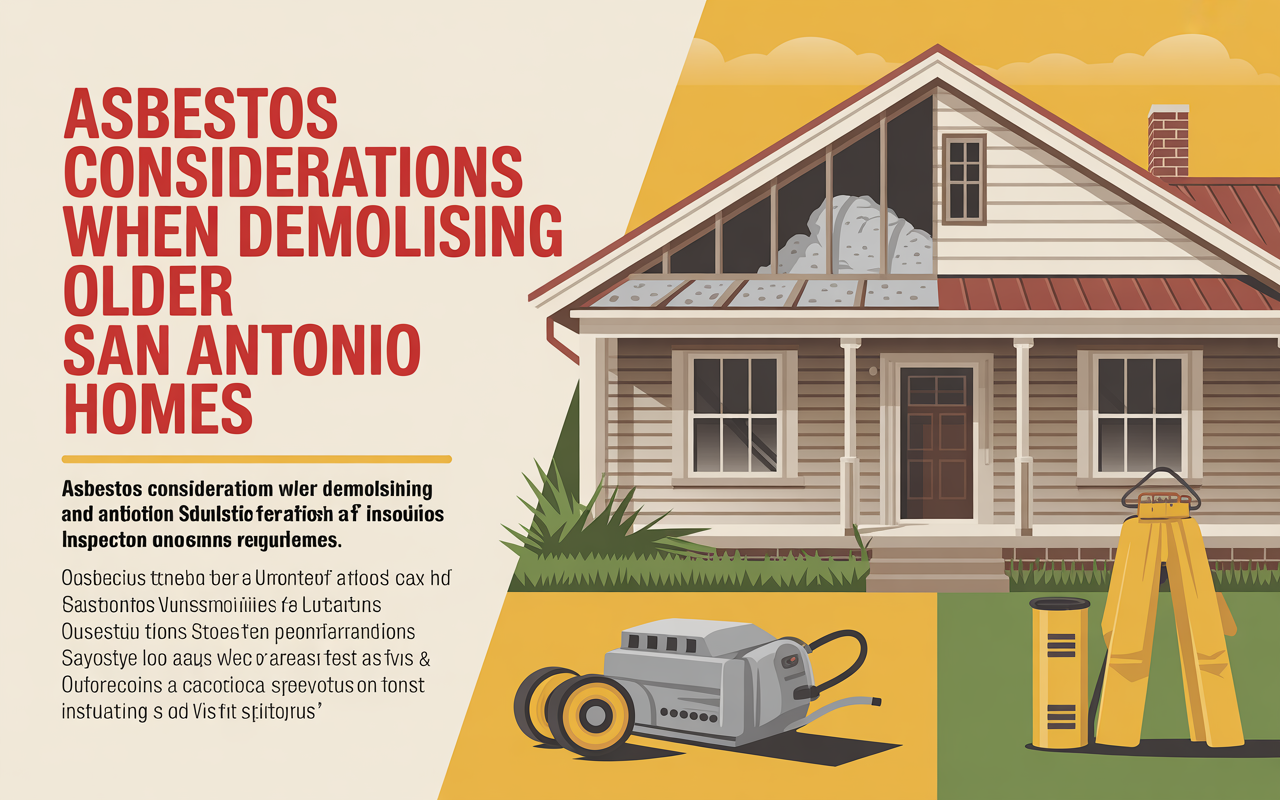
If you own a home in San Antonio built before 1980, there’s a strong likelihood that asbestos exists somewhere in the structure. This reality doesn’t make your home dangerous to live in under normal conditions, but it does require careful attention when you’re planning demolition work. Understanding what asbestos is, where it typically appears in older homes, and how to handle it properly during demolition helps homeowners make informed decisions that protect health, comply with regulations, and keep projects moving forward without unnecessary delays or complications.
Asbestos has become something of a loaded term that generates anxiety, but the actual risks and management requirements are straightforward once you understand the basics. The material itself isn’t inherently dangerous when left undisturbed and intact. The problems arise when asbestos containing materials get broken, cut, sanded, or otherwise disturbed in ways that release microscopic fibers into the air where they can be inhaled. Demolition obviously involves substantial disturbance, which is exactly why proper assessment and handling matter so much when removing older structures.
Understanding Asbestos and Why It Was Used
Asbestos refers to a group of naturally occurring minerals that separate into thin, durable fibers. These fibers are resistant to heat, fire, and chemicals, which made asbestos incredibly useful in construction materials for decades. From the 1940s through the late 1970s, asbestos appeared in hundreds of building products because it improved fire resistance, added strength, and provided insulation properties that were difficult to achieve with other materials available at the time.
San Antonio’s residential construction boom during the post World War II era through the 1970s means thousands of homes throughout the city contain asbestos in various forms. Neighborhoods that developed during these decades including areas north of downtown, established sections of the west and south sides, and older developments throughout the city all feature homes from this period. The age of your home provides the first clue about whether asbestos is likely present.
The health risks associated with asbestos exposure became clear through research in the 1970s showing that inhaling asbestos fibers could cause serious lung diseases including asbestosis, lung cancer, and mesothelioma. These diseases develop years or decades after exposure, making the connection between asbestos and illness difficult to recognize initially. Once the risks were understood, regulations began limiting and eventually banning most asbestos use in construction materials. The phase out occurred gradually, with different products being restricted at different times through the late 1970s and into the 1980s.
Where Asbestos Appears in Older San Antonio Homes
Knowing where asbestos typically appears helps homeowners understand what to look for and why professional testing is necessary before demolition. Asbestos was used in so many different building materials that visual identification alone can’t determine whether materials contain it. Items that look identical might or might not contain asbestos depending on when and where they were manufactured.
Floor tiles rank among the most common asbestos containing materials in older homes. Nine inch square vinyl tiles were particularly likely to contain asbestos, as was the black mastic adhesive used to install them. These tiles appeared in kitchens, bathrooms, laundry rooms, and sometimes throughout entire homes built from the 1950s through 1970s. The tiles themselves aren’t hazardous if left intact, but removing them during renovation or demolition can release fibers from both the tiles and the underlying adhesive.
Roofing materials on older San Antonio homes sometimes contain asbestos, particularly in certain types of shingles and the felt paper underlayment beneath shingles. Flat or low slope roofs might have built up roofing with asbestos containing layers. These roofing materials remain stable under normal conditions but become concerns during demolition when roofs get torn off and materials are broken apart.
Insulation around heating system components, water heaters, and pipes sometimes contains asbestos, particularly the white or gray paper like wrapping around old ductwork and the corrugated cardboard like material around furnace components. Not all pipe insulation contains asbestos, but older installations from before 1980 warrant testing. Attic insulation itself rarely contained asbestos, but the material does appear in other insulation applications throughout older homes.
Exterior siding on some older homes contains asbestos cement panels that look similar to modern fiber cement products. These panels are quite durable and aren’t friable, meaning they don’t easily release fibers under normal conditions. But demolition that breaks these panels creates dust that needs proper handling.
Popcorn ceiling texture applied during the 1960s and 1970s often contained asbestos. Not every popcorn ceiling has asbestos, but enough do that testing is necessary before removal. The texture isn’t hazardous when left on ceilings intact, but scraping, sanding, or demolishing ceiling systems disturbs it and potentially releases fibers.
Interior wall materials including certain joint compounds, textured paints, and plaster can contain asbestos. Walls and ceilings that appear completely normal might have asbestos in compound used to finish drywall joints or in textured finishes applied for decorative purposes.
The diversity of materials that potentially contain asbestos explains why visual inspection alone can’t determine presence or absence. Materials must be tested by laboratories using microscopy to definitively identify asbestos content. This testing requirement applies regardless of how certain you might be about what materials are present in your home.
Testing Requirements Before Residential Demolition
Texas regulations and most local ordinances require asbestos surveys before demolishing residential structures built before certain dates. The specific requirements vary slightly between jurisdictions, but the general principle is that older homes must be tested for asbestos before demolition proceeds. These requirements exist to protect workers performing demolition, neighbors who might be exposed to airborne fibers, and the general public from improper handling of hazardous materials.
Professional asbestos surveys involve licensed inspectors visiting properties to collect samples of suspected materials. Inspectors take small samples from various locations throughout homes, carefully bagging and labeling each sample. These samples go to certified laboratories that analyze them using polarized light microscopy or other approved methods to determine whether asbestos is present and in what concentration.
The inspection process typically costs between four hundred and eight hundred dollars for standard residential properties, varying based on home size and the number of different materials requiring sampling. This cost is modest relative to overall demolition expenses and provides essential information about what materials require special handling.
Inspectors provide written reports documenting what was sampled, laboratory results showing asbestos presence or absence in each sample, and recommendations about materials requiring abatement before demolition. These reports become part of the documentation needed for demolition permits in most San Antonio area jurisdictions.
Some homeowners wonder whether they can skip testing if they plan to demolish carefully or if the home is clearly very old. The answer is no. Regulations require testing regardless of demolition methods or home condition. The testing protects everyone involved and provides documentation that proper procedures were followed.
When Abatement Becomes Necessary
Not every positive asbestos test result requires formal abatement before demolition. Regulations establish thresholds based on the quantity and type of asbestos containing materials present. Small amounts of certain non friable materials might be handled during demolition using appropriate precautions rather than requiring separate abatement. But substantial quantities or friable materials that easily release fibers do require abatement by licensed contractors before structural demolition proceeds.
Friability refers to how easily materials crumble and release fibers. Sprayed on insulation or deteriorated pipe wrap that falls apart easily is friable and requires abatement even in small quantities. Solid materials like floor tiles or intact asbestos cement siding are non friable and might not require abatement if quantities are below regulatory thresholds. The inspection report and regulatory requirements for your specific jurisdiction determine what must be abated.
Asbestos abatement involves certified contractors who specialize in safe removal and disposal of asbestos containing materials. These contractors establish containment areas using plastic sheeting to isolate work zones. They use negative air pressure systems with HEPA filtration that pull air into work areas and filter it before exhaust, preventing fiber migration to other areas. Workers wear protective equipment including respirators. Materials get wetted to minimize fiber release during removal, then carefully bagged in labeled containers for disposal at facilities licensed to accept asbestos waste.
After removal, abatement contractors conduct air monitoring to verify that fiber levels in affected areas are safe before containment comes down. This clearance testing provides documentation that abatement was completed successfully and areas are safe for other work to proceed.
The abatement process typically adds two to four weeks to project timelines depending on the extent of asbestos present and contractor availability. Costs vary widely based on what materials need removal and how much is present. Minor abatement might cost three to five thousand dollars. Extensive abatement removing asbestos from throughout a home can reach fifteen to thirty thousand dollars or more.
These timeline and cost impacts factor into decisions about whether to renovate or demolish older homes. If you’re already questioning whether a home justifies major renovation investment, discovering that substantial asbestos abatement is needed before work can begin often tips the decision toward demolition and rebuilding.
Why DIY Asbestos Removal Is Seriously Risky
Some homeowners consider removing asbestos materials themselves to save abatement costs. This approach is both illegal and genuinely dangerous. Regulations require that certain quantities and types of asbestos only be handled by licensed abatement contractors. Even where regulations might technically allow homeowner removal of very small quantities, the health risks make it inadvisable.
Asbestos fibers are microscopic and invisible to the naked eye. You can’t see when you’re releasing fibers or when you’ve been exposed. By the time you realize you’ve disturbed asbestos containing material, exposure has already occurred. The diseases caused by asbestos take decades to develop, meaning you won’t know immediately whether exposure was harmful.
Professional abatement contractors have training, equipment, and experience that allow them to remove asbestos while minimizing fiber release. They understand proper work practices, use containment and filtration systems, wear appropriate protection, and dispose of waste properly. Homeowners attempting removal lack these protections and almost certainly expose themselves and others to hazardous fibers in the process.
The cost savings from DIY removal also prove illusory when you consider proper disposal requirements. Asbestos waste must go to licensed landfills that accept it, not regular trash. Transportation requires specific procedures. Many disposal facilities won’t accept waste from unlicensed haulers. Homeowners who remove asbestos themselves often discover they can’t legally dispose of it without hiring licensed haulers anyway, eliminating much of the supposed cost advantage.
How Asbestos Affects Demolition Planning
Once asbestos surveys identify materials requiring abatement, project planning must account for the abatement process completing before structural demolition begins. This sequencing adds time to overall project duration and requires coordination between abatement contractors and demolition contractors.
The abatement contractor comes first, establishing containment, removing asbestos materials, conducting clearance testing, and demobilizing before demolition contractors arrive. This handoff must be clean, with documentation showing abatement completion and clearance so demolition can proceed without regulatory complications.
Demolition contractors need copies of asbestos survey reports showing what was found and abatement documentation confirming removal of materials that required it. These documents become part of demolition permit applications and demonstrate compliance with regulations. Companies experienced in residential demolition, such as Sat X Demo, coordinate regularly with abatement contractors and understand the documentation and sequencing requirements that keep projects moving smoothly through the transition from abatement to demolition.
Even after abatement removes materials that required it, demolition contractors handle remaining asbestos containing materials that fell below abatement thresholds using appropriate precautions. This might include wetting materials during demolition to minimize dust, using work practices that reduce fiber release, and ensuring debris goes to disposal facilities that accept materials with residual asbestos content. These precautions are standard procedure for experienced residential demolition contractors working on older homes.
What Homeowners Should Expect Through the Process
Understanding the asbestos assessment and abatement process helps homeowners plan demolition projects realistically. The sequence typically begins three to six weeks before planned demolition start dates, providing time for each step to complete without delaying overall timelines.
Initial asbestos surveys happen once demolition planning is serious enough to justify the testing expense but early enough that results inform decisions about whether to proceed with demolition. If survey results show minimal asbestos requiring only modest abatement, projects proceed with slight timeline adjustments. If results reveal extensive asbestos throughout the home, homeowners can reconsider plans before committing further resources.
Once abatement is deemed necessary, homeowners should expect proposals from licensed abatement contractors detailing scope, timeline, and cost. These proposals should reference survey results and explain what materials will be removed, what containment measures will be used, and what clearance testing will verify completion. Homeowners should verify that contractors hold appropriate licenses and insurance before proceeding.
During abatement, homeowners typically can’t access properties because of containment measures and air quality concerns. Contractors notify homeowners when work completes and clearance testing confirms areas are safe. This process takes the full timeline quoted, rarely finishing early but sometimes extending slightly if complications arise or clearance testing identifies areas needing additional attention.
After abatement documentation is complete, demolition can proceed on normal timelines. The demolition contractor might need to handle some remaining materials with asbestos awareness, but the major concerns have been addressed and work proceeds without the extensive precautions abatement required.
Making Informed Decisions About Older Homes
Asbestos presence in older San Antonio homes is common enough that it shouldn’t cause alarm or automatically rule out demolition plans. It’s simply a factor requiring proper assessment and handling through established processes that protect health and comply with regulations. The key is planning for asbestos considerations early rather than discovering them as surprises mid project when they create delays and budget impacts.
Homeowners considering demolition of pre 1980 homes should budget for asbestos surveys and factor potential abatement into timeline and cost projections. Not every older home will require extensive abatement, but planning for the possibility prevents the disappointment and disruption that comes from unrealistic expectations that don’t account for these requirements.
The regulations governing asbestos in demolition exist for good reasons based on solid science about health risks. Following these regulations protects not just demolition workers but neighbors, future property users, and the broader community from exposure to materials that cause serious diseases. Compliance isn’t bureaucratic hassle. It’s responsible stewardship that ensures demolition happens safely.
Working with qualified professionals throughout the process provides peace of mind that everything is being handled properly. Licensed asbestos inspectors provide accurate assessment. Certified abatement contractors remove materials safely. Experienced demolition contractors understand how asbestos considerations fit into overall project planning and coordinate work appropriately. This professional approach costs more than cutting corners but delivers results that comply with regulations and protect health.
Older homes throughout San Antonio have character and history that many people value, but they also contain materials that require careful handling when those homes reach the end of their useful lives. Understanding asbestos realities, planning appropriately, and working with qualified professionals transforms what might seem like a frightening complication into a manageable project phase that gets addressed systematically on the path toward whatever comes next for your property.
