
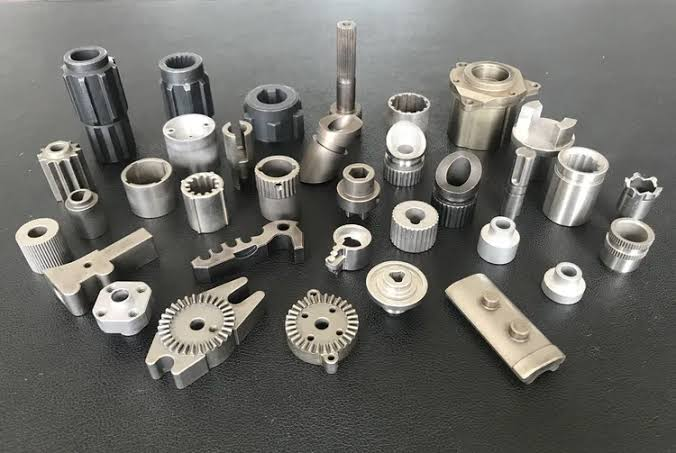
There is a growing expectation on automotive companies to develop better-performing vehicles, decrease manufacturing costs, and follow engineering standards that are constantly changing. These requirements can be met only with the help of technologies that will allow for the manufacturing of precise and accurate parts. Powder metallurgy has proved to be quite helpful in achieving this aim since it provides for creating robust near-net-shape parts without much wastage of material.
During sintering, metal powders are compacted and then heated to form metallic parts that have good dimensional stability and are resistant to wear. This technology has become very important for automotive engineering.
1. Engine and Powertrain Components
The engine and powertrain parts are designed to tolerate the continuous effect of high temperatures, mechanical loads, and friction without impacting their performance. Modern automotive manufacturers prefer using sintered metal products since they can provide good tolerance, wear resistance, and stability in manufacturing. Such properties contribute to increased engine efficiency while ensuring reliable large-scale production.
The sintering technology is used to create many engine parts, such as connecting rods, oil pump rotors, VVT components, sprockets, and valve seat inserts. Many of those parts have a complicated geometry and require additional machining in the case of traditional manufacturing technologies.
High strength-to-weight ratio, fatigue resistance, and stability in properties ensure the reliability of these parts during the entire service life of the car and increase the efficiency of engines.
2. Transmission and Drivetrain Systems
Transmission and drivetrain components are responsible for transferring engine power efficiently while operating under continuous mechanical stress. To ensure that gears engage properly and the vehicle works properly, there is a need for precision in terms of these components.
Through the process of powder metallurgy, it is easy to make transmission components that have good uniformity. With the powder metallurgy process, it becomes easier to avoid machining and save on production time.
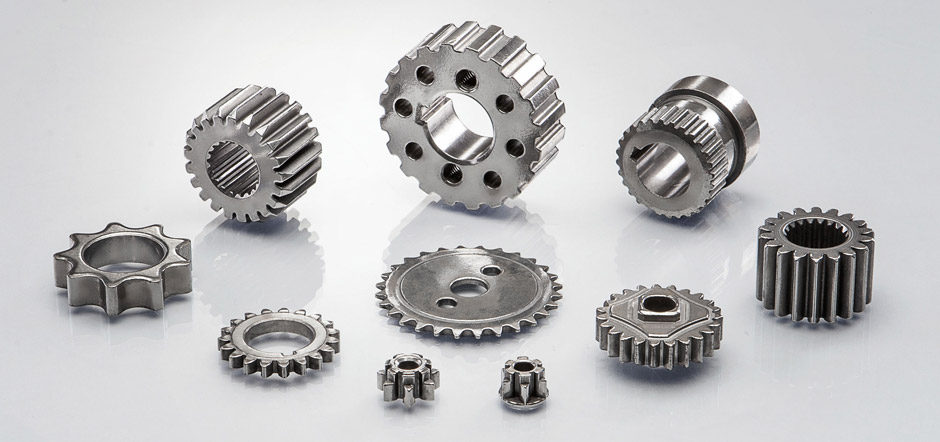
Examples include synchronizer rings, planetary gears, clutch hubs, carriers, and Four Wheel Drive gear shift assemblies. The fatigue strength of sintered metal makes these components strong enough to withstand harsh conditions.
3. Brake and Safety System Applications
The automotive brake and safety systems need components that can withstand high temperatures and friction conditions. The common choice for these systems is sintered metals because of their stability, high wear resistance, and accuracy even in harsh environmental conditions.
Copper, bronze, and iron sintered brake pads offer reliable braking ability along with the capability to resist heat production during the braking process. The constant friction property of sintered materials helps to offer stable performance when vehicles have significant weight and are used extensively.
ABS sensor rings represent another critical area of using sintered materials. These precision-engineered products provide accurate speed control of the wheels to enhance vehicle stability.
4. Bearings, Bushings, and Actuators
The most valuable feature of sintered metals lies in the possibility of engineering controlled porosity through their production process. It means that automotive powder metal components are able to hold the lubricating oil in the pores and gradually discharge it while operating.
It provides for lower friction, decreased wear, and increased longevity without the need for constant servicing. This makes the sintered bearings and bushings especially useful in cases when constant lubrication is problematic.
These components are widely used in steering assemblies, windshield wiper motors, gears, and other moving units in which reliability and longevity are highly important. Shift-by-wire actuators also benefit from the strength, accuracy, and consistency provided by the sintered components.
Thus, the use of such parts helps decrease the overall cost of ownership of the vehicle and increase its reliability.
5. Electric Vehicle Motor Technologies
The increasing use of electric vehicles has made the role of powder metallurgy in the manufacturing of cars quite important. There is a need for lightweight and precise components for the electric vehicle’s powertrain.
Soft Magnetic Composites (SMC) produced using powder metallurgy techniques have gained popularity for use in the rotor and stator parts of electric motors. These composites offer outstanding magnetic qualities, which help in minimizing losses and increasing efficiency.
Sintered materials are also used in sensors and actuators responsible for motor control and power management. Their dimensional accuracy and consistent performance support the reliability of electric drive systems while helping manufacturers meet the demanding performance standards of modern electric vehicles.
As electric mobility continues to advance, sintered metals will remain an essential manufacturing solution for next-generation automotive technologies.
Supporting the Future of Automotive Innovation
The automotive industry requires manufacturing technologies that provide precision, reliability, and high efficiency. Sintered metals always satisfy these demands, providing the ability to create complex parts using a minimum amount of materials, high accuracy, and reliability of mechanical properties. All these factors allow the use of powder metallurgy in the manufacturing of parts for engines, transmissions, brakes, bearings, and other parts used in electric vehicle technologies.
The process of sintering allows the use of material more efficiently and performs fewer secondary machining operations than conventional manufacturing technology. It also allows for ensuring higher dimensional accuracy than most conventional casting processes. That makes sintering very suitable for the manufacturing of complicated parts for automotive applications.
As automotive engineering develops, producers require manufacturing partners who can provide consistent quality, high tolerances, and reliability. Compared with conventional machining suppliers and casting manufacturers, Volunteer Sintered Products can offer a unique powder metallurgy experience, precision manufacturing, and engineering support.
