
Table of Contents
- Smart Outlets and Switches
- Ground Fault Circuit Interrupters (GFCIs)
- Arc Fault Circuit Interrupters (AFCIs)
- Smart Circuit Breakers
- Electrical System Monitoring
- Child-Safe Electrical Outlets
- Regular Electrical Inspections
- Conclusion
Electrical safety is critical for every homeowner. As electrical systems age and homes become filled with more devices, protecting your household from potential hazards is more important than ever. Advances in technology offer innovative solutions to enhance both safety and efficiency. These intelligent devices and monitoring systems are at the forefront of modern home protection strategies, automatically addressing dangers before they become serious threats. Click here if you’re interested in upgrading your own home’s electrical safety through professional electrical services.
Today, adopting innovative technologies for electrical safety goes beyond keeping up with trends—it’s about ensuring the security of every family member and the integrity of your property. This article will guide you through the most effective ways to shield your household using innovative solutions, from monitoring systems to specialized circuit interrupters to childproofing every outlet. Homeowners who implement these strategies benefit not only from improved safety but also enjoy greater convenience and peace of mind.
Smart Outlets and Switches
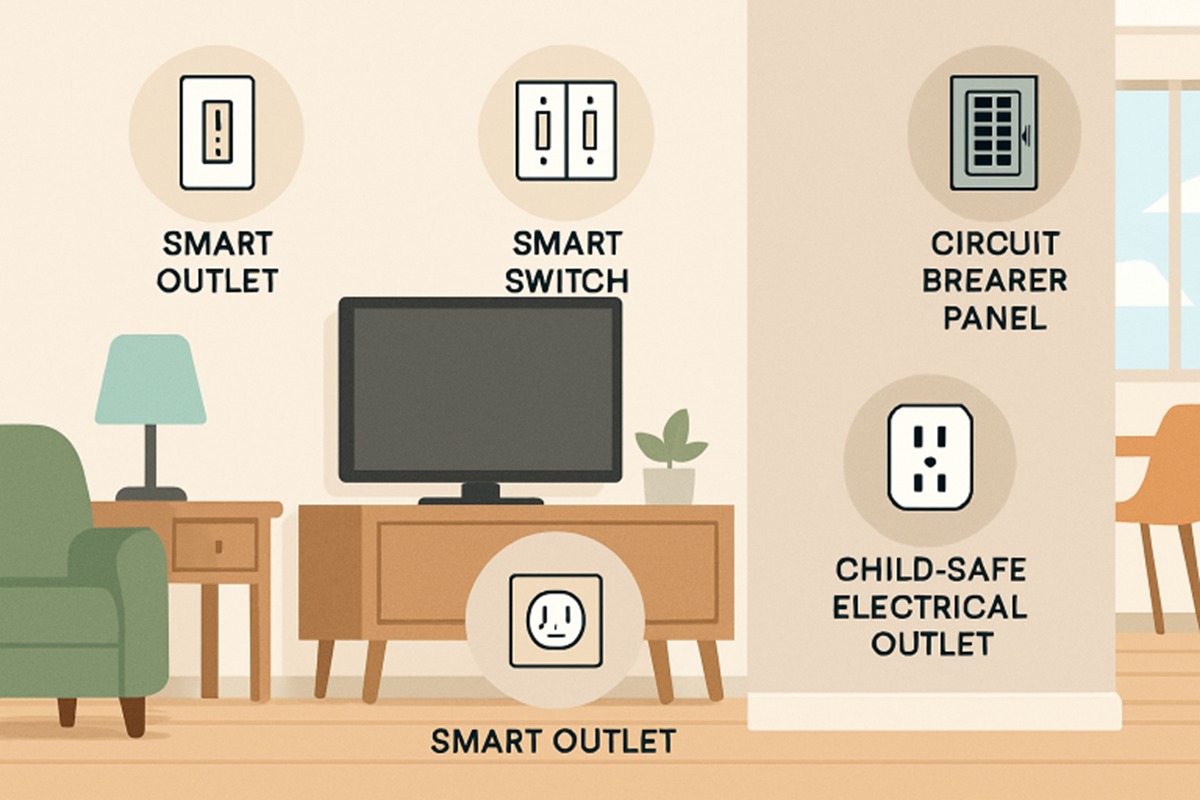
These innovative devices offer enhanced control and oversight for your home’s electrical network. Smart outlets and switches can be programmed to turn off appliances, scheduled to match daily routines automatically, and managed remotely via a smartphone app. More advanced models detect anomalies such as short circuits or unusual temperature rises, cutting power instantly to prevent fire hazards. These features not only enhance safety but also help identify devices drawing excess power, enabling optimized energy use.
Besides providing remote access and safety notifications, smart outlets are an excellent investment for reducing standby power—often referred to as “vampire energy”—which can represent up to 10% of household electricity consumption, according to the U.S. Department of Energy. By eliminating unnecessary power use, homeowners experience significant savings on their energy bills while keeping their homes safer from electrical faults.
Ground Fault Circuit Interrupters (GFCIs)
Essential for modern homes, GFCIs are most commonly found in bathrooms, kitchens, and outdoor areas. These devices instantly cut off electrical flow when they detect an imbalance—such as current diverted by contact with water—dramatically reducing the risk of electric shock. GFCIs help safeguard families against one of the most common causes of household accidents, especially where moisture is present.
It’s vital to regularly test GFCIs according to manufacturer instructions to ensure continuous operation. The Consumer Product Safety Commission recommends pressing the “test” and “reset” buttons monthly as a routine safety practice. When appropriately installed, GFCIs can significantly reduce the risk of sevre shock and associated injuries, making them indispensable in every home.
Arc Fault Circuit Interrupters (AFCIs)
Whereas GFCIs protect against electrical shocks, AFCIs are designed to detect potentially deadly electrical arcs or unwanted sparks in your wiring that can ignite fires behind your walls. As explained by This Old House in its overview of arc-fault circuit interrupters, these devices play an essential role in modern home safety by detecting dangerous arc faults that standard breakers often miss. Electrical failures such as arc faults are responsible for tens of thousands of home fires each year. AFCIs constantly monitor electrical flow and disconnect the circuit within milliseconds when a hazard is detected.
Homeowners should consider updating their electrical panels to include AFCIs in bedrooms, living areas, and other spaces where wiring damage may go unnoticed. These upgrades are especially valuable in older homes where aging insulation and hidden wear can increase fire risk. Installing AFCIs helps prevent electrical fires while adding an essential layer of protection against hazards that might otherwise remain undetected.
Smart Circuit Breakers
Modern circuit breakers have evolved from simple trip switches into sophisticated smart devices. Unlike traditional breakers, innovative models continuously analyze electrical usage, detect overloads or faults, and send instant alerts to your smartphone or other device. This immediate insight allows homeowners to proactively address electrical issues, reducing the risk of fire or equipment damage from surges and faulty appliances.
Integrating surge protectors directly into the smart breaker panel provides additional defense for sensitive electronics against voltage spikes caused by lightning or grid anomalies. Smart circuit breakers make it easy for homeowners to turn off power to specific rooms, troubleshoot issues remotely, and even monitor long-term trends in energy consumption, a valuable step for cost savings and sustainability.
Electrical System Monitoring
Proactive monitoring technologies are emerging as a standard in residential safety. Sensors like Ting and similar products are designed to detect minute electrical faults, such as micro-arcs or overheated wires, often long before visible symptoms appear. Notifications sent to your phone enable early repairs and prevent dangerous incidents. These systems can often be installed with minimal disruption and add a critical layer of intelligence to existing safety precautions.
Unlike occasional inspections, these monitoring tools provide continuous oversight, offering peace of mind to busy families who may miss the early warning signs of electrical trouble. More information on how home sensors can prevent fires is available from the Consumer Reports guide to new fire safety rules. By identifying hidden risks in real time, proactive monitoring helps homeowners address electrical issues before they escalate into costly or life-threatening emergencies. When combined with routine maintenance and safe electrical habits, these technologies significantly strengthen overall home fire prevention efforts.
Child-Safe Electrical Outlets
Safety is essential for households with young children. Traditional outlet covers can easily become choking hazards or be removed by curious toddlers. Child-safe outlets with built-in shutters or magnetic locks stay closed unless a matching plug is used, making it virtually impossible for children to insert foreign objects and receive a shock. This innovation drastically reduces the risk of accidents and makes homes kid-friendly without sacrificing accessibility for adults.
Regular Electrical Inspections
While smart devices enhance everyday safety, regular professional inspections remain essential. Licensed electricians assess the condition of your wiring, check circuit loads, and ensure compliance with the latest building codes. Inspections can uncover hidden issues, such as deteriorating insulation, unsafe repairs, or overburdened circuits, and provide recommendations for upgrades that address potential hazards.
Establishing a schedule for inspections—such as every 3-5 years or after purchasing a new home—ensures ongoing safety, especially in older properties where systems may not meet current standards.
Conclusion
Integrating smart electrical safety solutions is one of the best investments homeowners can make in reducing the risk of fire, electrocution, and property loss. By combining advanced outlets, interrupters, continuous system monitoring, robust circuit breakers, and regular professional inspections, you can create the safest possible environment for your family. Staying informed about evolving safety technology will help you protect not only your home but everyone who lives in it.
