
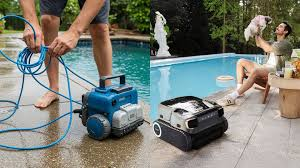
Pool cleaner names can be confusing. One product may be called cordless, another may be called automatic, and another may be described as robotic. To many buyers, they all sound like tools that remove debris from the pool.
The difference is bigger than the name.
A cordless pool vacuum usually means a battery powered tool that helps you clean without a power cord or hose connection. In many cases, you still guide it by hand. A robotic pool cleaner usually means a self contained machine that moves through the pool on its own during a cleaning cycle.
So the real question is not only whether the cleaner has a cord. The better question is how much work you still have to do.
Why These Pool Cleaning Tools Are Easy to Confuse
Pool cleaning terms are not always precise. “Cordless” describes the power setup. “Vacuum” describes debris removal. “Automatic” may describe several types of cleaners. “Robotic” usually means the cleaner has its own movement system and cleaning logic.
That is why two products can look similar online but feel very different in real use. One may require you to stand at the pool edge and guide the cleaning head. Another may run a cleaning cycle while you handle other tasks.
The right choice depends on pool size, debris type, budget, and how much physical cleaning you want to avoid.
What Is a Cordless Pool Vacuum?
A cordless pool vacuum is usually a portable, battery powered cleaning tool. It is often used for quick cleanup in one specific area rather than full routine cleaning.
It works well when you can see the mess and want to remove it fast. For example, it can help with sand on the steps, a few leaves near a corner, dirt in a shallow area, or small debris after children have been playing in the pool.
The main benefit is convenience. You do not need to connect a long hose or manage a power cord. You pick it up, turn it on, and clean the area that needs attention.
The tradeoff is control. In most cases, you still guide the tool. The result depends on how long you use it and how carefully you cover the pool.
What Is a Robotic Pool Cleaner?
A robotic pool cleaner is more automated. It usually has its own motor, filter basket, brushes, movement system, and cleaning cycle. Instead of relying on constant user control, it moves and collects debris by itself.
For buyers comparing a pool sweeper with more advanced robotic options, the key difference is how much of the cleaning still depends on manual control. A basic tool may help remove debris, but a robotic cleaner can reduce the repeated physical work that comes with routine pool care.
Modern robotic cleaners may clean the pool floor, walls, and waterline. Some models also help with surface debris. They are designed for regular maintenance, especially when homeowners do not want to manually vacuum every week.
A robotic cleaner usually costs more upfront than a basic cordless vacuum, but it can save more time and effort for busy families, larger pools, and pools that collect debris often.
The Biggest Difference Is Automation
The biggest difference between these tools is automation.
A cordless vacuum saves setup time. A robotic cleaner saves cleaning labor.
That distinction matters. If you only need to remove a small patch of sand from the steps, a cordless vacuum may be enough. If you want the pool floor, walls, waterline, and surface areas handled as part of a regular routine, a robot is usually the better fit.
A cordless vacuum still asks you to guide the work. A robotic cleaner is built to do more of the movement and coverage on its own. That is why the right choice depends less on the word “cordless” and more on how much hands on cleaning you want to keep doing.
Cleaning Coverage: Spot Cleaning vs Whole Pool Cleaning
Coverage is where many buyers make the wrong assumption. A cordless vacuum can be helpful, but it does not always replace whole pool cleaning.
A cordless vacuum is useful for targeted messes. It is practical when debris is limited to one area, such as steps, corners, shallow ledges, or a small section of the floor.
A robotic cleaner is better for repeated full cycles. It is designed to reduce the need for manual vacuuming and brushing across more of the pool. This matters if your pool has a larger floor area, walls, a long waterline, slopes, or debris that returns every few days.
Pool shape also affects the choice. A simple rectangular pool may be easier to manage with basic tools. A freeform pool, sloped floor, or pool with more wall and waterline buildup usually makes automation more valuable.
Where Beatbot Sora 70 Fits Between Cordless Convenience and Robotic Cleaning
Beatbot Sora 70 is a practical example of how cordless convenience can move closer to robotic cleaning. It is a good fit for homeowners who like the freedom of a cordless tool but want more automation than a handheld vacuum can provide. Instead of asking the user to guide every movement, Sora 70 supports broader cleaning across pool areas such as the water surface, floor, walls, and waterline.
This makes sense for families dealing with leaves, pollen, small bugs, grass clippings, floor dirt, and shallow area debris after regular use. A parent may not want to manually clean the pool before every swim, and a busy homeowner may not want to spend the weekend pushing a vacuum head around the pool. For someone comparing a cordless pool cleaner, Sora 70 shows the difference between quick manual cleanup and a more automated routine.
Beatbot Sora 70 still has limits. It helps reduce physical cleaning work, but it does not replace chlorine, pH, or alkalinity testing. It does not replace the main filtration system, filter maintenance, adult supervision, large debris removal, or professional pool repair.
Which One Should You Buy?
Choose a cordless pool vacuum if your pool is small, your debris is occasional, or you mainly need quick spot cleaning. It can also make sense for spas, shallow areas, steps, and corners where dirt gathers after use.
Choose a robotic pool cleaner if you want routine cleaning with less physical effort. It is usually the better choice for busy households, larger pools, pools with walls and waterline buildup, or yards with frequent leaves, pollen, and insects.
Some owners may use both. A robot can handle regular cleaning cycles, while a cordless vacuum can remain available for quick touch ups before guests arrive or after a windy day.
Budget matters too. If you are cost sensitive and do not mind manual work, starting with a cordless vacuum may be reasonable. If your main goal is reducing weekly labor, a robotic cleaner is usually the better long term tool.
The Best Choice Depends on Your Maintenance Style
A cordless pool vacuum is quick, portable, and hands on. A robotic pool cleaner is more automated, broader in coverage, and better suited to routine maintenance.
Neither name is automatically better. The right tool depends on your pool and your habits. If you like handling small cleanup jobs yourself, a cordless vacuum may fit your routine. If you want the cleaner to do more of the work while you focus on other parts of pool care, a robotic cleaner makes more sense.
The difference is not just power cord versus no cord. It is manual control versus automated cleaning logic. Once you understand that, choosing the right pool cleaning tool becomes much easier.
read more : 8 Simple Steps to Safer Roads in Massachusetts
