
Navicular issues are among the most concerning soundness challenges faced by horse owners, trainers, and riders. While formerly the term “navicular disease” was commonly utilized, experts now refer to these conditions as equine navicular symptoms or navicular syndrome, as the problem tends to involve not just the navicular bone but also adjacent tendons, ligaments, and soft tissues of the hoof.
Recognizing the early signs is crucial to ensuring your horse’s comfort and performance with the guidance of a veterinarian or farrier to develop a proper management strategy.
Knowing the Navicular Apparatus
The navicular apparatus is a small but vital piece of anatomical architecture that resides within the hoof of the horse, directly behind the coffin bone. It is comprised of the navicular bone, the deep digital flexor tendon, and the ligaments that support the region and stabilize it. Together, they act as a shock absorber for the horse to enable movement and carry weight efficiently.
Over time or with repeated strain, these tissues can become stressed, inflamed, or degenerated—leading to equine navicular syndrome that can affect movement, balance, and comfort.
Intermittent Front-Limb Lameness
One of the first and most common symptoms of navicular issues is occasional front-limb lameness. It may begin subtly—your horse is “off” following riding or demonstrating unevenness that comes and goes.
This irregular pattern occurs as the discomfort may change with exercise level, terrain, or hoof condition. Both front legs are typically involved normally, though one will show sooner than the other.
Riders also report that the horse will also tighten its stride, especially on hard ground or when turning.
Pointing or Alternating Front Feet
Horses that are in pain from the navicular area will try to shift their weight in an attempt to find relief. One of the behaviors exhibited is “pointing” a front leg—placing one leg out ahead and keeping the heel on the ground. The horse will then, over time, switch legs, moving from one leg to the other, shifting which leg bears more of its weight.
This subtle shift in position is a move to get rid of tension along the back of the hoof, where the navicular bones are located. The standing position of your horse can betray such preconditions.
Shortened or Choppy Stride
A reduced stride especially noticeable in the trot is a typical sign of navicular pain. The horse will appear to be hesitant to place its heels on the ground, preferring to place more pressure on the toes so as not to cause stress in the back of the hoof.
This toe-first landing alters the natural gait of the horse, leading to a less fluid, choppy motion. Compensation for pain in this way over time places additional stresses on the shoulders and upper joints.
Difficulty Turning or Circling
Horses showing equine navicular symptoms can resist circling or turning sharply, particularly on hard or rocky ground. The extra stress to the inside front hoof will compound pain and respond in resistance to bending, stumbling, or even tripping.
While being ridden, it may present as stiffness in one plane, difficulty maintaining balance, or refusal to execute some maneuvers.
Toe-Wearing and Hoof Shape Changes
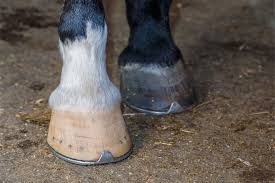
Close inspection of your horse’s hooves will also indicate signs of impending navicular strain. Navicular horses tend to land on their toes, so the toe area in front of it will be more worn than the heels. Over time, heels will begin to contract or become underrun and make the angle of the hoof more acute.
Farriers may occasionally notice that the frog region is diminished or that the digital cushion is poorly developed both indicators of asymmetrical weight bearing. A consistent hoof checkup can detect such alterations before they progress further.
Sensitivity to Hoof Testing or Flexion
Horses suffering from navicular pain will typically react on a veterinary or farrier check when their heel area is pushed. Back-of-the-foot sensitivity, where the navicular bone and deep flexor tendon reside, can be revealed through application of hoof testers.
Flexion tests, flexing the leg and holding it in a bent position for several seconds prior to trotting, may also elicit minor lameness. These tests are extremely helpful in determining the cause of pain.
Refusal to Move Forward
A navicular painful horse may be resistant or apprehensive under saddle. The rider will say the horse is “lazy” or “stubborn,” when in fact it’s attempting to protect the affected structures by restricting motion.
Typical changes in behavior might include:
- Resisting stopping or collecting
- Head bobbing, especially at the trot
- Resisting collecting or holding a canter
- General unwillingness to move forward willingly
Because these behaviors can be misleading training or attitude issues, it is important to investigate potential physical causes first before blaming behavior resistance.
Shifting Weight or Resting Frequently
Another subtle sign of equine navicular syndrome is repeated weight shifting while standing. Horses will go back to lifting and setting down a single front hoof over and over again, moving weight from leg to leg in an attempt to reduce pressure. This action often becomes more noticeable following prolonged standing, i.e., in the stall or during grooming.
Observing your horse’s stance patterns and shoe wear can yield important indicators of emerging problems before they cause notable lameness.
Early Identification and Veterinary Evaluation
The sooner equine navicular signs are detected, the greater the likelihood of maintaining your horse’s long-term mobility. Diagnostic procedures like nerve blocks, radiographs, or MRI scans can be performed by a veterinarian to determine the level of changes in the navicular region.
Working alongside a seasoned farrier is also paramount. Balanced trimming and corrective shoeing will help balance the hoof, improve weight-bearing distribution, and reduce strain on affected structures.
Encouraging proper conditioning, turnout time, and footing management also helps to maintain hoof soundness.
Supporting Overall Joint and Hoof Health
Extended joint and hoof maintenance are key considerations in the management of horses prone to navicular problems. Frequent farrier intervention, sound exercise routines, and a well- balanced diet are top priorities for most owners as part of a holistic management approach.
Other horse owners also look for nutritional solutions to support joint and connective tissue health. OptiWize Collagen Plus may be used as a horse joint supplement to a complete wellness regimen, together with the advice of a veterinarian and farrier.
Final thoughts
Understanding and identifying equine navicular symptoms periodic lameness, shorter steps, or changes in the shape of the hoof are methods through which horse owners might take proactive steps towards responsible care. By combining attentive observation with professional support, you can help your horse maintain mobility, balance, and overall well-being over time.
