
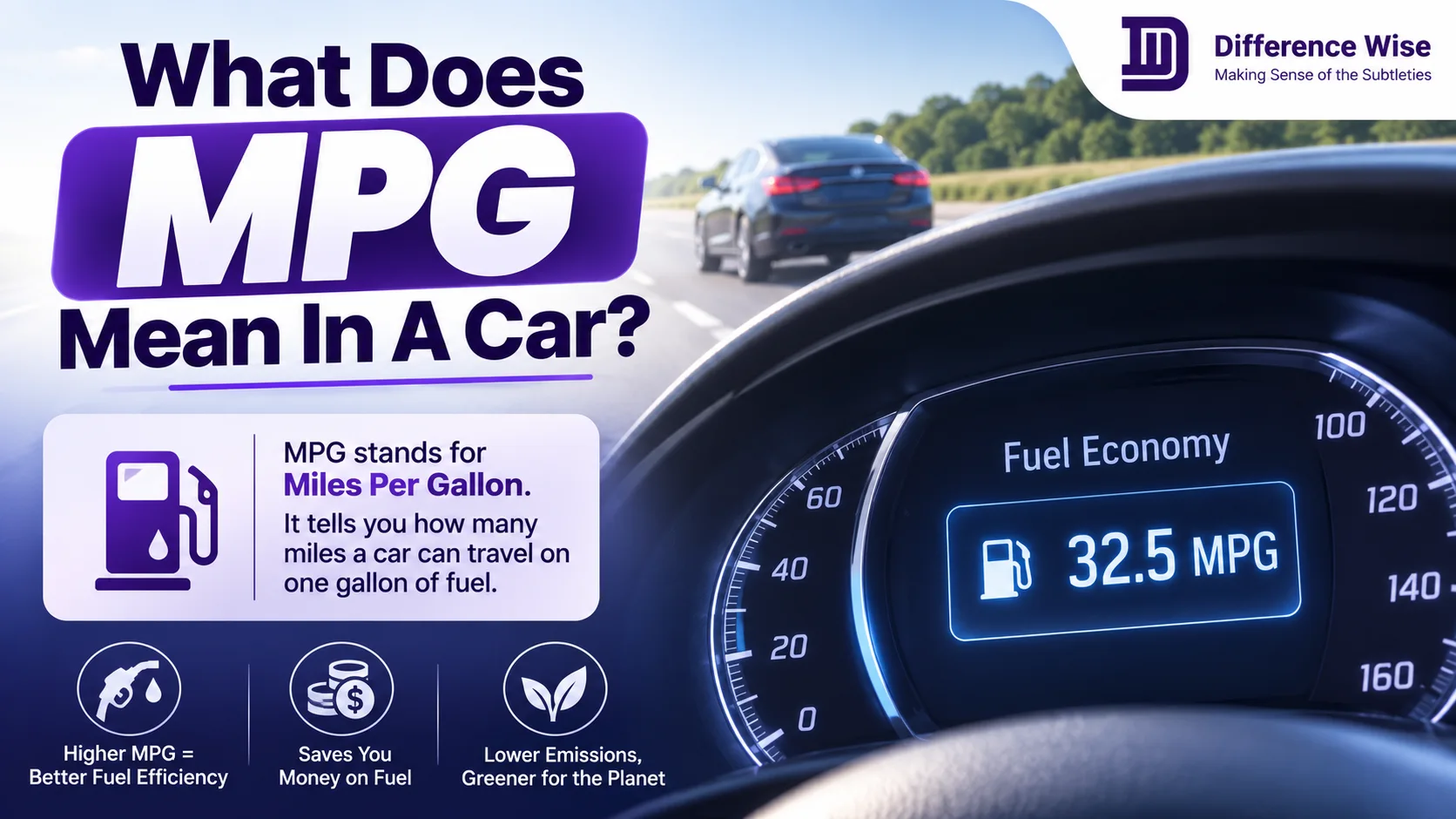
Shopping for a new vehicle involves learning many confusing terms and technical acronyms. Many drivers constantly wonder what does mpg mean in a car. It stands for miles per gallon. This simple measurement shows how far your vehicle travels using a single gallon of gasoline. A higher number always indicates better fuel efficiency. Better efficiency means you spend far less money at the gas station. It also means you leave a much smaller carbon footprint behind over time.
Understanding this basic metric changes how you approach buying your next daily driver. Fuel economy directly impacts your monthly transportation budget heavily. It matters whether you buy a massive truck or a compact Toyota Prius. We will break down exactly how this number gets calculated for modern vehicles. You will learn the difference between highway driving and stop-and-go city traffic. We will also explain how electric vehicles use a similar rating system today.
Understanding The Testing Process
The Environmental Protection Agency
The Environmental Protection Agency controls how these official ratings are determined. Automakers cannot simply guess their own fuel economy numbers for advertising purposes. The government runs vehicles through very specific laboratory testing procedures. They place the car on a specialized treadmill device called a dynamometer. This machine simulates normal driving conditions in a highly controlled indoor environment.
City Versus Highway Ratings
Your window sticker displays different numbers for city and highway driving. City driving burns much more fuel because you constantly stop and idle. Traffic lights and heavy congestion force the engine to work much harder. Highway driving allows the car to maintain a steady speed over long distances. This consistent momentum requires significantly less engine effort, resulting in higher efficiency.
Calculating Combined Efficiency
The window sticker also displays a large combined fuel economy number. This single number helps buyers quickly compare different vehicles on the dealership lot. The government calculates this by assuming a specific mix of daily driving habits. They weigh city driving at fifty-five percent and highway driving at forty-five percent. This combined rating offers a realistic expectation for the average daily commuter.
Factors That Alter Real World Performance
Vehicle Weight And Aerodynamics
Physical size completely changes how much fuel a modern vehicle consumes. Heavy SUVs require massive amounts of energy just to get moving from a stop. They also suffer from severe aerodynamic drag at higher highway speeds. Conversely, a small sedan cuts through the air easily with very little resistance. Removing heavy junk from your trunk can actually improve your daily gas mileage.
Your Personal Driving Habits
How you press the gas pedal matters more than you might think. Aggressive acceleration burns fuel incredibly fast compared to slow, smooth starts. Heavy braking also forces you to waste energy regaining your lost momentum. Maintaining a steady speed helps the engine operate in its most efficient range. Using cruise control on open highways often improves your overall fuel economy noticeably.
Weather And Air Conditioning
Outside temperatures greatly affect how efficiently your internal combustion engine runs. Running the air conditioner at full blast drains extra power from the engine. This extra mechanical load forces the car to burn more gasoline immediately. Extremely cold weather also reduces efficiency because the engine takes longer to warm up. Driving with the windows down creates drag, which also hurts your highway performance.
Tracking Your Own Gas Mileage
The Manual Calculation Method
You can easily calculate your actual fuel economy without any special tools. First, fill your gas tank completely to the top until the pump clicks. Then, reset your dashboard trip odometer back to zero before leaving the station. Drive normally for a few days until you need fuel again. This gives you a clear baseline for your daily commute.
Finishing The Math
Return to the gas station and fill the tank completely again. Look at your receipt to see exactly how many gallons you just purchased. Next, check the trip odometer to see how many miles you drove. Divide the total miles driven by the gallons of fuel you bought. This final number is your true, real-world miles per gallon average.
Learning New Terms
Owning a car introduces you to many new concepts and strange abbreviations. Sometimes, learning technical car terms feels like learning a new language. You might even find yourself looking up what does stsu mean during late-night internet searches. Similarly, understanding mechanical terms helps you manage your vehicle properly. Knowing your fuel efficiency helps you spot early engine problems quickly.
Electric Vehicles And MPGe
The Equivalent Measurement
Electric vehicles do not use liquid gasoline to power their motors. Therefore, the traditional measurement system simply does not work for them. The government created a new standard called miles per gallon equivalent, or MPGe. This allows buyers to compare a Tesla directly against a traditional gas car. It creates a level playing field for completely different engine technologies.
How Energy Gets Calculated
Electricity gets measured in kilowatt-hours rather than physical gallons of liquid. Experts determined that one gallon of gas equals about 33.7 kilowatt-hours of energy. The testing facility measures how far an electric car travels using that exact energy amount. This complicated math results in the MPGe number displayed on the window sticker. Electric vehicles usually score incredibly high on these standardized efficiency tests.
Comparing Costs And Values
Buying an electric car changes how you view monthly transportation expenses entirely. Calculating home charging costs requires a bit of extra research and basic math. It feels a bit like researching what does spwm mean when studying complex electronics. However, the long-term savings often justify the higher initial purchase price. Electricity generally costs much less than liquid fuel in most areas.
The Impact Of Vehicle Selection
Budgeting For Fuel Costs
Gas prices fluctuate constantly based on global markets and local supply chains. Buying a fuel-efficient car protects your wallet from sudden price spikes. A hybrid vehicle combines a gas engine with an electric motor for maximum savings. This technology drastically lowers your fuel consumption during heavy city traffic. You spend more time driving and less time standing at the pump.
Buying A Turnkey Option
Some buyers want a vehicle that needs absolutely no extra work. They want a reliable car, much like finding a perfect new house. Real estate buyers often ask what does move in ready mean before purchasing a home. In the car world, buying a highly efficient, brand-new model offers similar peace of mind. You simply turn the key and drive without worrying about immediate mechanical repairs.
Global Measurement Differences
The United States stands mostly alone in using this specific measurement system. Other countries use the metric system to track their fuel efficiency. They measure how many liters of fuel are needed to drive one hundred kilometers. Instead of distance per volume, they measure volume per required distance. It requires completely different math to translate those foreign numbers accurately.
FAQs
What is considered a bad mpg?
Anything below fifteen miles per gallon is generally considered very poor today. Massive trucks and older sports cars typically fall into this low category.
Does engine size affect fuel economy?
Yes, larger engines naturally burn more fuel to generate their extra horsepower. Smaller engines use less fuel but often provide much less overall acceleration.
Why is city driving less efficient?
Idling at red lights burns fuel without moving the vehicle forward at all. Constantly accelerating from a dead stop requires massive amounts of engine energy.
What does DTE mean on a dashboard?
DTE stands for distance to empty on your digital dashboard display. It estimates how many miles you can drive before running completely out of gas.
How does cruise control help efficiency?
Cruise control maintains a steady, constant speed without unnecessary throttle changes. This smooth operation prevents you from wasting fuel through aggressive, manual pedal inputs.
Final Takeaways
Understanding your vehicle’s fuel efficiency helps you make much smarter financial decisions. It shows you exactly how much money you burn during your daily commute. The testing process provides a standardized baseline for comparing completely different cars easily. However, your personal driving habits will always dictate your actual real-world results. Smooth driving and proper vehicle maintenance keep your engine running at peak efficiency. Electric vehicles offer incredible savings by utilizing battery power instead of expensive liquid gasoline. Whether you drive a truck or a hybrid, tracking your fuel consumption remains essential. Pay close attention to these numbers the next time you visit a car dealership.
