
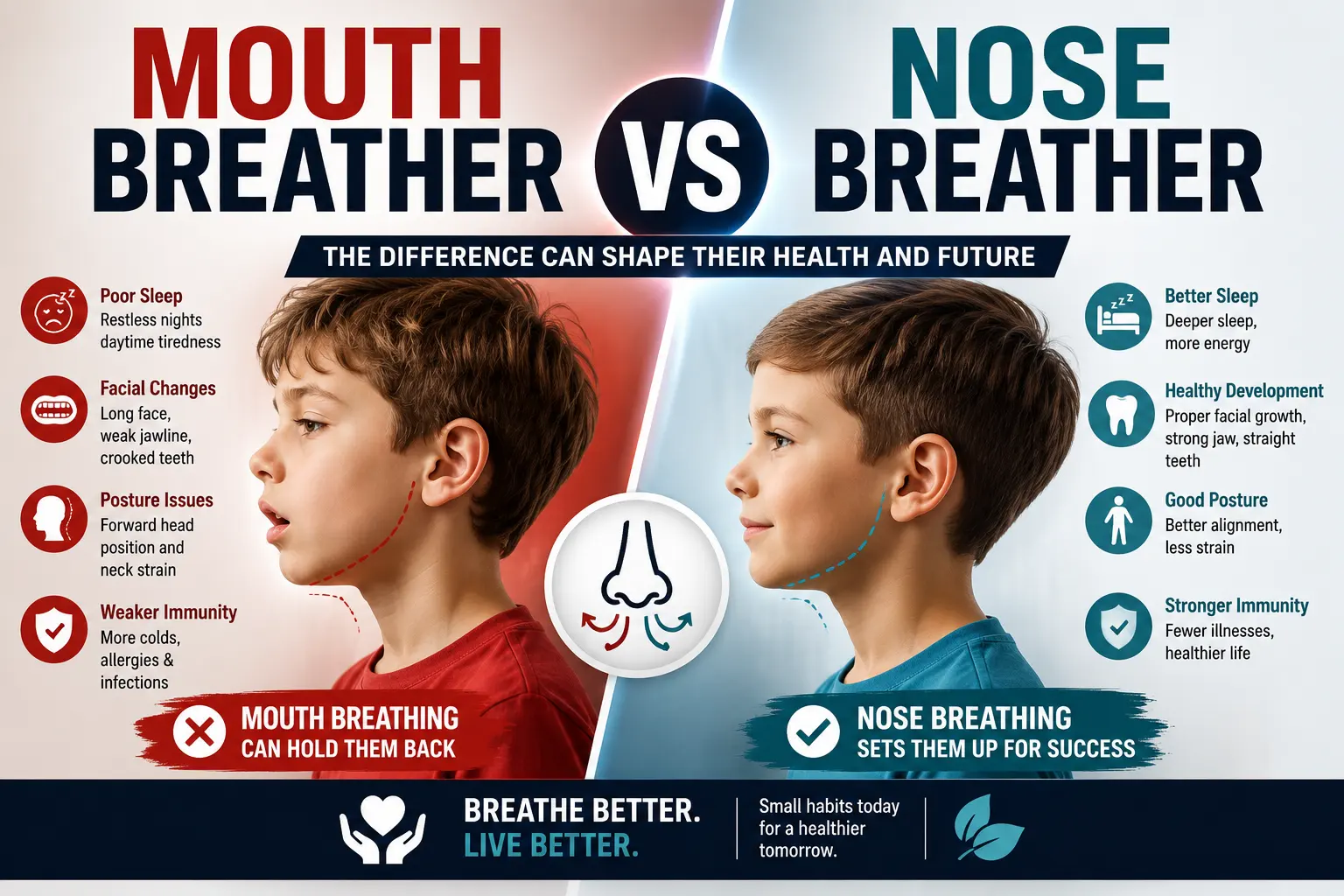
Mouth breather vs nose breather is a useful comparison because the way you breathe can affect your sleep, oral health, and overall comfort. Nasal breathing is usually the normal breathing pattern at rest, while mouth breathing can happen when nasal airflow is restricted.
Occasional mouth breathing is not always a problem, especially during intense exercise or temporary congestion. However, frequent mouth breathing during the day or while sleeping can point to an underlying issue that may need attention.
What Is A Nose Breather?
What Does Nasal Breathing Mean?
Nasal breathing means inhaling and usually exhaling through the nose. The nasal passages do more than provide a route for air to enter the lungs.
The nose helps filter, warm, and humidify incoming air before it reaches the lower respiratory system. Nasal tissues also contribute to the production of nitric oxide, which plays several roles in respiratory physiology.
For most people, breathing through the nose is the usual pattern when resting. People may naturally switch to mouth breathing when they need more airflow or cannot breathe comfortably through the nose.
Why Is Nose Breathing Important?
The structure of the nose helps prepare air for the respiratory tract. Tiny hairs, mucus, and nasal tissues help trap particles before they travel farther into the airway.
Nasal breathing also helps maintain moisture in the mouth and surrounding tissues. This can be useful because saliva protects the teeth and helps maintain a healthy oral environment.
The nose can also provide more resistance than the mouth, which influences how air moves through the upper airway.
Is Nasal Breathing Always Better?
Nasal breathing is generally preferred during normal rest when a person can breathe comfortably through the nose. However, that does not mean mouth breathing is always harmful.
During intense exercise, the body’s demand for oxygen and ventilation increases. Switching to mouth or combined mouth-and-nose breathing can therefore be a normal response.
The main concern is persistent mouth breathing without an obvious temporary reason.
What Is A Mouth Breather?
What Does Mouth Breathing Mean?
Mouth breathing occurs when someone regularly uses the mouth as a major route for breathing. It can happen while awake, asleep, or both.
A person may begin mouth breathing because the nose feels blocked or because nasal airflow is difficult. Over time, the habit can continue even after the original congestion improves.
Frequent mouth breathing can therefore be a sign rather than the root problem.
What Causes Mouth Breathing?
Several conditions can make nasal breathing difficult. Common causes include allergies, chronic congestion, sinus problems, a deviated septum, nasal polyps, and enlarged nasal tissues.
Children may also develop mouth breathing because of enlarged tonsils or adenoids. Sleep-disordered breathing can be another factor, especially when mouth breathing occurs during sleep.
Identifying the underlying cause is usually more useful than simply trying to force the mouth closed.
Is Occasional Mouth Breathing Normal?
Yes. People can breathe through their mouths during strenuous exercise, temporary illness, or periods of nasal congestion.
A cold can temporarily block the nasal passages and make mouth breathing easier. Allergies can have a similar effect when they cause significant nasal swelling.
Occasional mouth breathing should therefore be distinguished from a persistent breathing pattern.
Mouth Breather Vs Nose Breather: Main Differences
Breathing Route
The clearest difference is the route air takes. A nose breather primarily uses the nasal passages, while a mouth breather frequently uses the mouth.
Nasal breathing allows air to pass through structures that filter, warm, and humidify it. Mouth breathing bypasses much of this nasal conditioning.
Neither pattern is completely fixed because healthy people can switch between them when circumstances change.
Effects On The Mouth
Frequent mouth breathing can cause the mouth to become dry. This happens because continuous airflow can increase moisture loss from oral tissues.
Dry mouth can contribute to an unpleasant feeling and may increase conditions associated with bad breath. Reduced moisture can also affect the oral environment that helps protect teeth and gums.
Good oral hygiene remains important regardless of breathing pattern.
Breathing During Sleep
Mouth breathing is common in people who have difficulty maintaining comfortable nasal airflow during sleep. Snoring, dry mouth after waking, drooling, and restless sleep can sometimes accompany it.
Mouth breathing can also occur alongside obstructive sleep apnea. However, mouth breathing by itself does not prove that someone has sleep apnea.
Persistent loud snoring, breathing pauses, gasping, or significant daytime sleepiness should be evaluated by a healthcare professional.
Mouth Breathing And Oral Health
Dry Mouth
One of the most noticeable effects of habitual mouth breathing is dryness. People may wake up with a dry mouth even when they had no symptoms during the day.
Saliva plays an important role in protecting teeth and maintaining oral health. Reduced moisture can make the mouth more favorable to problems such as unpleasant breath and tooth decay.
Persistent dry mouth should therefore not be ignored.
Bad Breath
Mouth breathing can contribute to bad breath by drying oral tissues. A dry environment can affect the balance of bacteria and compounds responsible for unpleasant odors.
However, bad breath has many possible causes. Gum disease, dental decay, certain foods, smoking, medications, and other conditions can also contribute.
A dentist can help identify persistent oral causes.
Cavities And Gum Health
Research has linked chronic mouth breathing with increased oral health problems, including dental caries and periodontal concerns. The relationship is influenced by factors such as saliva, oral hygiene, diet, and the underlying cause of mouth breathing.
Mouth breathing should not be treated as the only cause of cavities or gum disease. Instead, it can be one factor that changes the oral environment.
Regular brushing, flossing, fluoride use, and dental checkups remain important.
Mouth Breathing In Children
Why Children Need Attention
Persistent mouth breathing can deserve particular attention in children because their facial bones and teeth are still developing. Chronic airway problems can affect sleep, breathing patterns, and oral function.
Studies have found associations between habitual mouth breathing and certain facial and dental characteristics. These findings do not mean mouth breathing alone causes every facial change.
Genetics, allergies, airway structure, oral habits, and other factors can also influence development.
Does Mouth Breathing Change The Face?
Research has associated chronic mouth breathing in children with features such as a narrow upper dental arch, increased lower facial height, and certain bite patterns.
The popular phrase “mouth breather face” is sometimes used to describe these features. It is not a medical diagnosis and should not be used to judge a child’s health from appearance alone.
If a child regularly keeps their mouth open, snores, or struggles to breathe through the nose, professional evaluation can help identify the cause.
Can Children Stop Mouth Breathing?
The best approach depends on why the child is mouth breathing. Allergies, enlarged adenoids, enlarged tonsils, nasal obstruction, and sleep-related breathing problems may require different treatments.
A pediatrician or ear, nose, and throat specialist can assess possible airway problems. Dentists and orthodontists may also become involved when dental or facial development is affected.
Treating the underlying problem is usually more useful than simply telling a child to keep their mouth closed.
Mouth Breathing And Exercise
Is Mouth Breathing During Exercise Normal?
Yes. Mouth breathing during intense exercise can be completely normal.
As exercise intensity rises, the body needs to move larger amounts of air. Breathing through the mouth can help increase airflow when nasal breathing alone is not enough.
For this reason, athletes should not assume that every instance of mouth breathing is a sign of poor health.
Should You Always Breathe Through Your Nose?
No. There is no universal need to force nasal breathing during every workout.
Nasal breathing can be comfortable during lower-intensity activity, but harder exercise may naturally require mouth or combined breathing. The appropriate pattern can change as exercise demands increase.
Difficulty breathing through the nose at rest is a different issue and may deserve further evaluation.
How To Tell If You Are A Mouth Breather
Daytime Signs
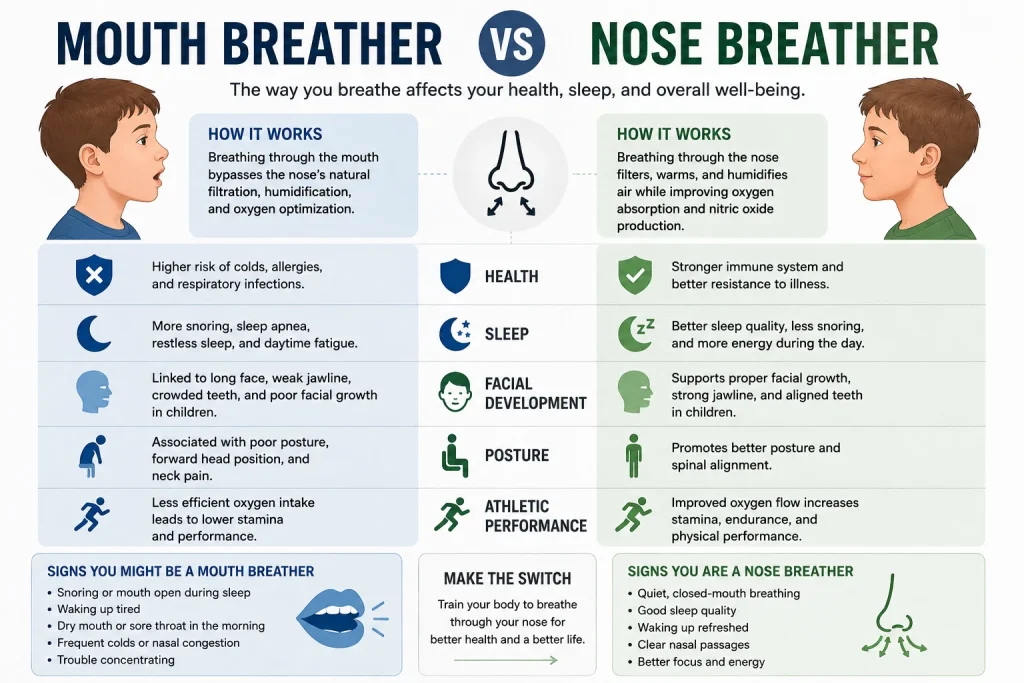
Several signs can suggest habitual mouth breathing. These include frequently keeping the mouth open, dry lips, dry mouth, nasal congestion, and difficulty breathing through the nose.
Some people also experience throat dryness or bad breath. These signs can have other causes, so they do not confirm mouth breathing by themselves.
Paying attention to your normal breathing pattern can provide a useful starting point.
Nighttime Signs
Nighttime clues can be easier for another person to notice. Sleeping with an open mouth, snoring, drooling, dry mouth after waking, and restless sleep can all occur with mouth breathing.
Morning headaches and daytime tiredness may also occur when mouth breathing is connected with poor sleep. However, these symptoms can have many causes.
If symptoms are persistent, a healthcare professional can determine whether a sleep or airway problem is involved.
When Should You Get Checked?
Persistent mouth breathing deserves attention when it occurs regularly without temporary congestion or intense exercise. It is particularly worth discussing with a professional when it affects sleep or occurs in a child.
A blocked nose, frequent snoring, breathing pauses, gasping during sleep, or significant daytime sleepiness are useful reasons to seek evaluation. The same applies to ongoing dry mouth or recurring dental problems.
Finding the underlying cause can make treatment much more effective.
How To Improve Nasal Breathing
Treat Nasal Congestion
If congestion is preventing nasal breathing, treating its cause may improve airflow. Allergies, infections, and chronic nasal inflammation can all contribute to obstruction.
Depending on the cause, treatment may involve medications or other approaches recommended by a healthcare professional. People with persistent congestion should not rely on temporary fixes indefinitely.
Clear nasal passages make normal nasal breathing much easier.
Address Structural Problems
A deviated septum, enlarged turbinates, nasal polyps, or enlarged adenoids can restrict airflow. These conditions may require evaluation by an appropriate medical professional.
Treatment depends on the condition and its severity. Some problems respond to medication, while others may require a procedure.
The goal is to restore comfortable nasal airflow rather than simply suppress mouth breathing.
Be Careful With Mouth Taping
Mouth taping has become popular online as a way to encourage nasal breathing during sleep. However, current evidence does not support using it as a universal treatment.
It may also be inappropriate for people with nasal obstruction or certain breathing disorders. Anyone considering it should first discuss persistent nighttime mouth breathing with a healthcare professional.
Treating the reason for mouth breathing is generally more sensible than covering up the symptom.
Mouth Breather Vs Nose Breather Compared With Other Differences
Why Definitions Matter
Some comparisons are easier to understand when the terms are placed side by side. For example, turquoise can appear blue or green depending on its shade, lighting, and surrounding colors.
Mouth breathing and nasal breathing also exist on a spectrum. A person can primarily breathe through the nose while occasionally using the mouth.
The important distinction is the frequency, situation, and reason for the breathing pattern.
Related Health Comparisons
Healthcare terms often describe related but separate functions. For example, Pepcid and Tums can both be used for certain digestive symptoms, but they work differently.
The same principle applies here. Mouth and nose breathing both move air into the respiratory system, but the two routes have different effects and are used under different circumstances.
Understanding the purpose and context makes these comparisons easier.
Why Context Matters
Not every difference means that one option is always good and the other is always bad. A similar distinction appears when comparing a tornado warning and tornado watch, because each term describes a different situation and level of concern.
Mouth breathing during a hard workout can be normal, while persistent mouth breathing during sleep may warrant investigation. Context is therefore essential when judging a breathing pattern.
FAQs
Is Nose Breathing Better Than Mouth Breathing?
Nasal breathing is generally preferred during rest because the nose filters, warms, and humidifies incoming air. Mouth breathing can be normal during intense exercise or nasal congestion.
Is It Bad To Be A Mouth Breather?
Occasional mouth breathing is not necessarily harmful. Persistent mouth breathing can contribute to dry mouth and may indicate an underlying nasal or sleep-related problem.
Why Do I Breathe Through My Mouth At Night?
Nasal congestion, allergies, structural nasal problems, enlarged tissues, and sleep-disordered breathing can contribute to nighttime mouth breathing. Identifying the cause is important when the pattern happens regularly.
Can Mouth Breathing Change Your Face?
Chronic mouth breathing in children has been associated with certain facial and dental changes. However, research does not show that mouth breathing alone causes every such change.
Does Mouth Breathing Cause Cavities?
Chronic mouth breathing can contribute to oral dryness, which may increase factors associated with dental decay. Diet, hygiene, saliva, and other oral health factors also matter.
Does Mouth Breathing Cause Bad Breath?
It can contribute to bad breath by drying the mouth. Persistent bad breath can also result from dental disease, gum problems, certain foods, medications, or other conditions.
Is Mouth Breathing During Exercise Normal?
Yes. During intense exercise, increased ventilation needs can make mouth or combined mouth-and-nose breathing normal.
How Can I Stop Mouth Breathing?
The first step is finding the reason it happens. Treating allergies, congestion, nasal obstruction, or other underlying problems may help restore comfortable nasal breathing.
Is Mouth Taping Safe?
Mouth taping is not a universal treatment for mouth breathing. It can be risky when nasal airflow is restricted, so persistent nighttime mouth breathing should be discussed with a healthcare professional.
When Should I See A Doctor For Mouth Breathing?
Consider an evaluation when mouth breathing is persistent or occurs with loud snoring, breathing pauses, gasping, chronic congestion, or significant daytime sleepiness. Children with regular mouth breathing should also be assessed when symptoms persist.
Final Takeaways
Nasal breathing is generally the normal breathing pattern when a person is resting, while mouth breathing can occur when nasal airflow is restricted or breathing demands increase. The nose filters, warms, and humidifies incoming air, while frequent mouth breathing can dry the mouth and contribute to oral health concerns. Occasional mouth breathing during exercise or temporary congestion is usually different from habitual mouth breathing.
Persistent mouth breathing can be linked to allergies, nasal obstruction, enlarged adenoids or tonsils, structural problems, and sleep-related breathing disorders. Children may need particular attention because chronic mouth breathing has been associated with certain dental and facial development patterns. Still, these changes have multiple possible causes, so mouth breathing should not automatically be blamed.
The most useful approach is to identify why mouth breathing occurs and address that cause. If breathing through the nose is difficult, or if mouth breathing affects sleep, oral health, or a child’s development, a healthcare professional can help determine the next step.
