
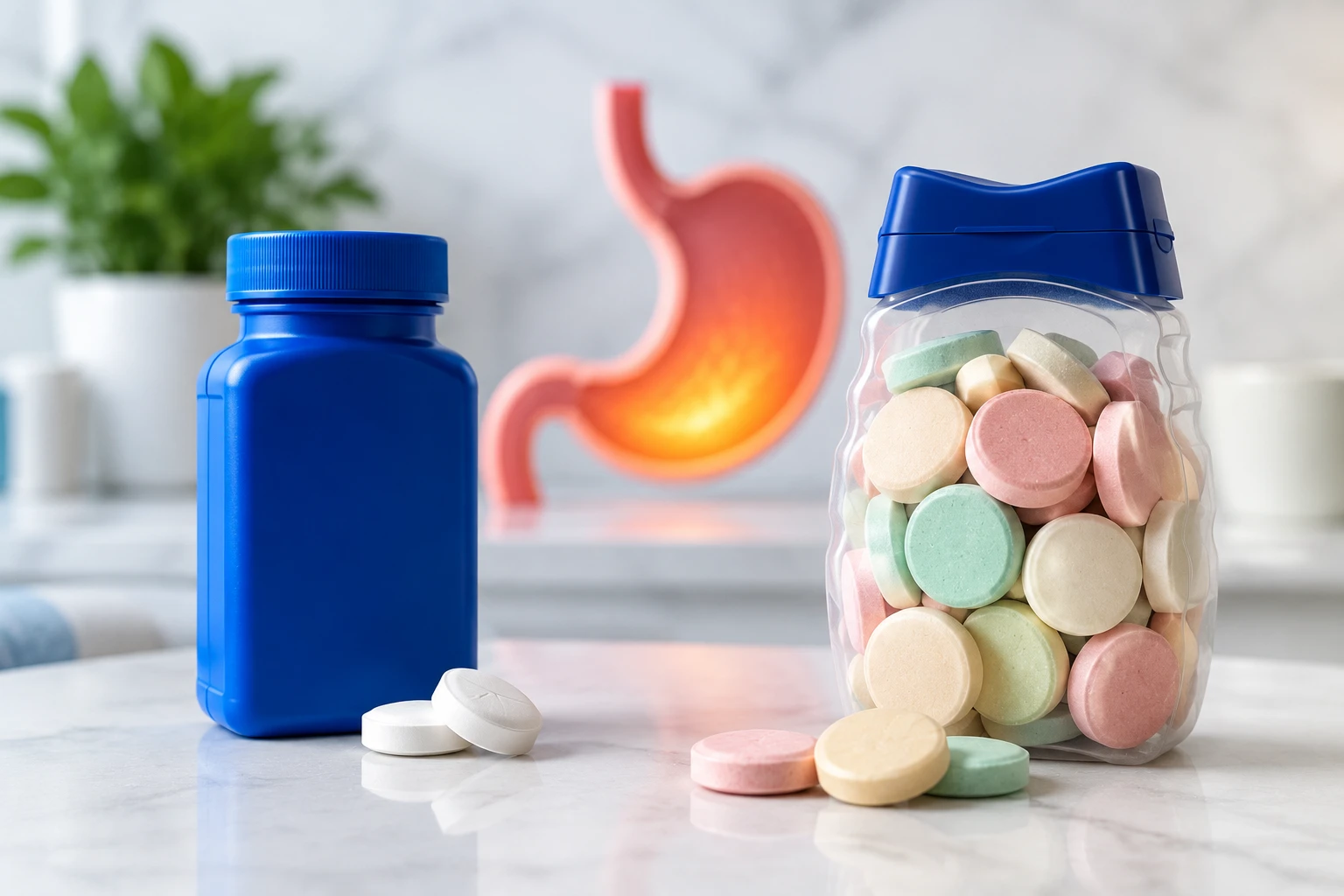
Pepcid vs Tums is a common comparison for people looking for relief from heartburn, acid indigestion, or acid reflux. Although both products can help with heartburn, they work in different ways.
Tums neutralizes stomach acid that is already present, while Pepcid reduces the amount of acid the stomach produces. That difference affects how quickly they work, how long their effects can last, and when each may be useful.
What Is Pepcid?
What Does Pepcid Contain?
Pepcid contains famotidine, which belongs to a group of medicines called H2 blockers. Famotidine works by blocking histamine signals that encourage the stomach to produce acid. This makes Pepcid an acid reducer rather than a traditional antacid.
Different Pepcid products can contain different combinations of active ingredients. Regular Pepcid AC uses famotidine, while Pepcid Complete also contains antacid ingredients. Checking the exact product label is important before comparing doses or effects.
How Does Pepcid Work?
Pepcid reduces stomach acid production instead of directly neutralizing acid already in the stomach. Famotidine blocks H2 receptors on acid-producing cells in the stomach. As a result, less acid is released into the digestive system.
This mechanism makes Pepcid different from calcium carbonate antacids. It can help control heartburn for a longer period than a typical dose of an antacid. Certain over-the-counter famotidine products can also be used before expected heartburn triggers.
What Is Pepcid Used For?
Over-the-counter famotidine is used to prevent and treat heartburn related to acid indigestion. Prescription famotidine has additional uses, including GERD, ulcers, and conditions involving excessive stomach acid.
People with frequent symptoms should not simply keep increasing their use of OTC medicine. Persistent heartburn can require evaluation for an underlying digestive condition. This is particularly important when symptoms continue despite appropriate OTC treatment.
What Is Tums?
What Does Tums Contain?
Tums is an antacid whose active ingredient is calcium carbonate. Different Tums products contain different amounts of calcium carbonate, so their directions and maximum daily amounts can vary.
Regular Strength, Extra Strength, and Ultra Strength products are not interchangeable. The specific product label should always be checked before taking a particular amount. This distinction matters because the amount of calcium carbonate differs between formulations.
How Does Tums Work?
Tums works by neutralizing stomach acid that is already present. Calcium carbonate reacts with stomach acid and reduces its acidity. This can provide quick relief when heartburn appears unexpectedly.
Unlike Pepcid, Tums does not primarily reduce the stomach’s production of new acid. Its main purpose is immediate symptom relief rather than longer acid suppression. That difference is one of the biggest points in the Pepcid vs Tums comparison.
What Is Tums Used For?
Tums products are labeled for temporary relief of heartburn, acid indigestion, and sour stomach. They are commonly used when symptoms occur after eating or drinking.
Tums can be useful when someone wants rapid relief from occasional symptoms. However, frequent heartburn should not simply be treated with repeated antacid doses without considering the underlying cause.
Pepcid Vs Tums: How Do They Work?
Pepcid works upstream by reducing the amount of acid produced by the stomach. Famotidine blocks H2 receptors, which decreases signals responsible for acid secretion.
Because it changes acid production, Pepcid can provide longer acid control. It does not work by directly neutralizing the acid already present in the stomach.
Tums Neutralizes Existing Acid
Tums works directly on acid already present in the stomach. Calcium carbonate reacts with hydrochloric acid and raises the stomach’s pH.
This direct action helps explain why Tums can provide rapid relief. However, it does not prevent the stomach from producing more acid afterward.
What Is The Main Difference?
The main difference is acid reduction versus acid neutralization. Pepcid reduces new acid production, while Tums neutralizes acid that is already present.
This difference makes the two products useful for different situations. For another article comparing two terms with distinct meanings, see turquoise as a blue-green color.
Pepcid Vs Tums: Which Works Faster?
How Fast Does Tums Work?
Tums is designed for rapid relief because it begins neutralizing stomach acid when it reaches the stomach. This makes it useful when heartburn appears suddenly.
The exact timing can vary with the product, food in the stomach, and individual digestion. Still, antacids are generally associated with faster relief than acid-reducing medicines.
How Fast Does Pepcid Work?
Pepcid generally takes longer to provide relief because famotidine must reduce acid production. The manufacturer states that certain Pepcid products begin relieving heartburn within about 15 to 30 minutes.
That does not mean Pepcid is ineffective during that initial period. Its mechanism simply differs from an antacid that acts directly on existing stomach acid.
Which Is Faster?
Tums generally has the advantage when the priority is rapid acid neutralization. Pepcid generally takes longer to start working but can provide longer acid control.
Therefore, speed alone does not determine which product is more suitable. The desired duration and type of relief also matter.
Pepcid Vs Tums: Which Lasts Longer?
How Long Does Tums Last?
Tums generally provides shorter-lasting relief because it neutralizes existing acid rather than suppressing continued acid production. The manufacturer describes its antacid action as providing temporary relief.
The exact duration depends on the product and individual circumstances. Eating, digestion, the amount taken, and the severity of symptoms can all influence how long relief lasts.
How Long Does Pepcid Last?
Famotidine can provide substantially longer acid control than a typical antacid. Certain Pepcid products are marketed as providing acid control for up to 12 hours under specified conditions.
However, a stated duration of acid control should not be interpreted as a guarantee of complete symptom relief. Individual responses can differ considerably.
Which Lasts Longer?
Pepcid generally provides longer acid control than Tums. Tums focuses on rapid neutralization, while Pepcid continues reducing acid production after it begins working.
This makes duration an important factor when deciding between the two. A person seeking immediate relief may value speed, while another may prioritize longer control.
Pepcid Vs Tums For Heartburn
Tums may be useful when heartburn appears suddenly and rapid relief is the main goal. Its calcium carbonate begins neutralizing acid directly in the stomach.
Pepcid can also treat heartburn, but it generally takes longer to begin working. Its advantage comes from reducing further acid production rather than immediately neutralizing existing acid.
Which Is Better For Longer Control?
Pepcid may be more useful when longer acid control is the main concern. Famotidine continues affecting acid production after the initial dose takes effect.
This can make it useful for predictable symptoms or certain situations where heartburn tends to return. The appropriate product still depends on the person’s symptoms and medical circumstances.
Which Is Better For Occasional Heartburn?
Neither product is automatically better for every person with occasional heartburn. Tums can be practical for sudden symptoms, while Pepcid may suit someone seeking longer acid control.
The choice also depends on the specific formulation being used. Readers should follow the product label rather than assuming every Pepcid or Tums product works identically.
Pepcid Vs Tums For Acid Reflux
Does Tums Help Acid Reflux?
Tums can relieve the heartburn caused by acid reflux by neutralizing stomach acid. It can therefore reduce the burning sensation associated with occasional reflux episodes.
However, Tums does not stop the underlying reflux process. It also does not reduce acid production in the same way famotidine does.
Does Pepcid Help Acid Reflux?
Pepcid can help heartburn associated with acid reflux by reducing stomach acid production. Famotidine is also used medically in the treatment of GERD.
Reducing acid can make reflux episodes less irritating to the esophagus. However, recurring reflux can involve more than acid alone, so persistent symptoms may need medical evaluation.
Which Is Better For Acid Reflux?
Pepcid may provide longer acid control, while Tums may provide faster relief when symptoms suddenly appear. The difference comes from their mechanisms rather than one product being universally stronger.
People with recurring reflux should consider how often symptoms occur. Frequent symptoms can indicate GERD and may require a treatment plan beyond occasional OTC medicine.
Pepcid Vs Tums For Nighttime Heartburn

Can Tums Help At Night?
Tums can provide quick relief when nighttime heartburn appears. Its antacid action can neutralize acid already present in the stomach.
However, its effects are generally shorter than those associated with an H2 blocker. Someone experiencing repeated nighttime symptoms may therefore need to consider why the symptoms keep occurring.
Can Pepcid Help At Night?
Pepcid can provide longer acid control because famotidine reduces acid production. This can make it useful for some people whose heartburn tends to occur during the evening or night.
The manufacturer reports extended acid control for certain Pepcid products. However, individual results can differ, and recurring nighttime heartburn deserves attention.
Which Is Better At Night?
Pepcid may have an advantage when longer acid control is the main concern. Tums may be more useful when a person needs quick relief from an isolated episode.
Frequent nighttime heartburn can be associated with GERD. If symptoms repeatedly interfere with sleep, discussing them with a healthcare professional is appropriate.
Can You Take Pepcid And Tums Together?
Do They Work Differently?
Yes, Pepcid and Tums work through different mechanisms. Pepcid reduces acid production, while Tums neutralizes acid that is already present.
This difference means they are not simply duplicate versions of the same medicine. Some products even combine an H2 blocker with antacid ingredients.
What Is Pepcid Complete?
Pepcid Complete is different from regular Pepcid AC. It combines famotidine with calcium carbonate and magnesium hydroxide.
This means Pepcid Complete provides both acid reduction and antacid action. It should therefore not be treated as though it contains famotidine alone.
Should You Combine Separate Products?
People should not automatically combine separate Pepcid and Tums products without checking the labels or asking a pharmacist. Other medicines, health conditions, and the exact formulations can affect whether combination use is appropriate.
This is particularly important because antacids can affect the absorption of some medicines. If someone already takes several medications, a pharmacist can help check for potential issues.
Pepcid Vs Tums: Side Effects
What Are Tums Side Effects?
Tums can cause digestive effects such as constipation, gas, or belching. Taking excessive amounts can also cause problems associated with excessive calcium intake.
People with certain kidney conditions may need to be particularly careful with calcium-containing products. Anyone using Tums frequently should follow the label and discuss recurring symptoms with a healthcare professional.
What Are Pepcid Side Effects?
Famotidine can cause side effects including headache, dizziness, constipation, or diarrhea. Most people do not experience serious problems, but unexpected or severe reactions require medical attention.
Famotidine also requires extra attention in people with impaired kidney function. Healthcare professionals may recommend different dosing for certain patients.
Which Has Fewer Side Effects?
There is no universal answer because the two medicines have different active ingredients and mechanisms. Side effects also depend on the person, dose, formulation, and other medicines being used.
Tums has calcium-related considerations, while famotidine has its own medication interactions and precautions. Comparing side effects should therefore focus on the individual rather than simply choosing one product as safer.
Pepcid Vs Tums: Drug Interactions
Can Tums Interact With Medicines?
Yes, calcium carbonate can affect the absorption of certain medicines. This is why Tums labels advise people taking prescription drugs to consult a healthcare professional before use.
The timing between an antacid and another medicine can sometimes matter. A pharmacist can check the exact medications involved and provide appropriate instructions.
Can Pepcid Interact With Medicines?
Famotidine can also interact with other medications. People should tell their healthcare provider about prescription medicines, OTC products, vitamins, supplements, and herbal products they use.
The interaction profile differs from calcium carbonate. This is another reason not to assume that an OTC medicine is automatically free of medication concerns.
Who Should Ask Before Using Them?
People with kidney disease, those taking prescription medicines, pregnant individuals, and people with recurring symptoms may benefit from professional advice before use. Children may also require different instructions based on age and product labeling.
The safest approach is to follow the exact label for the product being used. When uncertain, a pharmacist can provide advice based on the person’s medication list and health history.
Pepcid Vs Tums: How Long Can You Use Them?
How Long Can You Take Pepcid?
OTC famotidine should generally not be used for longer than the period stated on its label without medical advice. MedlinePlus states that people should not take OTC famotidine for more than two weeks unless directed by a doctor.
Persistent symptoms may indicate a condition that needs evaluation. Increasing the dose or continuing treatment indefinitely is not a substitute for finding the cause.
How Long Can You Take Tums?
Tums is intended for temporary symptom relief, and its labels include limits on prolonged use. Specific directions vary between Tums products and strengths.
Using the maximum amount for an extended period can create unnecessary risks. If heartburn keeps returning, it is better to investigate the cause than repeatedly increase antacid use.
When Should You Seek Medical Advice?
Medical advice is appropriate when heartburn continues despite OTC treatment or occurs frequently. Symptoms that are severe, unusual, or accompanied by other concerning signs also warrant prompt attention.
Recurring heartburn can be related to GERD or another digestive condition. For another example of how different terms can describe different levels of urgency, see tornado warning vs watch.
Pepcid Vs Tums: Which One Should You Choose?
Choose Tums For Quick Relief
Tums may be suitable when occasional heartburn appears suddenly and rapid relief is the main goal. Its calcium carbonate directly neutralizes stomach acid.
This makes it useful for short-term symptom relief. Its effect is generally shorter because it does not suppress continued acid production.
Choose Pepcid For Longer Acid Control
Pepcid may be more suitable when longer acid control is desired. Famotidine reduces acid production rather than simply neutralizing existing acid.
Certain OTC products can also be used before expected heartburn triggers. However, readers should follow the specific instructions for their product rather than assuming every Pepcid formulation has the same directions.
Neither Is Always Better
The better option depends on the person’s symptoms, health circumstances, and reason for taking the medicine. Tums generally offers faster relief, while Pepcid generally provides longer acid control.
This distinction is more useful than declaring one product the overall winner. For another comparison focused on two different approaches to a similar result, see taper vs fade.
Pepcid Vs Tums: Quick Comparison
Active Ingredients
Pepcid’s primary active ingredient in regular products is famotidine. Tums uses calcium carbonate as its antacid ingredient.
Some Pepcid products contain additional antacid ingredients, so the exact product matters. Always check the active ingredients before comparing two packages.
Main Action
Pepcid reduces stomach acid production through H2 receptor blocking. Tums neutralizes stomach acid that is already present.
This difference explains much of the contrast between their onset and duration. It also explains why they can sometimes serve different roles in heartburn management.
Speed And Duration
Tums generally works faster because it directly neutralizes existing acid. Pepcid usually takes longer but can provide longer acid control.
Neither timing claim guarantees the same experience for every person. Product strength, food, symptoms, and individual response can all affect results.
FAQs
Is Pepcid The Same As Tums?
No. Pepcid is an H2 blocker that reduces stomach acid production, while Tums is an antacid that neutralizes existing stomach acid.
Is Pepcid Better Than Tums?
Neither is universally better. Tums may provide faster relief, while Pepcid may offer longer acid control.
Does Tums Work Faster Than Pepcid?
Generally, yes. Tums directly neutralizes existing acid, while famotidine usually takes longer because it reduces acid production.
Does Pepcid Last Longer Than Tums?
Generally, yes. Famotidine can provide longer acid control than a typical calcium carbonate antacid dose.
Can You Take Pepcid And Tums Together?
Some products combine famotidine with antacids, such as Pepcid Complete. Before combining separate products, check their labels or ask a pharmacist.
Is Pepcid An Antacid?
Regular Pepcid is not a traditional antacid. Famotidine is an H2 blocker that reduces stomach acid production.
Is Tums An Acid Reducer?
Tums is an antacid rather than an acid reducer. Calcium carbonate neutralizes acid that is already present in the stomach.
Which Is Better For Heartburn?
Tums may suit sudden, occasional heartburn when quick relief is desired. Pepcid may suit situations where longer acid control is preferred.
Which Is Better For Acid Reflux?
Both can help symptoms, but they work differently. Pepcid reduces acid production, while Tums neutralizes existing acid.
Can You Take Tums After Pepcid?
The answer depends on the specific products and other medicines being used. Check the labels or ask a pharmacist before combining separate medicines.
Does Pepcid Help GERD?
Yes. Famotidine is used for GERD and can reduce acid production associated with reflux.
Can Tums Help GERD?
Tums can temporarily relieve heartburn symptoms associated with acid reflux. It does not address the underlying reflux process or reduce acid production.
Can You Take Pepcid Every Day?
OTC Pepcid has specific label limits for duration and use. People with recurring symptoms should seek medical advice rather than using it indefinitely.
How Long Can You Take Tums?
Tums is intended for temporary relief, and individual products have specific label directions. Frequent or prolonged use should be discussed with a healthcare professional.
What Is The Difference Between Pepcid AC And Pepcid Complete?
Pepcid AC primarily uses famotidine, while Pepcid Complete combines famotidine with antacid ingredients. They should therefore not be treated as identical products.
Final Takeaways
Pepcid and Tums can both help with heartburn, but they work in different ways. Pepcid uses famotidine to reduce stomach acid production, while Tums uses calcium carbonate to neutralize acid already present. This makes Tums generally faster for sudden relief and Pepcid generally better suited to longer acid control.
The right choice depends on the type and frequency of symptoms. Tums may fit an occasional episode when quick relief is needed, while Pepcid may be useful when longer control or prevention is the goal. The exact product also matters because both brands offer different formulations with different active ingredients and directions.
Neither medicine should be treated as a universal solution for recurring heartburn. If symptoms happen frequently, persist despite OTC treatment, or cause significant discomfort, medical advice can help identify the underlying problem. Always follow the specific product label and check with a pharmacist when other medicines or health conditions could affect your choice.
