
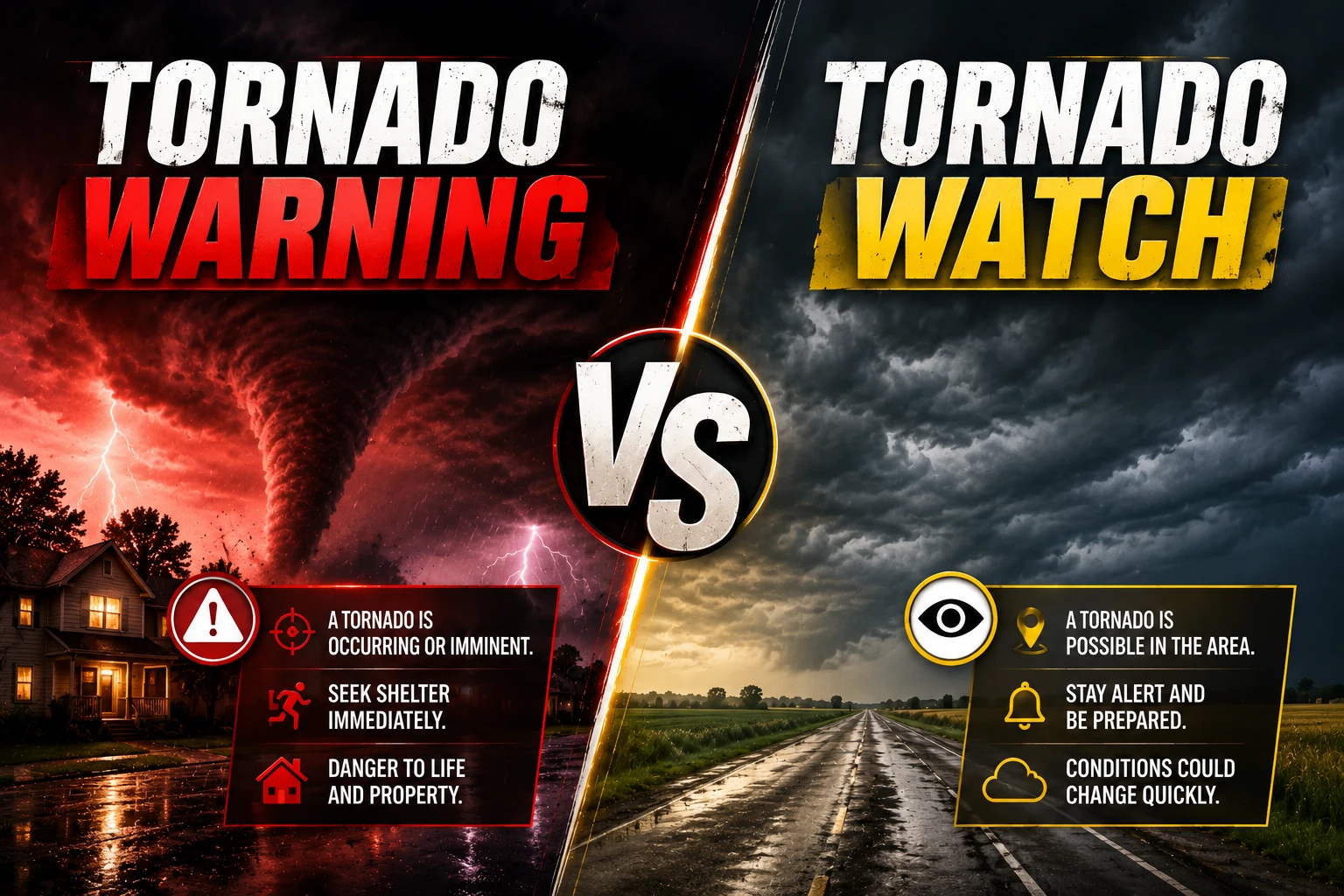
A tornado watch and tornado warning both signal severe weather, but they mean very different things. A watch means tornadoes are possible, while a warning means a tornado has been detected or is expected soon.
Knowing the difference can help you react quickly when severe weather develops. A watch gives you time to prepare, while a warning means you should move to a safe shelter immediately.
What Is A Tornado Watch?
What Does A Tornado Watch Mean?
A tornado watch means conditions are favorable for tornadoes to develop in and around a designated area. It does not mean that a tornado has already formed or been spotted.
The watch is an advance alert that severe thunderstorms and tornadoes could develop. You should stay informed and be ready to take action if conditions become more dangerous.
The National Weather Service uses the simple phrase “Be Prepared” for a tornado watch. This captures the main purpose of the alert without suggesting that a tornado is already threatening your location.
Who Issues A Tornado Watch?
The NOAA Storm Prediction Center generally issues tornado watches. It monitors atmospheric conditions across the United States and identifies areas where severe thunderstorms and tornadoes may develop.
Local National Weather Service offices coordinate with the Storm Prediction Center during severe weather events. These local offices can also adjust watch areas based on changing storm conditions.
This division helps separate broad weather forecasting from immediate local warnings. The watch identifies a larger potential threat, while local offices handle specific tornado warnings.
How Large Is A Tornado Watch?
A tornado watch normally covers a much larger area than a tornado warning. It can include several counties, large portions of a state, or even parts of multiple states.
The broad coverage gives forecasters room to account for storms that may develop or move across the region. Not everyone inside a watch will experience a tornado.
This is similar to other alert systems where a broad area receives an advance notice before a more specific threat develops. The key is to treat the watch seriously without assuming that a tornado is already happening.
How Long Does A Tornado Watch Last?
Typical Watch Duration
Tornado watches are commonly issued for several hours. The National Weather Service says they are usually issued for about four to eight hours.
The actual duration depends on the weather setup and how long favorable conditions are expected to remain. A watch can also be canceled early if the threat decreases.
You should continue checking official weather information until the watch expires or is canceled. Conditions can change considerably during several hours of severe weather.
What Should You Do During A Watch?
A tornado watch is the right time to prepare your shelter and emergency supplies. Check your phone alerts, weather radio, flashlight, batteries, and other basic emergency equipment.
You should also identify where everyone in your household will go if a warning is issued. People who need additional time to reach shelter should prepare before storms become severe.
Do not wait until a warning arrives to decide where you will shelter. Having that decision made ahead of time can save valuable minutes when conditions deteriorate.
Should You Stay Alert During A Watch?
Yes, even though a watch does not mean a tornado is currently occurring. Continue monitoring reliable weather information throughout the watch period.
Pay attention to changing warnings, storm movement, and instructions from local authorities. A tornado warning can be issued for part of a watch area at any time.
Think of a watch as a preparation period rather than a reason to panic. You have time to get ready, but you should not ignore the possibility of rapidly changing weather.
What Is A Tornado Warning?
What Does A Tornado Warning Mean?
A tornado warning means a tornado has been detected or is considered imminent. The warning is issued for a specific area where the immediate threat is greatest.
A warning can be based on radar evidence, a reliable report from a trained storm spotter, or another credible observation. A person does not necessarily have to see the tornado before a warning can be issued.
The National Weather Service uses “Take Action” for tornado warnings. When a warning applies to your location, you should move to a safe shelter immediately.
Who Issues A Tornado Warning?
Local National Weather Service forecast offices issue tornado warnings. These offices monitor storms using weather radar, reports from trained observers, and other information.
Because local offices focus on specific regions, they can issue warnings for individual storms and smaller geographic areas. This makes warnings much more targeted than watches.
The warning process can happen quickly when a storm develops strong rotation. That is why people should already know their shelter location before a warning arrives.
How Large Is A Tornado Warning?
A tornado warning usually covers a much smaller area than a watch. It may cover part of a county, several communities, or a narrow path where a dangerous storm is expected to travel.
Modern warnings often use geographic polygons to identify the area most likely to experience the threat. This means you should check whether your specific location falls within the warning area.
A warning does not necessarily mean every person in a large county faces the same immediate danger. The exact warning area and storm path matter.
How Long Does A Tornado Warning Last?
Typical Warning Duration
Tornado warnings are generally much shorter than tornado watches. The National Weather Service says they are usually issued for around 30 minutes.
The duration can change depending on storm movement and how long the tornado threat remains. Forecasters can update, extend, or cancel a warning as new information becomes available.
You should not leave shelter simply because the original warning period is nearly over. Wait for reliable information indicating that the immediate threat has passed.
What Should You Do During A Warning?
Move to a sturdy shelter immediately when a tornado warning is issued for your location. Go to a basement, storm shelter, safe room, or small interior room on the lowest possible floor.
Stay away from windows, exterior walls, and large open spaces. Protect your head and neck from flying debris using your arms, pillows, blankets, or other available protection.
Do not spend time gathering unnecessary belongings. A tornado can develop or move quickly, so getting into shelter should take priority over property.
Does A Warning Mean A Tornado Is Already On The Ground?
Not necessarily. A warning can be issued when radar indicates strong rotation that suggests a tornado may be developing or is likely to occur.
Warnings can also follow reports from trained spotters or other reliable observers. Therefore, you should never wait until you personally see a tornado before taking shelter.
The absence of a visible tornado does not make a warning unimportant. Tornadoes can be obscured by rain, darkness, terrain, or other conditions.
Tornado Watch Vs Warning: Main Differences
Watch Means Possibility
A tornado watch means the atmospheric conditions are favorable for tornadoes. The threat is broader and may involve storms that have not yet produced tornadoes.
Your main responsibility during a watch is preparation. Stay informed, review your shelter plan, and be ready to act if a warning is issued.
This is different from other types of comparisons where the terms describe gradual differences. For example, taper vs fade describes two haircut techniques, while a tornado watch and warning represent different stages of weather risk.
Warning Means Immediate Threat
A tornado warning means there is a more immediate danger. A tornado has been detected or is considered imminent within the specified warning area.
Your response should change from preparation to immediate shelter. Do not wait for additional confirmation from another source before taking action.
This difference is the most important thing to remember. Watch means prepare, while warning means act.
Watch Vs Warning At A Glance
A tornado watch generally covers a larger area and lasts several hours. A tornado warning is more localized and normally lasts for a much shorter period.
The watch is issued by the Storm Prediction Center, while local National Weather Service offices issue tornado warnings. A watch does not require a tornado to already exist, but a warning is based on a detected or imminent threat.
The distinction becomes easier when you focus on the action required. A watch tells you to get ready, while a warning tells you to get into shelter.
What Should You Do During A Tornado Watch?
Prepare Your Shelter
Use the watch period to identify the safest place in your home or workplace. A basement, storm shelter, or small interior room on the lowest floor is generally preferred.
Choose an area away from windows and exterior walls. Make sure everyone in your household knows where to go before severe weather reaches your area.
If you live in a region where tornadoes are common, this preparation should happen well before storm season. A warning is not the right time to search for the safest room.
Check Emergency Supplies
Keep essential supplies where you can reach them quickly. Useful items include a flashlight, batteries, phone charger, water, first-aid supplies, and necessary medications.
A weather radio with battery backup can also provide important alerts during power outages. Multiple warning methods are useful because no single system works perfectly in every situation.
You can also secure loose outdoor objects before storms arrive. Items such as patio furniture and outdoor equipment can become dangerous debris during strong winds.
Monitor Weather Information
Keep checking reliable weather information during the watch. Wireless Emergency Alerts, NOAA Weather Radio, local television, radio, and trusted weather services can provide updates.
Do not rely solely on outdoor warning sirens. Sirens are mainly intended to alert people outdoors and may not be heard inside a building.
The goal is to remain informed without becoming distracted by unreliable social media reports. Official National Weather Service information should take priority when severe weather threatens.
What Should You Do During A Tornado Warning?
Move To A Safe Room
When a warning covers your location, move to your designated shelter immediately. A small interior room without windows on the lowest floor is generally one of the safer choices in a sturdy building.
If a basement or storm shelter is available, use it when appropriate. Put as many walls as possible between yourself and the outside.
Stay there until reliable information indicates that the threat has passed. Do not leave shelter simply because the wind temporarily becomes quieter.
Protect Yourself From Debris
Flying debris is one of the major dangers associated with tornadoes. Protect your head and neck with your arms or available objects such as pillows, blankets, or a mattress.
Stay away from windows because broken glass can cause serious injuries. Avoid large rooms such as gymnasiums, auditoriums, and open-plan areas when possible.
If you are in a sturdy building, remain inside and use the safest available interior location. Your goal is to put solid walls between yourself and the storm.
What If You Are In A Mobile Home?
Mobile homes generally provide less protection from tornado winds than sturdy permanent buildings. People who live in mobile homes should identify a nearby sturdy shelter before severe weather develops.
During a watch, make sure you know how to reach that shelter. Waiting until a warning is active can make the trip more dangerous.
Follow local emergency instructions and leave for a suitable shelter when it is safe to do so. Having a plan in advance is especially important for mobile-home residents.
What If You Are Driving During A Tornado Warning?
Should You Keep Driving?
Driving during a tornado warning can be dangerous because storms can produce rapidly changing conditions and poor visibility. If possible, reach a sturdy building and take shelter.
Do not stop underneath a highway overpass. Overpasses do not provide reliable protection from tornado winds and debris.
If you cannot safely reach a sturdy building, your response depends on the specific situation. Follow current National Weather Service guidance and avoid making sudden or dangerous driving maneuvers.
What If No Shelter Is Nearby?
There is no single last-resort action that works for every driving situation. Your options depend on traffic, terrain, storm position, and whether a sturdy shelter is nearby.
The safest choice is generally to reach a sturdy building before the tornado arrives whenever doing so is possible. This is why avoiding unnecessary travel during severe weather can be helpful.
Never assume that your vehicle is a safe shelter from a strong tornado. Cars can be overturned, damaged, or thrown by powerful winds.
Should You Use An Overpass?
No, highway overpasses are not recommended tornado shelters. Wind speeds can increase around elevated structures, while debris can also be directed through the open areas underneath.
If you are traveling when a warning is issued, look for a sturdy building when conditions allow. Planning potential shelter locations along longer journeys can reduce the pressure to make a decision during the storm.
The same basic principle applies to severe weather preparation generally. Having a safe location identified ahead of time is better than searching for one during an emergency.
Can A Tornado Warning Happen Without A Watch?
Yes, It Can
A tornado warning can be issued without a tornado watch being active first. The National Weather Service recognizes that storms can develop or intensify quickly enough to require a warning without a preceding watch.
This can happen when a storm changes rapidly or develops an unexpected tornado threat. A warning is based on the immediate situation rather than a requirement that a watch already exist.
For that reason, you should always take a tornado warning seriously. The absence of a previous watch does not make the warning less important.
Why Would This Happen?
Watches are broad alerts based on the potential for tornadoes across a larger area. Warnings are more specific alerts based on what is happening within an individual storm.
Weather conditions can change faster than broad forecasts can account for. A storm may suddenly develop strong rotation that requires an immediate warning.
This is why official alerts should be monitored even when your area was not previously under a tornado watch. Weather threats can evolve quickly.
Can A Watch And Warning Happen Together?
Yes, both alerts can be active at the same time. A large region may remain under a tornado watch while a smaller portion receives a tornado warning.
The watch continues to describe the broader potential for additional tornadoes. The warning identifies a specific area facing a more immediate threat.
Think of the warning as a more urgent alert nested within a broader watch. People inside the warning area should take immediate shelter rather than simply continue monitoring conditions.
What Is A Tornado Emergency?
Tornado Emergency Meaning
A tornado emergency is an extremely serious alert used for an exceptionally dangerous tornado situation. It represents a higher level of concern than a standard tornado warning.
The National Weather Service generally reserves this wording for situations involving a confirmed violent tornado and a severe threat to human life. It is relatively uncommon.
If a tornado emergency is issued, people in the affected area should seek their safest available shelter immediately. There is no reason to wait for visual confirmation.
Tornado Warning Vs Tornado Emergency
A tornado warning means a tornado has been detected or is considered imminent. A tornado emergency indicates an even greater threat involving a confirmed violent tornado and potentially catastrophic consequences.
Both require immediate action. The emergency designation simply communicates that the situation is exceptionally dangerous.
These alerts should not be confused with a tornado watch. A watch describes potential conditions, while warnings and emergencies concern an immediate or confirmed tornado threat.
What Should You Do During A Tornado Emergency?
Move to the strongest available shelter immediately. Use a basement, storm shelter, or small interior room on the lowest floor of a sturdy building.
Stay away from windows and protect your head and neck from debris. Remain sheltered until official information indicates that the immediate danger has passed.
Do not go outside to watch the storm or record video. The safest response is to remain protected from wind, debris, and sudden changes in the storm’s path.
Common Tornado Watch And Warning Misunderstandings
Does A Watch Mean A Tornado Has Been Spotted?
No. A tornado watch means conditions are favorable for tornado development, not that a tornado has necessarily been observed.
The atmosphere may contain the ingredients needed for severe thunderstorms and tornadoes. Some watches end without a tornado ever forming in the area.
Even so, the watch should be taken seriously because conditions can change quickly. Preparation is the appropriate response.
Does A Warning Always Mean You Can See A Tornado?
No. A warning can be based on radar indications of rotation or reports from trained observers.
Rain, darkness, terrain, and distance can make tornadoes difficult or impossible to see. You should never use visibility as a test for whether a warning is serious.
If your location is inside a tornado warning, take shelter regardless of whether you can see a funnel cloud. Waiting for visual evidence can waste valuable time.
Should You Open Windows During A Tornado?
No. Opening windows does not protect a building from tornado damage.
This is an outdated tornado myth that can waste time during an emergency. The National Weather Service recommends using that time to reach a safe shelter instead.
Close windows if possible, but do not delay sheltering to do so. Getting away from windows and moving to a protected interior location is far more important.
How Are Tornado Alerts Different From Other Weather Alerts?
Watches And Warnings Have Different Purposes
Weather agencies use watches and warnings to communicate different levels of risk. A watch generally provides advance notice about potential severe weather, while a warning identifies an immediate threat.
This distinction also appears in other weather alerts. Understanding the difference between tornado watches and warnings is useful because the required response changes when a warning is issued.
The wording can sometimes feel similar, but the recommended action is different. A watch calls for preparation, while a warning calls for immediate protective action.
Why Does The Exact Wording Matter?
Clear alert wording helps people decide how urgently they need to respond. A broad possibility alert would be less useful if people interpreted it as proof that a tornado was already occurring.
Likewise, a warning needs to communicate urgency without requiring people to understand meteorological terminology. Simple phrases such as “Be Prepared” and “Take Action” help make the difference clearer.
This is why learning the terms before severe weather occurs is worthwhile. When an alert arrives, you can focus on the action rather than figuring out what it means.
How Do Weather Alerts Compare With Other Warning Systems?
Different warning systems use different levels of urgency and different terms. The important point is to understand what each alert requires you to do.
For example, a medical comparison such as Pepcid vs Tums involves different medicines serving different purposes. Tornado alerts work similarly in one basic sense, because the terms communicate different situations and responses.
With tornado alerts, however, the distinction directly affects personal safety. That makes understanding the difference particularly important during severe weather.
FAQs
Is A Tornado Watch Worse Than A Warning?
No. A tornado warning represents the more immediate threat. A watch means tornadoes are possible, while a warning means a tornado has been detected or is considered imminent.
What Does A Tornado Watch Mean?
A tornado watch means atmospheric conditions are favorable for tornadoes. You should stay informed, prepare your shelter, and be ready to take action.
What Does A Tornado Warning Mean?
A tornado warning means a tornado has been detected or is considered imminent. People in the warning area should take shelter immediately.
Who Issues A Tornado Watch?
The NOAA Storm Prediction Center generally issues tornado watches. Local National Weather Service offices coordinate with the center during severe weather events.
Who Issues A Tornado Warning?
Local National Weather Service forecast offices issue tornado warnings. They use radar information and reliable reports to identify immediate tornado threats.
How Long Does A Tornado Watch Last?
A tornado watch usually lasts around four to eight hours. The exact duration depends on the expected severe weather threat.
How Long Does A Tornado Warning Last?
A tornado warning is generally much shorter than a watch. The National Weather Service says warnings are usually issued for around 30 minutes.
Can A Tornado Warning Happen Without A Watch?
Yes. A tornado warning can be issued without a previous tornado watch when a storm rapidly develops an immediate tornado threat.
Can A Tornado Watch And Warning Happen At The Same Time?
Yes. A broad tornado watch can remain active while a smaller area receives a tornado warning for a specific storm.
What Should You Do During A Tornado Watch?
Prepare your shelter, check emergency supplies, monitor official weather information, and be ready to move when a warning is issued.
What Should You Do During A Tornado Warning?
Take shelter immediately in a sturdy building. Go to a basement, storm shelter, or small interior room on the lowest floor, away from windows.
Should You Open Windows During A Tornado?
No. Opening windows does not protect a building from tornado damage and can waste valuable time that should be spent getting into shelter.
Is A Car Safe During A Tornado?
A vehicle is not considered a reliable tornado shelter. If possible, reach a sturdy building before the storm arrives.
Should You Hide Under A Highway Overpass?
No. Highway overpasses do not provide reliable protection from tornado winds and flying debris.
What Is A Tornado Emergency?
A tornado emergency is a higher-level alert used for an exceptionally dangerous tornado situation. It generally involves a confirmed violent tornado and an extreme threat to life.
Does A Tornado Warning Mean A Tornado Has Been Spotted?
Not always. A warning can be based on radar indications as well as reliable observations from trained storm spotters.
Is A Tornado Watch A Guarantee That A Tornado Will Happen?
No. A watch means conditions are favorable for tornadoes, but some watches end without a tornado forming.
Final Takeaways
The difference between a tornado watch and warning comes down to possibility versus immediate danger. A tornado watch means conditions are favorable for tornadoes, so you should stay informed and prepare your shelter. A tornado warning means a tornado has been detected or is considered imminent, so you should take shelter immediately.
Tornado watches usually cover larger areas and last several hours, while tornado warnings are more localized and generally last much less time. The Storm Prediction Center issues watches, while local National Weather Service offices issue warnings. A warning can also occur without a previous watch, so you should always respond to the warning itself.
The easiest way to remember the difference is simple: watch means prepare, warning means act. During a warning, move to the safest available location inside a sturdy building, stay away from windows, and protect yourself from flying debris. Taking these alerts seriously can give you a better chance of staying safe when severe weather develops.
