
https://differencewise.com/is-turquoise-blue-or-green
Meta Description:
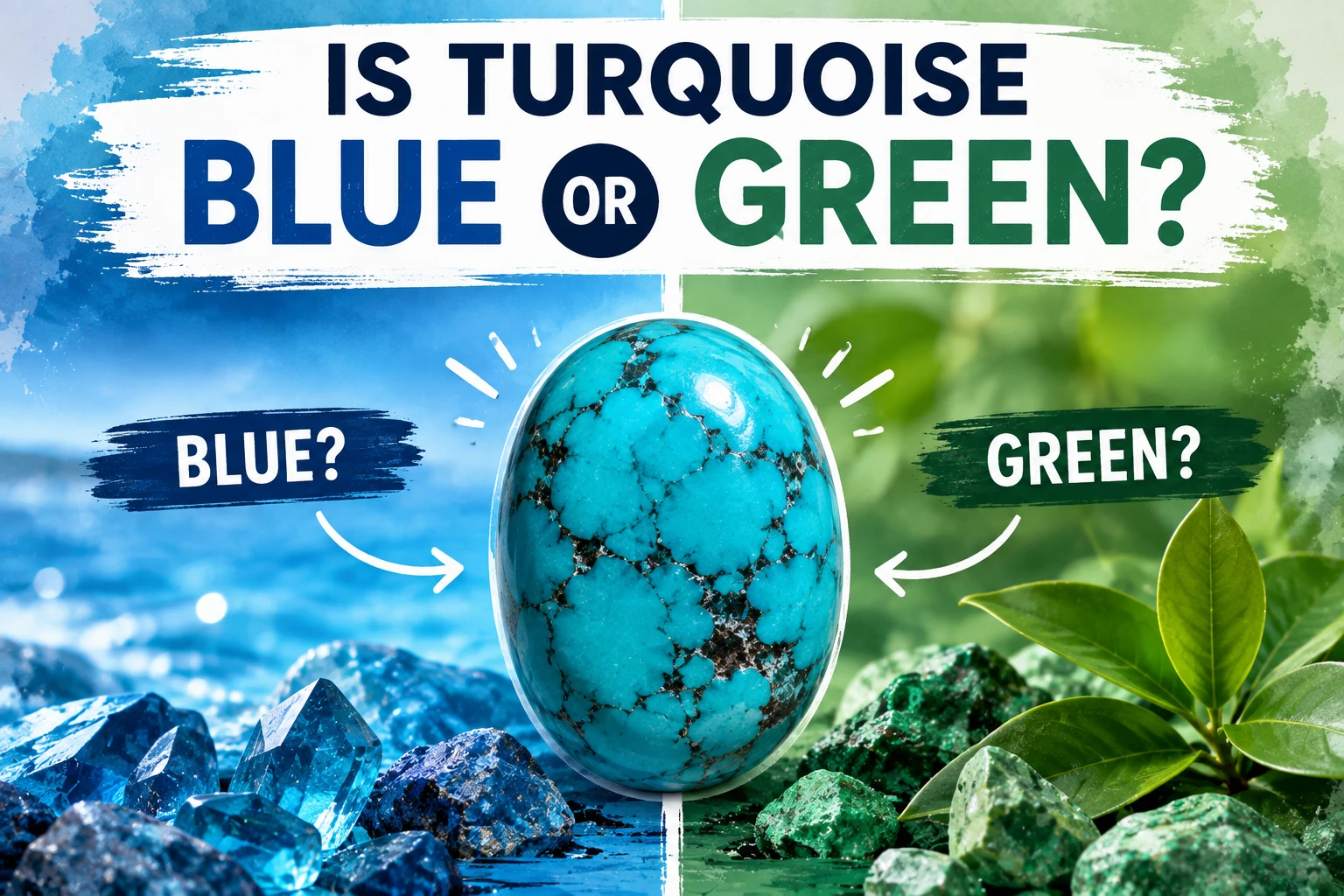
Is turquoise blue or green? The simplest answer is that turquoise is a blue-green color sitting between both hues. Some shades look more blue, while others appear noticeably greener.
The exact appearance depends on the shade, lighting, material, and surrounding colors. Natural turquoise gemstones can also occur across a broad range of blue and green shades. This makes turquoise different from colors that clearly belong to one family.
What Color Is Turquoise?
Is Turquoise A Blue-Green Color?
Turquoise is best described as a blue-green color rather than pure blue or pure green. It occupies the area between these two colors on a conventional color wheel. The classic turquoise shade has a bright appearance with noticeable blue and green qualities.
Some versions lean more toward blue, while others contain stronger green tones. This variation becomes especially noticeable when comparing digital colors with natural turquoise gemstones. Therefore, blue-green is the most useful general description for turquoise.
Is Turquoise A Shade Of Blue?
Turquoise can be described as a shade of blue when the particular version has stronger blue characteristics. Blue turquoise is also common among natural gemstones and has traditionally been highly valued. These shades can resemble sky blue or robin’s-egg blue.
However, turquoise usually contains enough green to separate it from traditional blue shades. The green component becomes especially noticeable in brighter turquoise colors. For this reason, describing turquoise as only blue leaves out an important part of its appearance.
Is Turquoise A Shade Of Green?
Turquoise can also appear green, especially when discussing natural turquoise gemstones. Some stones have a clearly green or greenish-blue appearance. The mineral naturally occurs across a range that extends from blue through greenish blue and into green.
This means green turquoise is completely genuine. It does not represent a different mineral simply because it contains more green. The particular color depends partly on the stone’s mineral composition and geological history.
Why Does Turquoise Look Blue Or Green?
Why Does Turquoise Look Blue?
A turquoise shade can look blue when it has stronger blue characteristics. The colors surrounding it can also change how people perceive the same shade. For example, turquoise placed beside bright green may appear noticeably bluer.
Lighting can create a similar effect. Cool lighting may emphasize the blue component, while warmer lighting can change the overall appearance. This is why the same turquoise object may look different in different rooms.
Why Does Turquoise Look Green?
Turquoise can appear greener when the shade contains stronger green characteristics. Natural turquoise can also become greener because of differences in its mineral composition. The U.S. Geological Survey describes turquoise as ranging from sky blue through bluish green to green.
Iron is associated with greener varieties of the mineral. This helps explain why natural stones from different locations can have noticeably different colors. The result can range from subtle greenish blue to a much stronger green appearance.
Does Lighting Change Turquoise?
Yes, lighting can significantly affect how turquoise appears to the eye. Natural daylight, warm bulbs, cool LEDs, and shaded conditions can produce different impressions. The colors surrounding turquoise can also influence how people perceive its hue.
This effect matters when choosing turquoise clothing, paint, fabric, or jewelry. A shade that looks blue in a store may appear greener under natural daylight. Screen settings can also change the appearance of digital turquoise.
What Is The Standard Turquoise Color?
What Is The Turquoise Hex Code?
The standard CSS color named turquoise uses the hexadecimal value #40E0D0. This represents a bright blue-green shade commonly used for websites, digital graphics, and design projects. The World Wide Web Consortium lists #40E0D0 as the named CSS turquoise color.
This code is useful when someone needs a consistent digital turquoise shade. It does not represent every possible turquoise color found in nature. Natural stones, fabrics, paints, and printed materials can all have different turquoise appearances.
What Is The RGB Value Of Turquoise?
The standard CSS turquoise color uses RGB values of 64, 224, 208. The red value is 64, while green is 224 and blue is 208. The high green and blue values create its recognizable blue-green appearance.
These numbers apply specifically to the standard digital color. They should not be used to determine whether a natural gemstone is authentic turquoise. Natural materials can contain many shades that differ significantly from this digital value.
Is Digital Turquoise The Same As Turquoise Gemstone?
No, digital turquoise and natural turquoise are not identical. The digital color has one defined value, while natural turquoise can occur in several different shades. A gemstone can range from light blue to greenish blue and green.
Therefore, a natural stone does not need to match #40E0D0 to be considered turquoise. The color name describes a recognizable family of shades in everyday language. The mineral itself has much greater natural variation than a single digital color code.
Is Turquoise A Primary Or Secondary Color?
Is Turquoise A Primary Color?
No, turquoise is not considered a primary color in common color systems. Primary colors serve as basic components within particular color models. Turquoise is instead a hue within the blue-green portion of the color range.
Its position between blue and green gives it characteristics associated with both colors. This is why it is often discussed as part of the cyan family. The exact classification can depend on which color model is being used.
Is Turquoise A Secondary Color?
Turquoise is not usually classified as a standard secondary color either. Its exact classification depends on the color system being discussed. It is more useful to describe turquoise as a blue-green hue.
This description focuses on its actual position rather than forcing it into a basic color category. Color theory contains several different systems, and terminology can vary between them. For everyday use, blue-green remains the clearest description.
Where Does Turquoise Sit On A Color Wheel?
Turquoise generally sits between blue and green on a conventional color wheel. This position explains why it can resemble both colors. A blue-dominant turquoise moves visually toward blue, while a green-dominant shade moves toward green.
The exact location can vary depending on the color system and specific shade. Still, the blue-green position remains consistent with the way turquoise is commonly understood. This also explains why turquoise can be difficult to classify using only one color name.
Is The Turquoise Gemstone Blue Or Green?
Can Natural Turquoise Be Blue?
Yes, blue is one of the best-known natural colors of turquoise. GIA describes turquoise as ranging from blue to green and notes that intense medium blue is traditionally the most prized color. This classic appearance is often compared with robin’s-egg blue or sky blue.
Blue turquoise has a long history in jewelry and decorative objects. Its strong blue appearance is one of the features most commonly associated with the gemstone. However, not every turquoise stone has this exact color.
Can Natural Turquoise Be Green?
Yes, green turquoise is a genuine natural variety of the mineral. Some stones are greenish blue, while others appear distinctly green. The color depends partly on mineral composition and geological conditions surrounding the stone’s formation.
Green turquoise can look very different from traditional bright blue material. Some examples retain enough blue to appear strongly blue-green. Others can have a much more obvious green appearance.
Which Turquoise Color Is Most Valuable?
An even, intense, medium blue has traditionally been the most sought-after turquoise color. GIA notes that pure blue shades are generally preferred when assessing turquoise quality. This preference has helped make bright blue turquoise especially recognizable in the jewelry market.
However, color is only one factor affecting a stone’s value. Texture, matrix, treatment, durability, rarity, and overall appearance can also influence desirability. Some collectors and designers specifically prefer unusual green turquoise varieties.
Why Does Turquoise Come In Different Shades?
Does Mineral Composition Affect Turquoise Color?
Yes, mineral composition plays an important role in the appearance of natural turquoise. Turquoise is a hydrated copper and aluminum phosphate mineral. Differences in its chemical composition can influence whether a specimen looks more blue or green.
Copper contributes to characteristic blue tones, while iron is associated with greener varieties. This helps explain why two natural turquoise stones can look noticeably different. Geological conditions also contribute to the appearance of individual specimens.
What Is Blue Turquoise?
Blue turquoise ranges from lighter blue shades to stronger medium blue colors. The most traditionally valued examples have an even, intense blue appearance. These stones can look very different from greener varieties found in other deposits.
Blue turquoise remains especially popular in traditional jewelry. Its color can range from soft sky blue to deeper medium blue. The most valued examples generally have strong, even color rather than uneven patches.
What Is Green Turquoise?
Green turquoise includes shades ranging from greenish blue to clearly green stones. Some examples retain subtle blue undertones, while others appear much closer to green. This range demonstrates the natural color variation found within the mineral.
The greener appearance is often linked with iron content. Collectors and designers may specifically seek these less traditional colors. Green turquoise is therefore a legitimate and sometimes desirable form of the gemstone.
How Is Turquoise Different From Similar Colors?

Is Turquoise The Same As Cyan?
Turquoise and cyan belong to the same broad blue-green color area, but they are not identical. The standard CSS cyan value is #00FFFF, while turquoise is #40E0D0. Cyan is generally more intense and sits closer to a pure combination of blue and green.
Turquoise usually has a softer appearance than pure cyan. The difference becomes easier to see when the two colors are displayed side by side. Their similarity explains why people sometimes use the names interchangeably in casual conversation.
Is Turquoise The Same As Teal?
No, turquoise and teal are different colors. Both belong to the blue-green family, but teal is generally darker than turquoise. The standard CSS teal value is #008080, while turquoise is #40E0D0.
Turquoise usually appears brighter and lighter. Teal often has a deeper and more muted appearance. However, everyday color names are not always used consistently, so some shades can look similar.
Is Turquoise The Same As Aqua?
Turquoise and aqua are closely related colors. Both can have a light blue-green appearance, which makes them easy to confuse. Digital color systems nevertheless treat them as different named colors.
Aqua often appears closer to cyan, while turquoise generally has a softer blue-green appearance. The distinction can become less obvious with physical materials and different lighting. For another comparison involving closely related terms, see Manhua vs Manhwa.
What Colors Go With Turquoise?
Which Neutral Colors Pair With Turquoise?
Turquoise works well with neutral shades such as white, cream, beige, gray, black, and brown. White can make turquoise appear brighter and cleaner. Gray can create a calmer combination, while cream and beige can make it feel warmer.
The best combination depends on the particular turquoise shade. Blue-heavy turquoise may work especially well with cool neutrals. Green-heavy turquoise can pair nicely with warmer earth tones.
Which Bright Colors Pair With Turquoise?
Turquoise can also work well with coral, pink, yellow, and orange. Coral is particularly popular because its warm appearance contrasts with turquoise’s cooler blue-green character. This creates a noticeable combination without requiring extremely dark colors.
Softer versions of these colors can create a calmer result. Brighter versions can produce a more energetic appearance. The balance between saturation and brightness is often more important than the exact color choice.
Where Is Turquoise Commonly Used?
Turquoise appears frequently in jewelry, clothing, interior design, graphic design, websites, packaging, artwork, and branding. Its blue-green appearance can create associations with water, freshness, travel, summer, and coastal settings. These associations make it useful across many creative fields.
Different turquoise shades can create very different visual impressions. Pale turquoise can feel soft and airy, while stronger shades can appear bold. Designers often choose the exact shade based on the mood they want to create.
What Does The Word Turquoise Mean?
Where Did The Name Come From?
The word turquoise comes from the French term turquois, which was associated with Turkey. The gemstone reached Europe through trade routes connected with Turkey. However, important historical turquoise deposits existed in Persia, which is now modern-day Iran.
The name eventually became associated with the gemstone’s recognizable blue-green appearance. Over time, turquoise also became established as the name of a specific color. Today, the word can refer to both the mineral and its associated color family.
How Old Is Turquoise?
Turquoise has been valued for thousands of years. GIA notes that turquoise found in ancient Egyptian tombs dates back roughly 4,000 BC. The mineral has appeared in jewelry, decorative objects, and cultural artifacts across many civilizations.
Its long history helps explain its continued popularity. Turquoise has remained associated with jewelry, decoration, and distinctive blue-green coloring. The gemstone’s natural variation has also contributed to its broad appeal.
Is Turquoise Blue Or Green?
What Is The Simplest Answer?
Turquoise is blue-green. It can look more blue or more green depending on the particular shade, material, and lighting. If someone asks you to choose between blue and green, either answer may make sense for a specific version.
However, blue-green is the most accurate general description. The color sits between blue and green rather than belonging completely to either one. This is true for the common color name, even though natural turquoise has a wider range.
Is Blue Turquoise Still Turquoise?
Yes, blue turquoise is a natural and widely recognized form of the mineral. Strong blue shades have traditionally been especially valued in turquoise jewelry. The mineral does not need to appear green to qualify as turquoise.
Blue examples can range from light blue to deeper medium blue. The most traditionally prized stones tend to have an even, intense color. Their appearance is one reason turquoise is often associated with blue in everyday descriptions.
Is Green Turquoise Still Turquoise?
Yes, green turquoise is also natural turquoise. Its greener appearance can result from differences in mineral composition, including iron content. Green varieties can range from subtle greenish blue to noticeably green stones.
Some collectors and designers specifically prefer these less traditional shades. Their color demonstrates the natural range of the turquoise mineral. For another comparison involving two commonly confused terms, see CCU vs ICU.
FAQs
Is Turquoise Blue Or Green?
Turquoise is generally a blue-green color. Individual shades can lean more toward blue or green. The natural gemstone also occurs across both sides of this range.
Is Turquoise A Shade Of Blue?
Turquoise can be considered a blue shade when it has stronger blue characteristics. However, blue-green is usually a more accurate description. Many natural turquoise stones have noticeable green undertones.
Is Turquoise A Shade Of Green?
Yes, some turquoise shades can appear distinctly green. Natural turquoise can range from blue through greenish blue to green. Green turquoise is a genuine variety of the mineral.
What Is The Turquoise Color Code?
The standard CSS turquoise color is #40E0D0. This code represents a specific digital color. Natural turquoise gemstones can have many different shades.
What Is The RGB Value Of Turquoise?
The standard CSS turquoise color uses RGB values of 64, 224, 208. These values create a bright blue-green digital color. They do not represent every possible turquoise shade.
Is Turquoise The Same As Teal?
No, although both are blue-green colors. Teal is generally darker and more muted, while turquoise is usually brighter. Specific shades can still appear similar.
Is Turquoise The Same As Cyan?
No. They belong to a similar color family but have different standard digital values. Cyan is generally brighter and more intensely saturated.
Can Turquoise Be Green?
Yes, natural turquoise can be green. Some stones are greenish blue, while others appear distinctly green. Their color depends partly on mineral composition.
Which Turquoise Color Is Most Valuable?
Intense, even medium blue has traditionally been the most prized turquoise color. However, value also depends on texture, matrix, treatment, rarity, and overall appearance.
Is Green Turquoise Real?
Yes, green turquoise is a genuine natural variety of the mineral. Its color can range from greenish blue to stronger green. Some collectors specifically seek these shades.
Does Turquoise Count As Blue?
It can, especially when referring to blue-dominant shades. However, turquoise is more accurately described as blue-green. Its position between blue and green is central to its identity.
Does Turquoise Count As Green?
Some turquoise shades can look green and are classified as green turquoise. The mineral naturally occurs across a broad blue-to-green range. The general color family remains blue-green.
Final Takeaways
Turquoise is best described as a blue-green color rather than strictly blue or green. Its position between these hues explains why different turquoise shades can look noticeably different. Some versions appear strongly blue, while others contain enough green to look distinctly green.
The standard digital turquoise color is #40E0D0, but natural turquoise gemstones have a much wider range. They can appear blue, greenish blue, or green depending on their composition and geological history. This means the digital color and the natural mineral should not be treated as identical.
Blue turquoise has traditionally been the most prized gemstone variety, but green turquoise is genuine and can also be desirable. The best description depends on whether you are discussing a digital color, gemstone, fabric, paint, or another material. For another comparison involving two commonly confused products, see Pepcid vs Tums.
