
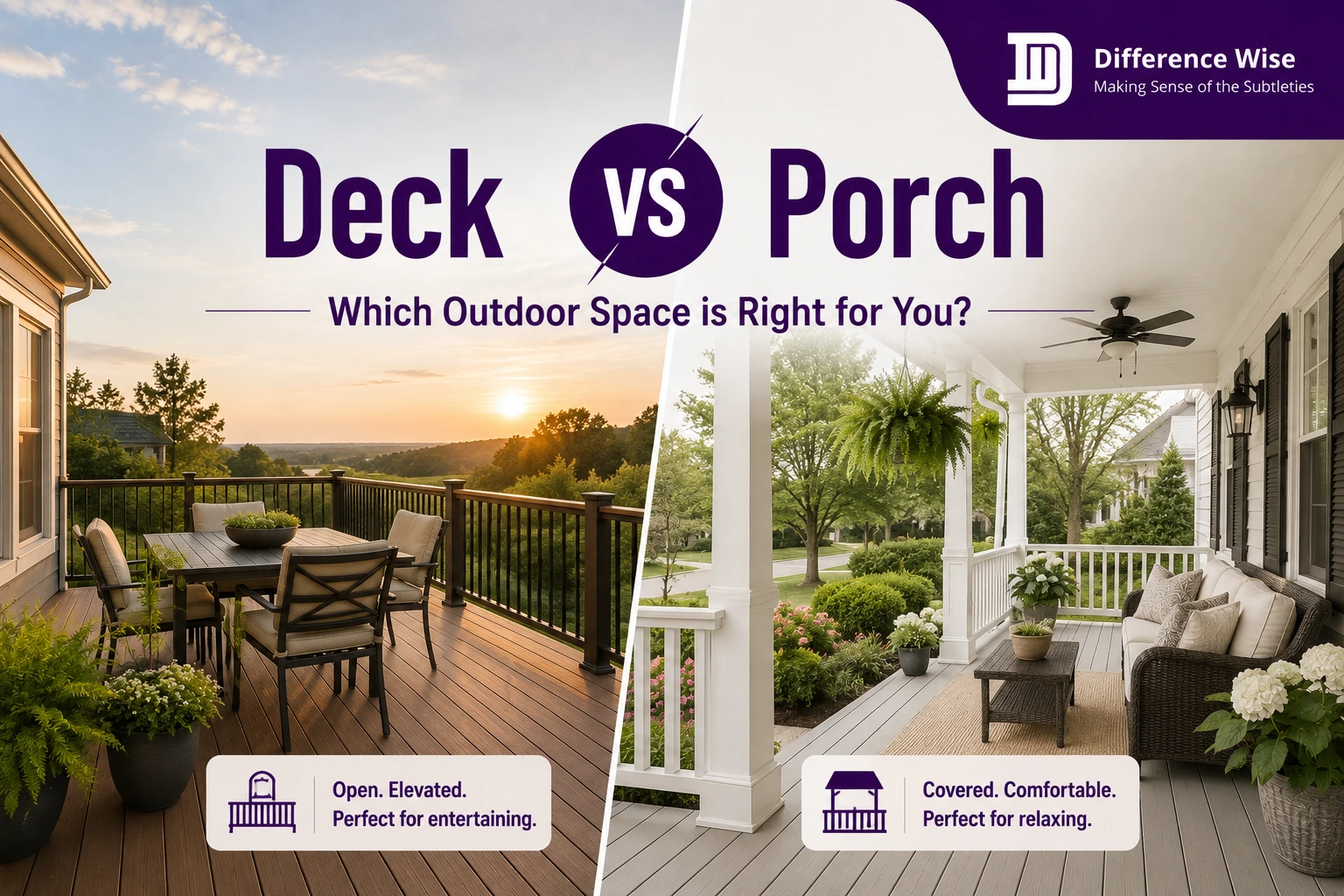
Adding an outdoor extension is a fantastic way to upgrade your property. Homeowners often struggle to choose between a deck vs porch. Both structures offer an excellent space for relaxing and entertaining guests outside. However, they serve entirely different architectural purposes.
Understanding these differences requires a close look at their structures and costs. A simple visual comparison does not reveal their distinct maintenance needs. You must weigh the pros and cons carefully before starting construction. We will break down every detail to help you make an informed decision.
Understanding the Core Definitions
What Constitutes a Deck?
A deck is an open-air platform built right outside your home. It usually extends from the back or side of the main house. Decks do not have roofs, allowing full exposure to the sunny sky.
They provide excellent areas for summer barbecues and large family gatherings. You can easily place large dining sets and lounge chairs on them. They essentially act as an uncovered outdoor living room for fair weather.
What Defines a Porch?
A porch is a covered shelter attached directly to your home entrance. It structurally integrates with your house and always features a solid roof. This roof protects you and your visitors from heavy rain and harsh sunlight.
Porches act as a welcoming transition zone into your house. They usually sit right at the front door to greet arriving neighbors. Many older homes feature large wrap-around designs for extra seating.
The Main Structural Difference
The primary difference lies entirely in the roof covering. Decks remain fully open to the natural elements year-round. Porches provide consistent shelter from bad weather conditions at all times.
Therefore, your local climate heavily influences which option works best. If you get heavy rain frequently, a covered structure makes more sense. If you love sunbathing, an open platform is the better choice.
Building Materials and Costs
Common Decking Materials
Builders usually construct decks using pressure-treated wood or cedar. Tropical hardwoods like mahogany are also popular but cost much more. Many people now choose composite materials for their new platforms.
Composite boards resist weather damage better than traditional natural wood. They do not rot or splinter after years of heavy rain. Your material choice directly affects the total construction budget.
Typical Porch Components
Porches utilize materials that match the main house perfectly. Builders pour concrete or lay brick for the foundational flooring. They install asphalt shingles or metal panels to match the existing roof.
This careful integration makes the extension look completely natural. It appears as an original part of the house rather than an add-on. This requires more specialized labor and planning.
Budgeting for Construction
Decks are generally much cheaper to build initially. Their open design requires far fewer building materials and labor hours. You save a lot of money by skipping the roof framing entirely.
Porches cost significantly more due to the heavy roof extension. Adding protective screens or electrical wiring increases the final price considerably. You must plan your project budget very carefully before hiring contractors.
Maintenance and Upkeep Requirements

Caring for Wooden Platforms
Wooden decks require constant maintenance to stay safe and beautiful. You must power wash, stain, and seal the wood every few years. Direct sun and rain wear down natural wood very quickly.
This routine prevents terrible rotting, dangerous splintering, and unsightly warping over time. If you ignore this upkeep, the boards will eventually fail entirely. It requires a serious commitment to long-term property care.
Maintaining Covered Extensions
Porches demand far less overall maintenance than open platforms. The roof shields the flooring from direct rain and harsh sun damage. You might only need to sweep the floor and paint the columns occasionally.
The protective covering saves you money and time in the long run. The materials simply degrade at a much slower pace. You can enjoy the space without worrying about constant repairs.
Comparing Hard Surfaces
When selecting surfaces, you should explore highly durable options carefully. This is very similar to comparing dekton vs quartz for interior kitchen counters. You want materials that resist heavy stains and harsh weather conditions.
Composite boards and concrete floors offer the lowest maintenance needs outdoors. They clean up easily with a simple garden hose and mild soap. Investing in better materials upfront saves you countless weekends of hard labor.
Lifestyle and Climate Considerations
Best Uses for Open Spaces
Decks are absolutely perfect for hosting large summer parties. They offer plenty of room for heavy grills and outdoor dining tables. Some people even install heavy hot tubs directly onto the reinforced structure.
They shine brightest on mild, sunny days with clear skies. You can watch the stars at night without any roof blocking your view. They encourage a highly active, outdoor-focused lifestyle.
Advantages of Covered Areas
Porches allow you to enjoy the fresh air regardless of the weather. You can drink your morning coffee comfortably during a summer rainstorm. Adding screens keeps annoying mosquitoes away during the humid evening hours.
It is an excellent spot for quiet reading and evening relaxation. You can leave comfortable fabric furniture outside without fearing sudden rain damage. It acts as a true extension of your interior living room.
Personal Grooming and Relaxation
You might sit outside specifically to groom yourself peacefully. For instance, you could be applying your daily beard balm vs beard butter on a quiet Sunday morning. A covered area provides the perfect shaded spot for your personal routines.
You can relax without blinding sunlight hitting your face directly. It offers a private, sheltered oasis just steps from your bedroom. This makes your daily habits feel much more luxurious and calming.
Home Value and Visual Appeal
Return on Investment
Adding either structure increases your overall property value nicely. Decks often yield a slightly higher immediate return on your investment. They offer highly desired entertainment space at a much lower initial cost.
Buyers love seeing a large, clean platform in the backyard. It helps them easily visualize hosting their own family gatherings. A well-maintained platform makes the house much easier to sell quickly.
Boosting Curb Appeal
Front porches drastically improve the street view of your house. They add immense architectural character and charm to plain exterior facades. Just like choosing between greek villa vs alabaster paint, a porch changes your home’s entire vibe.
It makes the property look highly inviting to neighbors and guests. A welcoming entry strongly influences a buyer’s first impression of the house. It sets a positive tone before they even walk inside.
Insurance and Appraisals
Appraisers often view fully covered areas differently than open platforms. They might count a well-built porch toward your total living space. This official classification can raise your home equity quite significantly over time.
However, this might also increase your yearly property taxes slightly. Always check your local building codes before starting any major construction. Understanding these rules prevents costly legal headaches down the road.
FAQs
Do I need a permit to build a deck or porch?
Yes, most local building departments require official permits for both structures. Always check your local zoning laws before starting your construction project.
Can I add a roof to my existing deck?
You can sometimes add a roof, but it requires structural reinforcement. Decks are usually not originally designed to hold the heavy weight of a roof.
Which structure lasts longer over time?
A well-built porch generally outlasts an open deck. The roof protects the floor and foundation from damaging weather and moisture.
Final Takeaways
Deciding between these outdoor structures depends entirely on your specific lifestyle needs and budget. A deck provides an excellent, budget-friendly option for hosting large gatherings under the open sky. It requires more maintenance if you choose wood, but it offers a fantastic space for grilling and sunbathing. Conversely, a porch acts as a highly protective extension of your home’s architecture. It costs more to build due to the roof, but it allows you to enjoy the outdoors in any weather. Take time to evaluate your local climate and personal entertaining habits carefully. Your final choice will successfully expand your living space and increase your overall property value.
