
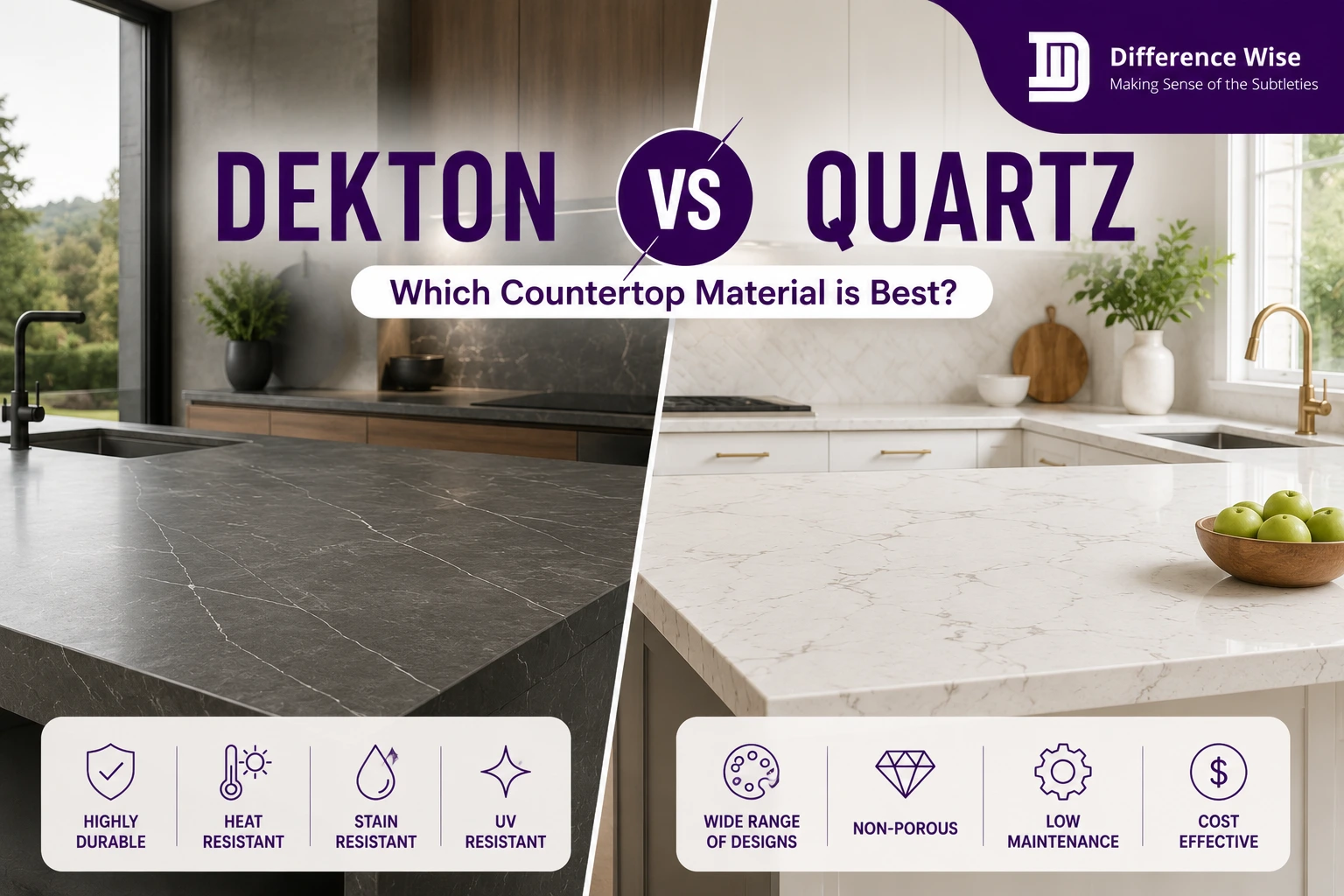
Selecting new kitchen counters requires careful planning and research. Many homeowners get stuck comparing Dekton vs quartz surfaces. Both materials offer incredible durability for busy food preparation areas. However, they feature very different chemical compositions and structural properties.
Understanding these differences requires a close look at their manufacturing processes. A quick glance at the stone slabs hides their true functional limits. We will break down every performance detail to help you choose. This ensures your investment serves your cooking needs perfectly for decades.
Composition and Manufacturing Methods
What is Dekton?
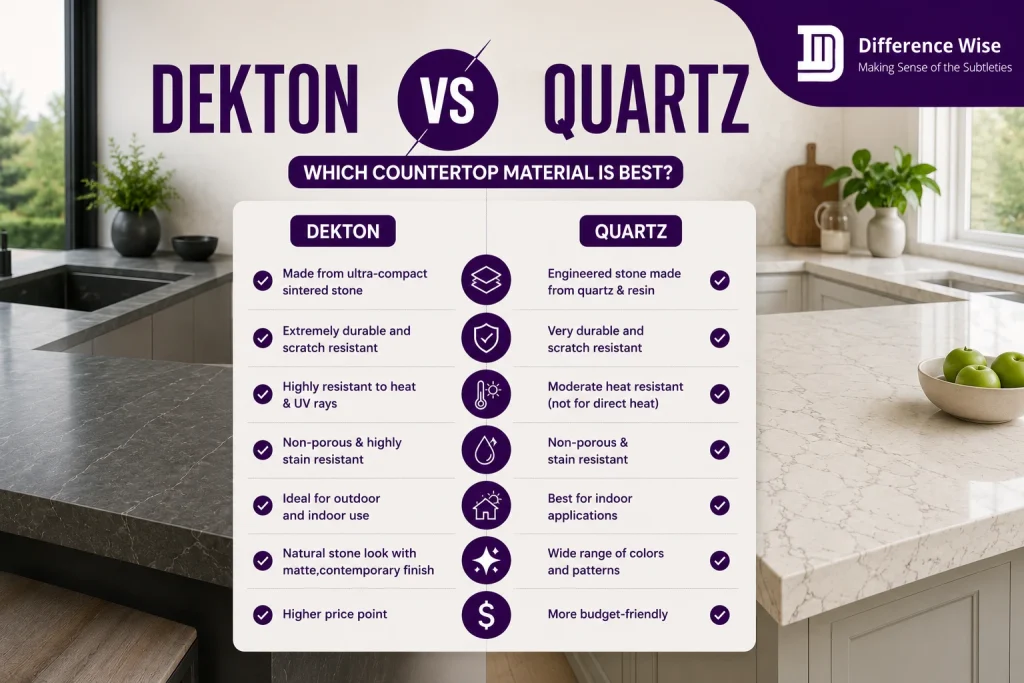
Dekton represents a highly advanced ultra-compact surface material. Manufacturers use a complex blend of raw elements to produce it. These raw components include glass, porcelain, and natural quartz.
It skips polymer resins entirely during the manufacturing stage. The final product relies purely on physical bonding of minerals. This creates a remarkably dense and heavy stone slab.
How Quartz is Made
Quartz functions as an engineered stone surface for interior spaces. It contains roughly ninety percent crushed natural quartz crystals. Manufacturers add polymer resins and color pigments to bind everything together.
This mixture undergoes vacuum compression and gentle baking. The resin acts as a glue holding the crushed stone firm. It provides a beautiful, consistent visual pattern across the kitchen.
Sintering Versus Curing
Dekton uses Sinterized Particle Technology to fuse raw materials together. This extreme high-heat process mimics natural metamorphic rock formation. It completes the entire structural change in a few hours.
Quartz relies entirely on chemical curing through resin hardening. This difference dictates how each surface reacts to daily kitchen hazards. You must consider these manufacturing variances before finalizing any purchases.
Heat and UV Performance
Heat Resistance Levels
Dekton is completely fireproof and extremely heat resistant. You can place boiling pots directly on the counter without damage. It withstands thermal shock perfectly in busy kitchen environments.
Quartz handles heat very poorly during daily cooking tasks. The internal polymer resins will scorch at roughly three hundred degrees. Hot pans leave permanent, ugly burn marks on the stone.
Sunlight and Fading
Dekton offers incredible ultraviolet ray resistance outdoors. The color pigments never fade under direct, harsh sunlight exposure. This makes it perfect for exterior summer kitchens.
Quartz degrades rapidly when exposed to direct UV rays. The chemical resins turn yellow and fade over extended periods. You should strictly keep engineered stone away from sunny windows.
Outdoor Suitability
When planning sunny outdoor spaces, material selection requires extra attention. You might be building a deck vs porch for your backyard. Choosing exterior counters follows a similar strict planning process.
Dekton handles extreme outdoor weather changes flawlessly. Engineered stone will crack and discolor outside over time. Always pick ultra-compact surfaces for open-air entertainment zones.
Durability and Scratch Resistance
Scratch Defenses
Both surfaces provide excellent resistance against sharp knife scratches. You can chop ingredients directly on either counter easily. However, doing so will quickly dull your expensive kitchen knives.
Impact and Chipping
Dekton is extremely hard but can feel somewhat brittle. Heavy metal pots striking exposed edges can cause chipping. Repairing these chips requires professional assistance and specialized tools.
Quartz contains flexible resins that absorb heavy physical impacts. It resists edge chipping much better than ultra-compact surfaces. This makes it slightly safer for busy family kitchens.
Daily Wear and Tear
For small electronic accessories, proper placement keeps counters safe. You might use massagers similar to choosing between arkos vs rocknix performance items. You need a stable, scratch-proof surface for your grooming tools.
Both materials prevent scuffs from heavy vibrating devices perfectly. They maintain their smooth texture despite heavy daily usage. Your choice depends more on cooking habits.
Staining and Maintenance Needs
Porosity Levels
Both materials are completely non-porous and highly hygienic. They never require chemical sealing after professional installation. They block liquids from penetrating the inner core.
Stain Resistance
You can spill wine, coffee, or oil without worry. Stubborn agents wipe away cleanly with mild soap and water. They prevent bacterial growth in food preparation zones perfectly.
Cleaning Routines
Maintaining these counters requires minimal time and effort. Harsh chemical cleaners are unnecessary for basic daily maintenance. A damp cloth keeps the kitchen looking pristine.
Precision Calibration
For entertainment setups like video games, precision remains vital. You might play retro games requiring gsm 0.23 vs gsm 0.38 on ps2 adjustments. Fine-tuning hardware requires clear, distraction-free work areas nearby.
Smooth, clean counter surfaces provide excellent staging spots. You can manage complex electronic gear without surface damage. Clean spaces ensure reliable technical performance.
Cost and Installation Factors
Pricing Structures
Dekton generally sits at a much higher price point. The advanced manufacturing technology drives material costs up significantly. Quartz offers wider, more accessible price ranges for buyers.
Fabrication Complexity
Dekton requires highly specialized cutting tools and certified fabricators. The slabs carry internal tension and can crack during installation. Only experienced professionals should handle the fabrication process.
Installation Requirements
Quartz is much easier to cut and shape properly. Most standard stone installers possess the skills required for quartz. This availability lowers your overall renovation labor costs.
FAQs
Can I put a hot pan on Dekton?
Yes, Dekton is completely heatproof. You can set down screaming hot pans directly onto the surface without causing thermal shock or scorching.
Is quartz suitable for an outdoor kitchen?
No, direct sunlight and temperature swings ruin the resin binders in quartz. It will yellow and warp outdoors, so use Dekton instead.
Which material is more scratch-resistant?
Both surfaces are highly scratch-resistant. However, Dekton is slightly harder, making it nearly impossible to scratch under normal kitchen use.
Final Takeaways
Choosing between these countertop materials hinges entirely on your specific cooking environment and budget. Dekton utilizes an ultra-compact mineral blend to deliver unmatched heat and UV resistance, making it the ultimate choice for outdoor kitchens and heavy indoor cooking. Quartz relies on engineered stone and resin binders to offer excellent impact resistance and easier fabrication at a more accessible price point. Both surfaces remain completely non-porous and stain-resistant for easy daily maintenance. If you prioritize absolute heatproofing and exterior durability, Dekton is the superior option. Conversely, if you want a reliable indoor surface that handles heavy impacts and fits a standard budget, quartz wins out.
