
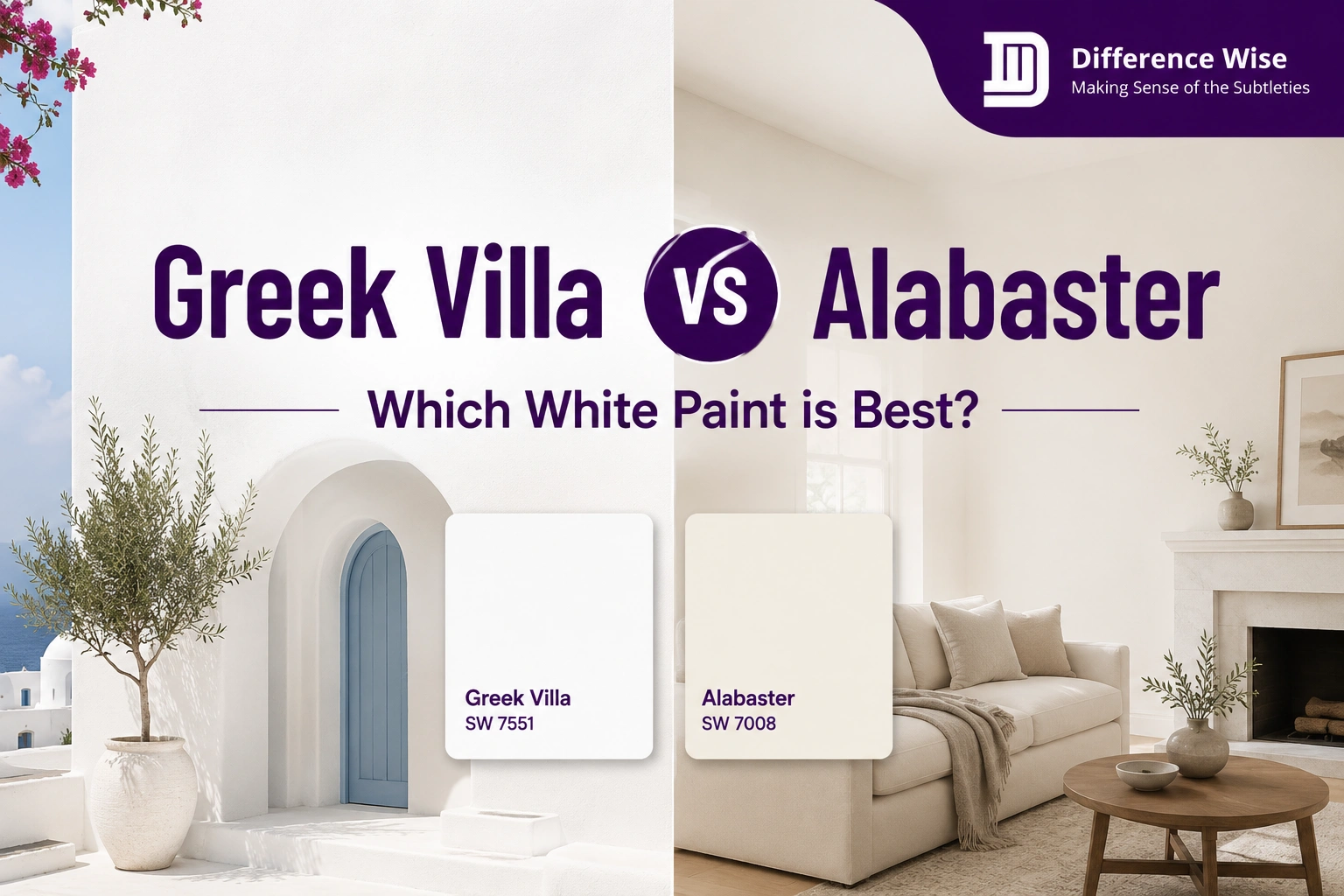
Choosing the right white paint is rarely a simple task for any property owner. You might find yourself stuck deciding between Greek Villa vs Alabaster. Both are highly popular choices from Sherwin-Williams. Buyers love them for their inviting and warm qualities. However, they act differently once applied to your walls. A simple paint swatch does not tell the whole story. You need to look closely at their unique properties. It takes patience to find the right shade for your project.
Understanding these two shades requires a close look at room lighting. It also means checking how they react to your flooring and furniture. Greek Villa offers a sunny and crisp appearance. On the other hand, Alabaster provides a softer and balanced background. We will break down every detail to help you decide. By the end, you will know exactly which color fits your layout. You can then start your painting project with total confidence.
Understanding Light Reflectance Value
What LRV Means for Paint
Light Reflectance Value is a standard measurement in interior design. It tells you exactly how much light a color reflects. The measurement scale ranges from zero to one hundred. Zero represents absolute darkness or black. One hundred represents pure, bright white.
A higher number means the paint reflects more light. This score helps you predict how bright a room will feel. You should always check the LRV before buying paint. It is a highly reliable guide for any interior renovation project. This rating system takes the guesswork out of painting.
Greek Villa LRV Details
Greek Villa has a Light Reflectance Value of 84. This score places it very high on the brightness scale. It reflects a massive amount of light back into the room. As a result, spaces feel larger and highly energetic.
It is an excellent choice for long, dark hallways. It also works very well in rooms with small windows. Despite its high score, it avoids looking like a stark hospital white. It maintains a gentle and highly welcoming glow. It keeps your interior looking fresh and bright.
Alabaster LRV Details
Alabaster has a Light Reflectance Value of 82. This is slightly lower than its competitor. You might think a two-point difference is totally meaningless. However, this lower score gives the paint more visual weight.
It absorbs slightly more light instead of bouncing it away. This creates a softer and more grounded appearance on the walls. It feels closer to a very light, delicate cream. It is perfect for spaces that need a calm, relaxed atmosphere. It reduces harsh glare from bright windows effectively.
Analyzing Paint Color Undertones
Why Undertones Matter
Every white paint has an underlying base color. We call this hidden color the undertone. Undertones dictate how the paint behaves under different physical conditions. They can make a white look pink, green, blue, or yellow.
Ignoring the undertone is a very common design mistake. You must test samples against a pure white piece of paper. This trick quickly reveals the hidden colors within the paint. It saves you from unpleasant surprises after painting an entire room. It ensures your final color matches your expectations.
Greek Villa Warm Traits
Greek Villa is a true warm white paint. It features a noticeable creamy yellow and beige undertone. This base gives the color a distinct sunny personality. It feels highly clean and fresh without ever feeling cold.
It is highly favored in coastal or modern organic homes. The warm base pairs well with natural, earthy textures. You will often see it combined with rattan, jute, and light oak. It brings a cheerful energy to any interior space. It creates a highly inviting atmosphere for guests.
Alabaster Soft Traits
Alabaster takes a very different approach to its base color. It contains a very subtle hint of gray. Designers often refer to this specific trait as a greige base. This gray drop acts as an anchor for the paint.
It prevents the color from looking too yellow or neon. This muted quality makes it incredibly versatile for homes. It looks highly expensive and sophisticated on large walls. It is an ideal backdrop for classic and transitional design styles. It offers a very balanced and safe interior palette.
Lighting Effects on Wall Colors

North-Facing Room Lighting
North-facing rooms receive cool, blue-tinted natural light throughout the day. This cool light can make standard whites look dingy or flat. Greek Villa is a powerful solution for this specific lighting problem.
Its warm yellow base actively fights the cold blue shadows. It injects much-needed warmth into the chilly space. Alabaster can sometimes look a bit dull in these rooms. The lack of direct sun highlights its gray undertone too much. You must counteract the blue light with warmer paint tones.
South-Facing Room Sunlight
South-facing rooms get bright, warm sunlight all day long. This intense light amplifies warm paint colors significantly. Greek Villa can suddenly look very yellow in this specific environment. If you want a crisp look, it might disappoint you.
Alabaster is the superior choice for southern sunlight exposure. Its tiny gray undertone cools down the intense warm sun. It keeps the room looking highly balanced and neutral. The color remains soft instead of becoming blindingly bright. It offers excellent glare reduction during the afternoon.
Artificial Lighting Choices
Your choice of interior light bulbs changes everything. Warm incandescent bulbs will pull out the yellow in Greek Villa. They will make Alabaster look creamier and much richer. Cool LED bulbs will completely suppress the yellow tones.
They will quickly highlight the gray anchor within Alabaster. Daylight bulbs offer the most neutral view of the wall paint. Consider your primary lighting sources before making a final decision. Always match your bulbs to your desired room atmosphere. This ensures your paint looks consistent day and night.
Best Room Applications
Living Room Painting Ideas
The living room is the main center of the home. You want a color that feels welcoming to all your guests. Greek Villa creates a highly lively and energetic central space. It pairs beautifully with large windows and large indoor plants.
Alabaster offers a more relaxed and subdued living area. It is perfect for winding down in the late evening. It lets your artwork and expensive furniture take center stage. Both choices provide an excellent foundation for living spaces.
Kitchen Cabinet Upgrades
Painting your kitchen cabinets is a major design update. Alabaster is a heavily requested color for new cabinetry. It provides a soft, creamy look that feels highly customized. It successfully avoids the harshness of a pure, stark white.
Greek Villa is also a stunning choice for kitchen cabinets. Choosing new countertops often means comparing dekton vs quartz. Ensure your warm white cabinets complement these hard stone surfaces perfectly. Your final paint choice depends on the overall kitchen design theme.
Bathroom Grooming Spaces
Bathrooms require a clean and highly refreshing color palette. Alabaster provides a neutral and calming background for master baths. Greek Villa warms up bathrooms that lack natural window light. This makes your daily grooming routine much more pleasant.
For instance, you might be choosing between beard balm vs beard butter right now. You need proper bathroom lighting and a bright wall color to see clearly. Greek Villa bounces artificial vanity light perfectly around the room.
Coordinating with Interior Finishes
Flooring Material Pairings
Flooring covers a massive surface area in your home. It heavily influences how your wall color finally appears. If you have cool-toned gray floors, you should choose Alabaster. The shared gray undertones create a highly pleasing visual harmony.
If you have warm oak or terracotta tile, choose Greek Villa. The warm wood tones complement the sunny beige base perfectly. Mixing cool floors with warm walls can cause a visual clash. Always match your paint to your existing hard floors.
Trim and Ceiling Matches
Selecting a matching trim color can be quite tricky. A popular method is to use the same color for walls and trim. You simply change the paint finish for basic contrast. Use a flat finish for walls and a semi-gloss for trim.
Both Alabaster and Greek Villa look beautiful in a monochromatic setup. If you want contrasting trim, use Sherwin-Williams Pure White. It provides a highly clean, crisp edge against both warm whites. It clearly defines the borders of your room.
Furniture Style Coordination
Your furniture style should directly guide your paint selection. Alabaster is a safe and highly reliable bet for most furniture. It handles dark, heavy traditional pieces very well. It also complements sleek, modern gray sofas beautifully.
Greek Villa leans heavily toward very specific design styles. It is perfect for bohemian, coastal, or rustic farmhouse decor. It loves being surrounded by natural wood, leather, and woven textures. Let your existing furniture dictate the wall color direction.
Exterior Painting Considerations
Sunlight Washout Effects
Exterior paint behaves very differently than interior paint. Direct outdoor sunlight washes out paint colors significantly. A color that looks creamy inside might look stark white outside. You must factor in this washout effect when choosing exterior colors.
Always paint a large test patch on the outside of your home. View it carefully on sunny days and cloudy days. This is the only way to ensure you like the result. Do not trust an indoor paint chip for exterior walls.
Planning Outdoor Spaces
When painting exteriors, you must consider adjoining structures carefully. You might be deciding between a deck vs porch for your backyard. Your exterior house paint should match these wooden or concrete additions properly.
Both Greek Villa and Alabaster look wonderful behind dark wooden decks. They provide a high-contrast background for outdoor seating areas. Testing your paint choice near your outdoor structures is highly recommended. It guarantees a unified look for your entire property.
Greek Villa Outside
Greek Villa is a fantastic option for house exteriors. It retains enough warmth to avoid looking like a bright primer. It gives the home a highly welcoming and cheerful curb appeal. It reflects the sun nicely without blinding your neighbors.
It works wonderfully on modern farmhouse exteriors. It also suits Mediterranean-style homes beautifully. It pairs well with dark wood doors and heavy copper fixtures. It is a highly reliable choice for modern residential exteriors.
Alabaster Outside
Alabaster is another wildly popular exterior paint option. Because sunlight washes it out, it loses some of its greige quality. It ends up looking like a soft, highly traditional white. It blends in perfectly with surrounding natural landscapes.
It looks incredible on classic brick, siding, or stucco. It pairs nicely with black shutters and dark gray roofs. It offers a timeless and highly expensive exterior aesthetic. It is a very safe choice for neighborhood homeowners associations.
Comparing with Other White Paints
Against Pure White Alternatives
Sometimes you need to compare these shades against true whites. Sherwin-Williams High Reflective White is a stark, pure white. Next to it, Greek Villa looks noticeably yellow. Alabaster looks distinctly gray and highly muted.
This direct comparison highlights their true hidden undertones. Pure whites are often too harsh for standard living spaces. This is why warm whites remain the preferred choice for interiors. They are much easier on the eyes over long periods.
Against Deeper Cream Shades
You might also compare them to deeper off-whites. Colors like Sherwin-Williams Creamy have much stronger yellow bases. Next to Creamy, Greek Villa looks very bright and clean. Alabaster looks almost like a light gray paint.
If you fear a room looking too yellow, avoid the deeper creams. Stick to the highly balanced profiles of Greek Villa or Alabaster. They offer the perfect middle ground for residential painting. They provide warmth without completely overpowering the room.
Choosing the Right Base
Selecting the right base color requires a lot of patience. You must gather multiple paint chips from the hardware store. Tape them directly to your walls in different rooms. Look at them next to your window frames and baseboards.
Eliminate the ones that clash with your fixed elements. Slowly narrow down your choices over a few days. This careful process guarantees you will love the final result. Take your time to avoid costly repainting jobs later.
Practical Maintenance and Upkeep
Best Paint Finishes
Choosing the right paint finish extends the life of your walls. Flat paint hides wall imperfections beautifully. However, flat paint is very hard to clean properly. For warm whites, a satin or eggshell finish is highly recommended.
These specific finishes offer a very slight visual sheen. They resist dirt and absorb much less moisture. They are perfect for high-traffic areas like hallways and living rooms. They keep your white walls looking fresh much longer.
Cleaning Light Walls
White walls naturally show dirt, fingerprints, and scuffs easily. Regular maintenance is heavily required to keep them looking perfect. Use a soft, damp microfiber cloth for basic daily dusting.
For stubborn marks, use a gentle mixture of water and mild dish soap. Avoid harsh chemical cleaners or highly abrasive scrubbing sponges. They can strip the paint finish and leave ugly dull spots. Gentle cleaning protects your investment over time.
Touching Up Scuffs
Eventually, your walls will suffer minor surface damage. Keeping leftover paint is highly essential for future touch-ups. Store the paint in a small, completely airtight container. Keep it in a safe, temperature-controlled environment.
When fixing a scuff, use a small, clean foam brush. Dab the paint lightly onto the damaged area. Feather the edges carefully so it blends perfectly into the existing wall. This quick fix keeps the room looking freshly painted.
FAQs
Is Greek Villa too yellow for a whole house?
It is not inherently too yellow for an entire house. However, it can appear yellow in brightly lit, south-facing rooms. Test it in multiple rooms before committing to a whole-house palette.
Which color is better for selling a house?
Alabaster is generally considered the safer bet for real estate. Its greige base makes it highly neutral and agreeable. It appeals to a very wide range of potential house buyers.
Can I use Greek Villa on the ceiling?
Yes, you can easily use it on your ceiling. Use a flat finish to minimize unwanted light glare. It provides a warmer look than standard bright ceiling white.
Does Alabaster look gray at night?
Under cool artificial lighting, Alabaster can show its gray undertone. Using warm white bulbs helps maintain its creamy appearance after dark. It adapts heavily to your chosen interior lighting scheme.
Final Takeaways
Choosing between these two beautiful white paints ultimately depends on your specific home environment. Greek Villa provides a sunny, energetic atmosphere with its higher light reflectance and creamy yellow undertones. It acts as the perfect choice for modern organic spaces or cool, north-facing rooms.
Alternatively, Alabaster offers a softer, more grounded presence due to its greige base and slightly lower brightness. It excels in bright, south-facing areas and classic design layouts. You should always test large paint swatches in your exact room to monitor how lighting changes throughout the day. Your final decision will successfully tie your flooring, furniture, and fixed interior finishes together.
