
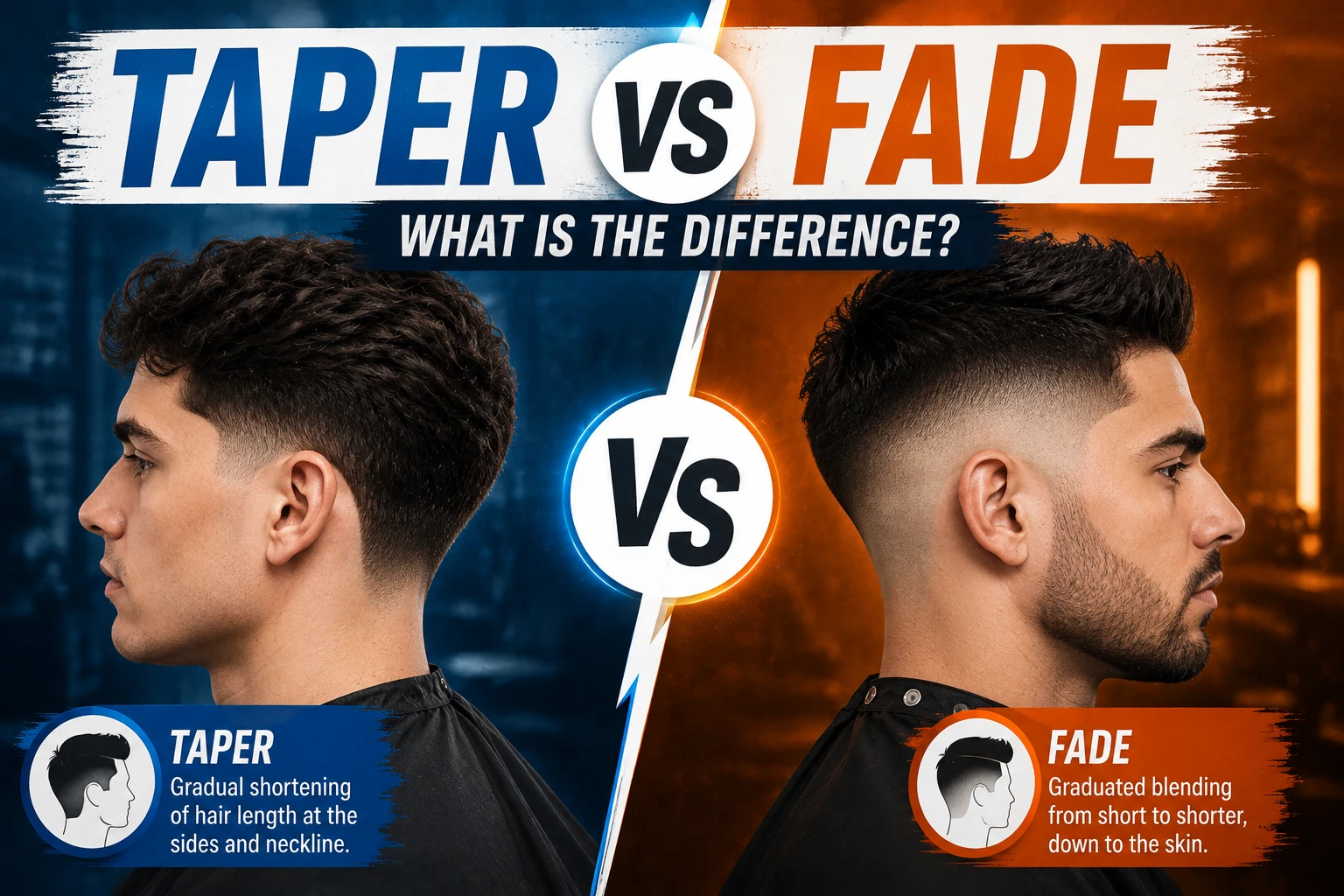
Taper vs fade is a common comparison when choosing a clean, modern haircut. Both styles gradually shorten the hair, but they differ in how far the transition extends and how short the hair becomes.
A taper usually keeps more hair around the sides and edges, while a fade can take the hair down to very short stubble or bare skin. Understanding that difference can help you explain exactly what you want when visiting a barber.
What Is A Taper?
How Does A Taper Haircut Work?
A taper gradually reduces hair length around the natural edges of the haircut. The shortening usually happens around the sideburns, ears, and neckline rather than across the entire side of the head.
A traditional taper normally leaves some visible hair at its shortest point. This creates a softer transition between the longer hair above and the shorter hair around the edges.
Because less hair is removed, a taper tends to preserve the natural shape of the head. It can therefore look clean without creating the strong contrast often associated with a fade.
Where Is A Taper Cut?
A taper is mainly concentrated around the lower edges of the haircut. The barber gradually shortens the hair near the neckline and sideburns while leaving more length above.
The exact height can vary between barbers and haircut styles. A low taper stays close to the ears and neckline, while a higher taper can extend farther toward the temples.
The term itself is not always used identically by every barber. That is why explaining the desired height and shortest length can prevent confusion.
What Does A Taper Look Like?
A taper generally produces a subtle and natural appearance. The sides remain relatively full, while the edges become progressively shorter.
This makes a taper suitable for people who want a neat haircut without a dramatic change to their overall hairstyle. It can work with short, medium, or longer hair on top.
The softer appearance can also make the haircut easier to grow out. New hair growth is usually less noticeable because the shortest area does not create an extreme contrast.
What Is A Fade?
How Does A Fade Haircut Work?
A fade gradually reduces the hair from longer lengths into very short hair. Depending on the type, the shortest section can finish at stubble or completely bare skin.
Unlike a traditional taper, a fade can extend farther upward across the sides and back. This creates a more noticeable transition between the hair on top and the shorter areas below.
The barber uses different clipper lengths and blending techniques to create a smooth progression. The result can range from subtle to very dramatic depending on the fade height and finish.
What Are The Main Types Of Fades?
The most common fade categories are low, mid, and high fades. These names describe where the transition begins on the sides and back.
A low fade starts closer to the ears and neckline. A mid fade begins around the middle of the sides, while a high fade moves the transition farther upward toward the temples.
Fades can also be described by their shortest finish. Skin fades and bald fades take the bottom section down to the skin, creating more contrast than a fade that leaves short stubble.
What Does A Fade Look Like?
A fade generally creates a sharper and more defined appearance. The shorter sides make the longer hair above stand out more clearly.
The overall effect depends on the height and finish. A low fade can look fairly subtle, while a high skin fade creates a much stronger contrast.
This flexibility is one reason fades work with many different hairstyles. They can be combined with textured tops, curls, pompadours, crops, quiffs, and many other cuts.
Taper Vs Fade: Main Difference
Is A Taper The Same As A Fade?
A taper and fade are related, but they are not traditionally the same haircut. Both use graduated changes in hair length, but a taper normally leaves more hair at the shortest point.
A fade takes the graduation farther and can reach very short stubble or bare skin. It can also cover a larger portion of the sides and back.
Modern barbering sometimes blurs this distinction. Terms such as “taper fade” are now widely used, which can make the traditional definitions less clear.
Does A Taper Go To Skin?
A traditional taper generally does not go completely down to the skin. The shortest section usually retains some visible hair, even when the taper is cut quite close.
If you specifically want bare skin around the temples or neckline, you should tell your barber. That request may lead to a taper fade or another type of fade rather than a classic taper.
The exact terminology can vary between barbershops. Describing the desired finish is therefore more reliable than using the haircut name alone.
Does A Fade Go To Skin?
Not every fade reaches bare skin. Some fades finish with very short clipper lengths, while skin fades and bald fades remove the hair down to the scalp.
This distinction matters because a skin finish creates more contrast. It also makes new hair growth easier to notice between barber visits.
If you want a fade but do not want exposed skin, tell your barber that you want the shortest section left at a specific clipper length.
Taper Vs Fade: Quick Comparison
Hair Length
A taper generally leaves more hair around the sides and edges. The shortest section remains visible rather than disappearing completely into the scalp.
A fade can reduce the hair much further. Depending on the style, the bottom can finish at very short stubble or bare skin.
This creates a noticeable difference in the final appearance. The taper looks softer, while the fade can look sharper and more defined.
Coverage
A taper usually focuses on the sideburns, temples, ears, and neckline. The main body of hair on the sides remains relatively full.
A fade can extend across much more of the sides and back. The higher the fade, the more of the side hair gets removed.
This means the two styles can have different effects even when the top hairstyle remains exactly the same.
Contrast
Tapers generally create lower contrast between the sides and the hair above. The gradual change can blend naturally into the existing hairstyle.
Fades usually create greater contrast because the sides become significantly shorter. Skin fades create the strongest difference between the scalp and longer hair.
The amount of contrast is ultimately a matter of personal preference. A low fade can provide a middle ground for someone who wants definition without an extreme change.
Types Of Tapers
Low Taper
A low taper keeps most of the side length intact while shortening the hair around the ears and neckline. It is one of the most subtle versions of a taper.
This style works well when you want the edges cleaned up without dramatically changing your haircut. It can also complement longer hair on top.
Because the transition remains low, the haircut keeps much of the natural side shape. That makes it a useful option for people who prefer a softer appearance.
Mid Taper
A mid taper moves the gradual shortening slightly higher on the sides. It provides more definition than a low taper while still retaining more hair than many fades.
The exact height can vary between barbers. It is therefore helpful to show a reference photo if you have a specific result in mind.
A mid taper can work with both traditional and modern hairstyles. The amount of side volume can also be adjusted according to your preference.
High Taper
A high taper takes the shorter transition farther upward toward the temples. Despite its name, it does not necessarily mean that the hair reaches bare skin.
The style can create more definition while retaining the basic character of a taper. It sits between a classic low taper and some more aggressive fade styles.
If you want a high taper, explain how short you want the lowest section. This helps your barber understand whether you want visible hair, stubble, or skin.
Types Of Fades
Low Fade
A low fade begins close to the ears and lower neckline. It removes less side hair than higher fades and can produce a relatively subtle result.
This makes the low fade useful for people who want a modern haircut without taking the transition too high. It can work with many hairstyles and hair textures.
The final effect depends on the shortest finish. A low skin fade will still look much sharper than a low fade that leaves visible stubble.
Mid Fade
A mid fade starts around the middle of the sides. It creates more contrast than a low fade while keeping more hair than a high fade.
This balanced placement makes the mid fade a popular choice. It can provide definition without making the sides extremely short.
The top can be styled in many ways. The fade simply changes how the sides transition into that hairstyle.
High Fade
A high fade moves the transition toward the upper sides and temples. It removes more side volume and creates a stronger contrast with the hair above.
This can produce a bold appearance, particularly when combined with a short or textured hairstyle. It can also make the top appear more prominent.
Because the transition is higher, regrowth may become noticeable sooner. Regular maintenance can help preserve the original shape.
Skin Fade
A skin fade takes the shortest part of the haircut down to bare skin. The barber gradually blends the exposed area into longer hair above.
The strong contrast gives a skin fade its distinctive appearance. It can look particularly sharp when freshly cut.
However, the exposed scalp also means new growth becomes easier to see. People who want to maintain the freshly shaved appearance may need more frequent appointments.
What Is A Taper Fade?
Why Is Taper Fade Confusing?
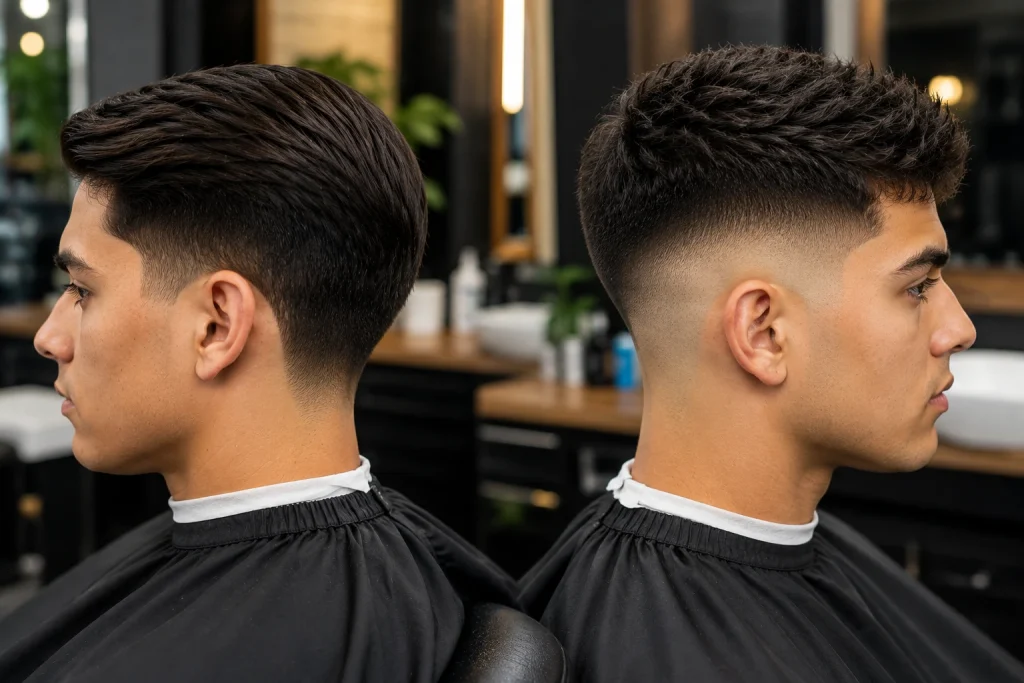
“Taper fade” is one of the most confusing haircut terms because barbers do not always use it in exactly the same way. Some use it to describe a low fade around the temples and neckline.
Others use the phrase for a haircut that combines tapering around the edges with a faded finish. This means the same request can produce different results depending on the barber.
For that reason, the phrase alone may not provide enough information. You should describe the height, amount of side hair, and shortest finish you want.
Is A Taper Fade A Taper Or A Fade?
A taper fade combines characteristics associated with both styles. It usually keeps the transition relatively controlled while using a shorter finish around selected areas.
The exact result depends on the barber’s interpretation. Some taper fades leave visible stubble, while others may reach the skin around the temples and neckline.
If you want a specific result, ask whether the barber’s version reaches the skin. A reference photograph can also remove uncertainty before the cutting begins.
How Should You Ask For One?
Start by explaining the height you want. You can ask for a low, mid, or high taper fade depending on where you want the transition.
Then explain the shortest finish. Say whether you want visible hair, very short stubble, or bare skin.
Finally, explain how much side weight you want to keep. These details give your barber more useful information than simply saying “taper fade.”
Taper Vs Fade: Maintenance
Which Needs More Maintenance?
A fade generally requires more frequent maintenance than a taper. This is especially true for skin fades because the difference between bare skin and growing hair becomes visible quickly.
A taper tends to remain presentable for longer because more hair remains around the edges. The gradual regrowth is usually less obvious.
Your hair growth rate also matters. Someone with fast-growing hair may need touch-ups sooner regardless of which haircut they choose.
How Often Should You Get A Taper?
Many people can maintain a taper for roughly three to five weeks before needing another full haircut. The exact period depends on how quickly the hair grows and how precise you want the edges to remain.
A very subtle taper can often grow out naturally. You may only need a full haircut when the overall hairstyle becomes too long.
Some people choose occasional edge cleanups between full appointments. This can keep the neckline and sideburns neat without completely reshaping the haircut.
How Often Should You Get A Fade?
A fade often looks its sharpest during the first couple of weeks. Skin fades may require more frequent visits because new growth becomes visible against the previously shaved area.
Many people refresh a fade every two to three weeks. Others allow it to grow longer before returning to the barber.
There is no single schedule that works for everyone. Your preferred level of sharpness and natural hair growth will determine the best timing.
Taper Vs Fade: Which Is Easier To Grow Out?
Growing Out A Taper
A taper is generally easier to grow out because the shortest section still contains some hair. As that hair gets longer, the transition usually becomes less noticeable.
This makes the style convenient for people who do not want frequent barber appointments. The haircut can gradually become fuller without a sudden change in appearance.
A taper can also transition into many other hairstyles. You can allow the sides to grow while keeping the top relatively unchanged.
Growing Out A Fade
A fade can take longer to return to its original fullness because more hair has been removed from the sides. This is particularly noticeable with high fades and skin fades.
As the shortest sections grow, the contrast gradually decreases. The haircut may still look good, but it will not have the same crisp appearance as a fresh fade.
If you want to grow out a fade, your barber can gradually reshape the sides. Patience is usually required when returning to a fuller hairstyle.
Which Grows Out Better?
A taper generally has the easier grow-out process. Its softer graduation means that additional hair growth does not change the appearance as dramatically.
Read More: Manhua Vs Manhwa: What Is The Difference?
A fade can still grow out well, but the change from skin or very short stubble is more noticeable. The higher and shorter the fade, the more obvious this transition can become.
For people who prefer longer periods between appointments, a taper may therefore be more practical. For people who prioritize a sharp finish, the extra maintenance of a fade may be worthwhile.
Taper Vs Fade For Different Hair Types
Straight Hair
Straight hair can clearly show the graduation created by either haircut. A taper keeps more side fullness, while a fade creates stronger contrast.
A low taper can work well with classic hairstyles such as side parts and longer textured tops. A fade can give shorter styles a cleaner and more defined appearance.
The best choice depends on how much side volume you want. Your barber can also adjust the blend to match your hair density.
Curly Hair
Curly hair can work particularly well with fades because the shorter sides contrast strongly with the curls above. This can make the top appear fuller and more defined.
A taper is also useful when you want to preserve more fullness around the sides and neckline. It can create a softer transition without removing as much hair.
Your barber should consider how much the curls shrink when they dry. Showing a reference photo can help communicate your preferred amount of length.
Coily Hair
Both tapers and fades are common choices for coily hair. A fade can create a crisp contrast, while a taper preserves more natural fullness around the sides.
The choice depends on the desired shape and how much contrast you want. Hair density and curl pattern can also influence the final result.
A barber experienced with coily hair can adjust the blend according to the hair’s natural growth pattern. This can help maintain an even appearance as the haircut grows.
Taper Vs Fade For Different Face Shapes
Round Face
A higher fade can reduce some side volume and create a more elongated visual effect. However, the hairstyle on top also plays an important role.
A low taper keeps more width around the sides. This can be useful when you do not want to remove too much side volume.
There is no universal haircut rule for round faces. Your preferred length, hair texture, and overall style should also guide the decision.
Long Face
People with longer faces may prefer hairstyles that retain some side fullness. A taper or low fade can provide that balance without removing too much from the sides.
A very high fade can make the top appear more dominant. Depending on the hairstyle, this can make the face appear even longer.
Keeping some volume on the sides can create a more balanced appearance. Your barber can adjust the height based on your proportions.
Oval Face
Oval faces can generally accommodate many haircut styles. Both tapers and fades can work well because the overall face proportions are already relatively balanced.
The main decision is usually about style and maintenance. A taper provides a softer appearance, while a fade creates more contrast.
Hair texture and personal preference should therefore play a bigger role than strict face-shape rules. A good barber can adapt either haircut to your features.
How To Tell Your Barber What You Want
Specify The Height
Start by saying whether you want a low, mid, or high transition. This tells the barber where you want the shorter section to begin.
The height can dramatically change the final haircut. A low fade and high fade can look like very different styles even when the top remains identical.
If you are unsure about the height, show a reference photo. This gives the barber a clear visual example.
Specify The Shortest Length
Tell your barber whether you want the shortest area left with hair, reduced to stubble, or taken down to skin.
This detail is particularly important when requesting a taper fade. The phrase can mean different things depending on the shop.
For a traditional taper, you can ask the barber to leave some visible hair at the edges. For a skin fade, specifically state that you want the shortest section taken to the skin.
Explain The Top
The sides and back are only part of the haircut. You should also explain how much length you want to keep on top and how you plan to style it.
Mention whether you want a textured top, side part, crop, quiff, curls, or another style. The barber can then make the transition work with the shape of the top.
If you are unsure, bring a photograph showing the complete haircut. A full reference gives more information than a close-up of the fade alone.
Taper Vs Fade: Which One Should You Choose?
Choose A Taper For A Subtle Look
A taper is a strong choice if you want a clean haircut without a dramatic reduction in side length. It preserves more natural volume and usually grows out more gradually.
It can also suit professional settings where a very sharp fade may feel too noticeable. Classic hairstyles often pair naturally with tapering around the edges.
A taper is particularly useful if you prefer fewer barber visits. Its softer grow-out can keep the haircut looking presentable for longer.
Choose A Fade For More Contrast
A fade may be better if you want shorter sides and stronger definition. The transition can range from subtle to dramatic depending on the height and shortest finish.
Low fades offer a more restrained option, while high and skin fades create much stronger contrast. This gives you plenty of room to adjust the haircut to your preferences.
The tradeoff is maintenance. Shorter fades generally require more frequent touch-ups to preserve their original shape.
Choose A Taper Fade For A Middle Ground
A taper fade can combine a controlled transition with a very short finish. It may provide more definition than a traditional taper without requiring a high fade across the entire side.
However, the phrase means different things to different barbers. Always clarify the height and shortest finish before the haircut begins.
If you want a haircut that balances natural side volume with clean edges, this hybrid approach can be worth considering. A photograph can make the intended result much easier to communicate.
FAQs
What Is The Main Difference Between A Taper And A Fade?
A taper usually shortens the hair around the edges while leaving visible hair at the shortest point. A fade takes the transition shorter and can reach bare skin.
Is A Taper Better Than A Fade?
Neither haircut is universally better. A taper may suit someone who wants a subtle style, while a fade may suit someone who prefers stronger contrast.
Does A Taper Go To Skin?
A traditional taper usually does not reach bare skin. If you want the skin exposed around the edges, ask your barber for a skin finish or appropriate fade.
Does Every Fade Go To Skin?
No. Some fades leave very short hair or stubble at the bottom. Skin fades and bald fades are the versions that reach the scalp.
What Is A Taper Fade?
A taper fade is a haircut term that can describe a blend of tapering and fading techniques. Its exact meaning varies between barbers, so the desired height and finish should be explained.
Which Lasts Longer, A Taper Or Fade?
A taper generally keeps its appearance longer between appointments. A fade, especially a skin fade, shows new growth more quickly.
Which Requires More Maintenance?
Fades generally require more maintenance than tapers. Skin fades often need particularly frequent touch-ups to keep the shaved area looking fresh.
Which Is Easier To Grow Out?
A taper is usually easier to grow out because it leaves more hair around the shortest areas. The transition becomes less noticeable as the hair gets longer.
What Is A Low Taper?
A low taper gradually shortens the hair around the ears, sideburns, and neckline. It keeps most of the side hair intact and creates a subtle finish.
What Is A Low Fade?
A low fade begins close to the ears and lower neckline. It can be finished with stubble or skin depending on the requested style.
What Is A Mid Fade?
A mid fade begins around the middle of the sides. It provides more contrast than a low fade while retaining more side hair than a high fade.
What Is A High Fade?
A high fade starts farther up the sides near the temples. It removes more side hair and generally creates a stronger contrast.
What Is A Skin Fade?
A skin fade gradually blends the hair down to bare skin. It creates a sharp contrast between the exposed scalp and longer hair above.
Is A Taper Fade The Same As A Low Fade?
Not always. Some barbers use taper fade to describe a low fade, while others use it for a hybrid style.
Can A Taper Become A Fade?
Yes, but changing a taper into a fade requires removing more hair from the sides. The exact result depends on the desired fade height and finish.
Can A Fade Become A Taper?
A fade can eventually grow into a fuller taper-like appearance. However, restoring the removed length takes time because the hair must grow back.
Which Is More Professional, A Taper Or Fade?
A taper is traditionally associated with a more conservative appearance. A low fade can also look professional, while higher fades usually create a more noticeable style.
Which Is Better For Curly Hair?
Both can work well with curly hair. A fade creates stronger contrast around the curls, while a taper keeps more natural fullness around the sides.
How Often Should You Get A Taper?
Many people refresh a taper every three to five weeks. The ideal schedule depends on hair growth and how sharp you want the edges.
How Often Should You Get A Fade?
Many people refresh a fade every two to three weeks. Skin fades may need more frequent maintenance because regrowth becomes visible sooner.
Final Takeaways
The difference between a taper and fade mainly comes down to how much hair is removed and where the transition occurs. A traditional taper gradually shortens the hair around the edges while keeping visible hair at the shortest point. A fade takes the transition much shorter and can reach stubble or bare skin, often across more of the sides and back.
A taper is generally the better choice for someone who wants a subtle appearance, easier grow-out, and less frequent maintenance. A fade is more suitable for someone who wants stronger contrast, shorter sides, and a sharper finish. Low, mid, high, and skin variations give fades different levels of definition.
The term “taper fade” can cause confusion because barbers do not always use it in exactly the same way. When requesting one, explain the transition height, shortest length, and amount of side hair you want to retain. A reference photo can also help ensure that you and your barber have the same haircut in mind.
